


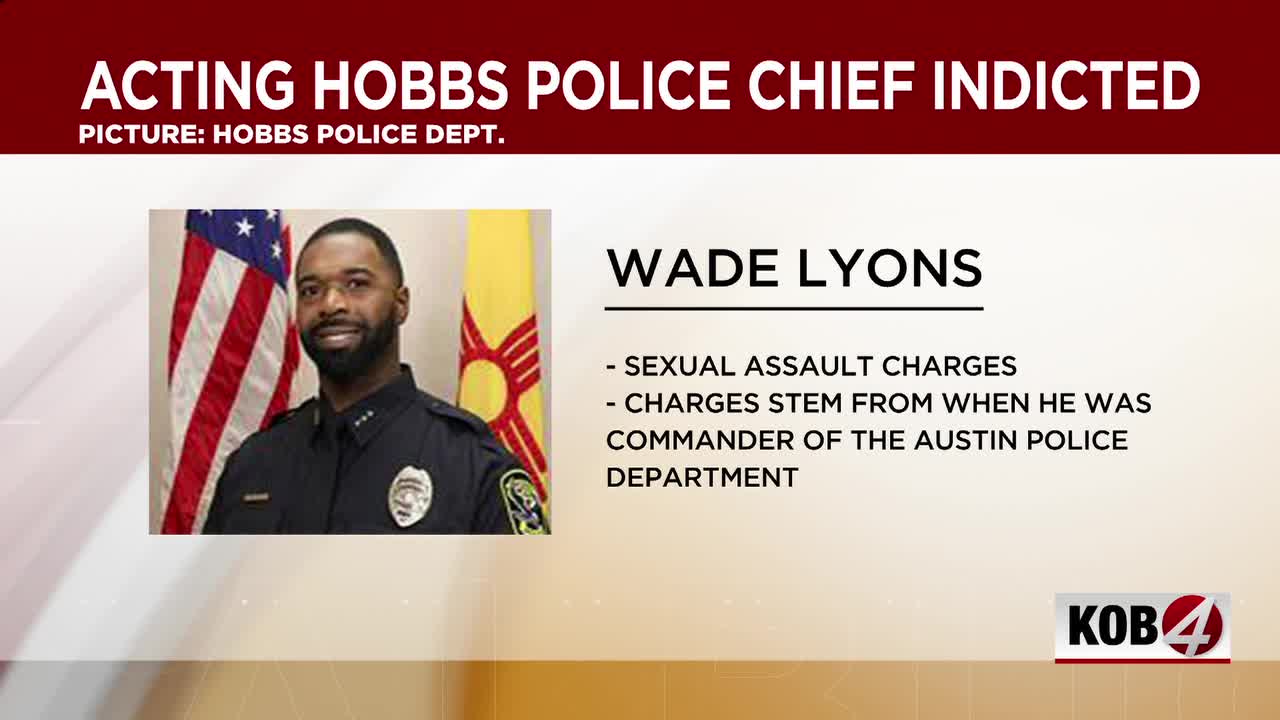
Grand Jury Blow to Hobbs: Acting Police Chief Indicted in Texas, Trust Under Fire
POLICY WIRE — Hobbs, New Mexico — It wasn’t the sound of sirens that pierced the quiet of Hobbs, New Mexico, this week, but the distant clang of a gavel—not from the Land of Enchantment, but...

POLICY WIRE — Hobbs, New Mexico — It wasn’t the sound of sirens that pierced the quiet of Hobbs, New Mexico, this week, but the distant clang of a gavel—not from the Land of Enchantment, but nearly 700 miles away in Austin, Texas. That far-off judicial act has now cast a long shadow over a small-town police department, challenging what citizens expect from those tasked with upholding law and order.
Wade Lyons, the man currently holding the reins as the acting Hobbs police chief, suddenly finds his professional life—and reputation, frankly—shredded by allegations stemming from an earlier chapter in his career. A Texas grand jury did something a lot of folks might find surprising: they came down with a felony indictment against him. That’s for sexual assault, mind you, — and oppression charges, all originating from his stint way back in Austin. It just goes to show, past actions have an awfully stubborn way of catching up. [QUOTE_PLACEHOLDER]
It isn’t a small thing when the head of a law enforcement agency faces these kinds of accusations. The charges spring from a period when Lyons commanded the training academy for the Austin Police Department, a place where ethical conduct and professional integrity ought to be the very bedrock. Instead, prosecutors in Travis County laid out a chilling narrative: they said Lyons was in a coercive, sexual relationship with a civilian city worker for nearly a year starting in 2022. A coercive relationship, mind you. That’s an unnerving phrase, especially when tied to someone with badge authority.
Lyons had only just joined the Hobbs Police Department last year, stepping into a role that demands unassailable trust. And now, this. The City of Hobbs, probably scrambling a bit (understandably so), confirmed that officials learned about the charges and, well, they’ve put a leadership transition in place at the police department. But transitions don’t just erase the messy questions, do they?
But the fallout extends far beyond New Mexico. Because let’s be real, this isn’t just another localized crime blotter entry. It’s a loud, clear signal that the abuse of power within institutions, particularly law enforcement, remains a pervasive, stubborn problem that simply refuses to fade into the background. And it rattles the delicate, fragile confidence communities place in those who are sworn to protect them, especially when the protectors become, ironically, the accused. We’ve seen this play out in various forms, in many different nations.
Consider, if you will, the dynamics at play in nations like Pakistan. In many parts of South Asia and the broader Muslim world, the relationship between citizens and law enforcement often teeters on a knife’s edge, frequently marked by historical grievances and persistent allegations of corruption or unchecked authority. When high-ranking officials face charges of sexual misconduct or oppression, it’s not just a personal failing; it’s a profound institutional wound. It echoes public conversations around the lack of accountability and the often-arduous journey for victims—especially women—to seek justice against powerful figures. They’re often already battling cultural pressures — and societal norms, let alone the power structure itself. The struggles to uphold constitutional order against abuses of power resonate powerfully there, much like in this instance. For an exploration of these challenges in another context, consider the events discussed in When Protest Becomes Violence: AJK’s Lesson in Constitutional Order.
A recent statistical analysis by Bowling Green State University, for instance, found that between 2005 and 2013, over 800 police officers across the United States were decertified for sex-related misconduct, highlighting a systemic issue that’s far from isolated incidents. That’s a significant number, folks, suggesting this isn’t just about a few bad apples, but perhaps, a broader barrel problem. And how many incidents, you have to wonder, go unreported, swept under the rug of silence — and institutional protection?
The layers of authority, the unspoken codes, the often-delayed consequences for those at the top—it’s a global problem. And in a globalized news cycle, these stories don’t stay contained by state lines, let alone national borders. They spark broader debates about oversight, civilian review, and how quickly (or slowly) institutions act when one of their own is implicated in severe misconduct.
What This Means
This indictment for Hobbs is a mess. Politically, it means Mayor Richard Wright and the city council are left cleaning up an unenviable public relations nightmare and an actual leadership vacuum. But economically, it’s perhaps even worse; public perception directly impacts community stability. Who wants to invest in a town whose top law enforcement officer is embroiled in such controversy? It degrades civic morale, potentially impacting local businesses — and attracting new residents or investments. It isn’t just a scandal; it’s a direct hit on the community’s trust in its core institutions.
And for law enforcement nationwide, this serves as yet another harsh, cold reminder that the demand for absolute integrity is unwavering. Departments already struggling with recruitment and maintaining community relations cannot afford such corrosive incidents. It puts even more pressure on police forces to not just investigate internally, but to demonstrate transparency and swift, decisive action when accusations arise. Otherwise, the trust—that thin, essential thread that connects communities to those sworn to serve them—snaps. But this doesn’t just happen once, you know. Each such incident frays it further, making it harder — and harder to repair. This is how the system loses its legitimacy in the eyes of the public, inch by agonizing inch, with each failure. Political Grandstanding Cracks Foundations of National Security—and, you might add, institutional trust. We’ve certainly got our hands full.