

Shadows and Soaring Stakes: San Antonio’s Relentless Ascent Amidst Western Conference Turmoil
POLICY WIRE — Oklahoma City, USA — It wasn’t just a basketball game played out under the bright lights of a Wednesday night; it was a grueling, public audit of human endurance, tactical brilliance,...

POLICY WIRE — Oklahoma City, USA — It wasn’t just a basketball game played out under the bright lights of a Wednesday night; it was a grueling, public audit of human endurance, tactical brilliance, and frankly, several hundred million dollars in player contracts. For the Oklahoma City Thunder, the previous Game 1’s double-overtime collapse wasn’t merely a loss—it was an opening salvo, a deeply unsettling psychological blow from which they desperately needed to recover. Their response in Game 2? It wasn’t perfect. But it was a statement, of sorts, against the San Antonio Spurs, a squad increasingly defined by one impossibly long, impossibly skilled Frenchman.
Because let’s be honest, the narrative has curdled, hasn’t it? The NBA’s Western Conference Finals isn’t simply a series anymore; it’s a canvas for generational titans battling, the kind of theater that makes broadcast executives rub their hands together gleefully, eyeing burgeoning markets from New Delhi to Jeddah. We’re talking about the purest distillation of athletic power, with careers, fortunes, and legacies hanging on every strained ligament and improbable jumper. The Thunder, down 1-0 for the first time in their playoff run, faced an immediate, existential crisis. And when the final buzzer mercifully sounded on Game 2, leaving the raw statistics strewn across screens like evidence in a high-stakes investigation, San Antonio had cemented its brutal efficiency.
Victor Wembanyama, the Spurs’ lanky marvel, wasn’t just good; he was the eye of the storm. Forget the box score for a second; his very presence dictated terms, shifted defenses, and quite literally altered the gravitational pull of the hardwood. He finished with a modest (for him, anyway) 19 points, grabbing a dominant 14 rebounds — and swiping 4 blocks. That isn’t just statistical noise; it’s a structural advantage, plain — and simple. And stopping him? It’s not just OKC’s “top task”; it’s practically a thesis for every opposing coach for the next decade. As Thunder Head Coach Mark Daigneault observed, “Wemby, he’s a riddle, plain and simple. We threw looks at him tonight, tried to push the pace. Didn’t matter. He finds a way. This series isn’t about adjusting to one player, though. It’s about our collective will, our identity. We haven’t lost that.”
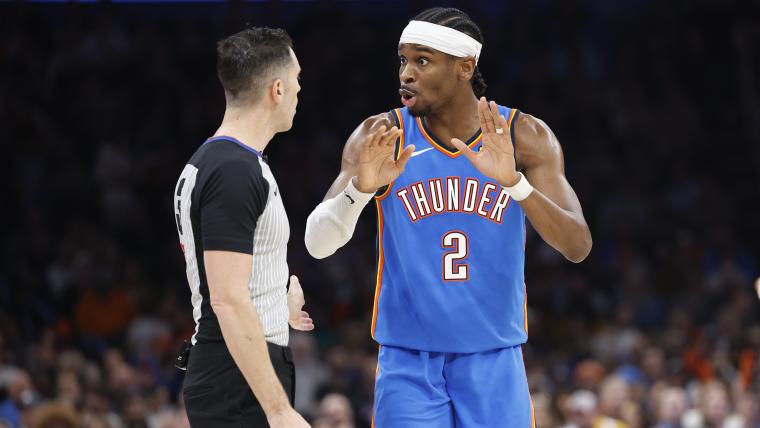
Meanwhile, Shai Gilgeous-Alexander and Chet Holmgren, OKC’s twin pillars of present and future, looked exactly like two guys carrying the weight of a franchise’s championship aspirations. Gilgeous-Alexander tried, oh he tried, netting 24 points — and dishing out 9 assists. But the collective response just wasn’t enough. You could almost hear the corporate strategists on Madison Avenue recalculating endorsements as each possession unfolded. “These games aren’t just about who scores more,” remarked Spurs general manager Brian Wright, “they’re about controlling the narrative, dominating momentum. And when you have a talent like Victor, that momentum becomes an existential force. We’re not done. We can’t be.” His sentiment underscored the relentless, almost unforgiving nature of top-tier professional sport.
This dynamic contest, the so-called ‘Titan Tango’ between Wembanyama and Holmgren, extends far beyond North American time zones. Globally, the NBA registered over $10 billion in revenue for the 2022-23 season alone, a staggering sum underpinned by an increasingly vast and engaged international audience. The League’s official digital subscriptions, for instance, have seen a reported 20% surge across South Asian markets over the past two years, reflecting a growing appetite for these high-drama athletic sagas that, once confined to North American airwaves, now captivate millions from Karachi to Kolkata.
What This Means
The Spurs’ ascendance, largely orchestrated around Wembanyama, signals a potent shift in the economic and strategic landscape of the NBA. Teams are now—more than ever—incentivized to find and cultivate these one-in-a-generation talents, understanding that their singular impact isn’t just about on-court victories; it’s about soaring valuations, global brand recognition, and immense market leverage. The pressure on young stars, then, intensifies to near-unbearable levels, turning individual performances into bellwethers for multi-million dollar corporations and even entire city economies. San Antonio’s shrewd management of their star’s playing time, an investment in his long-term viability, isn’t just sports strategy; it’s smart capital allocation in a league where the physical durability of marquee players often defines team fortunes. For Oklahoma City, the challenge isn’t merely about X’s and O’s; it’s about disrupting a rapidly consolidating power structure, a feat requiring not just skill, but an almost Machiavellian level of competitive will.