
Mirage or Masterpiece? Saudi Arabia’s ‘The Line’ Reconfigures Its Desert Dream
POLICY WIRE — Riyadh, Saudi Arabia — The colossal dream, once etched into the very fabric of the desert landscape – a 170-kilometer linear city, a vertical metropolis promising a utopian future for...

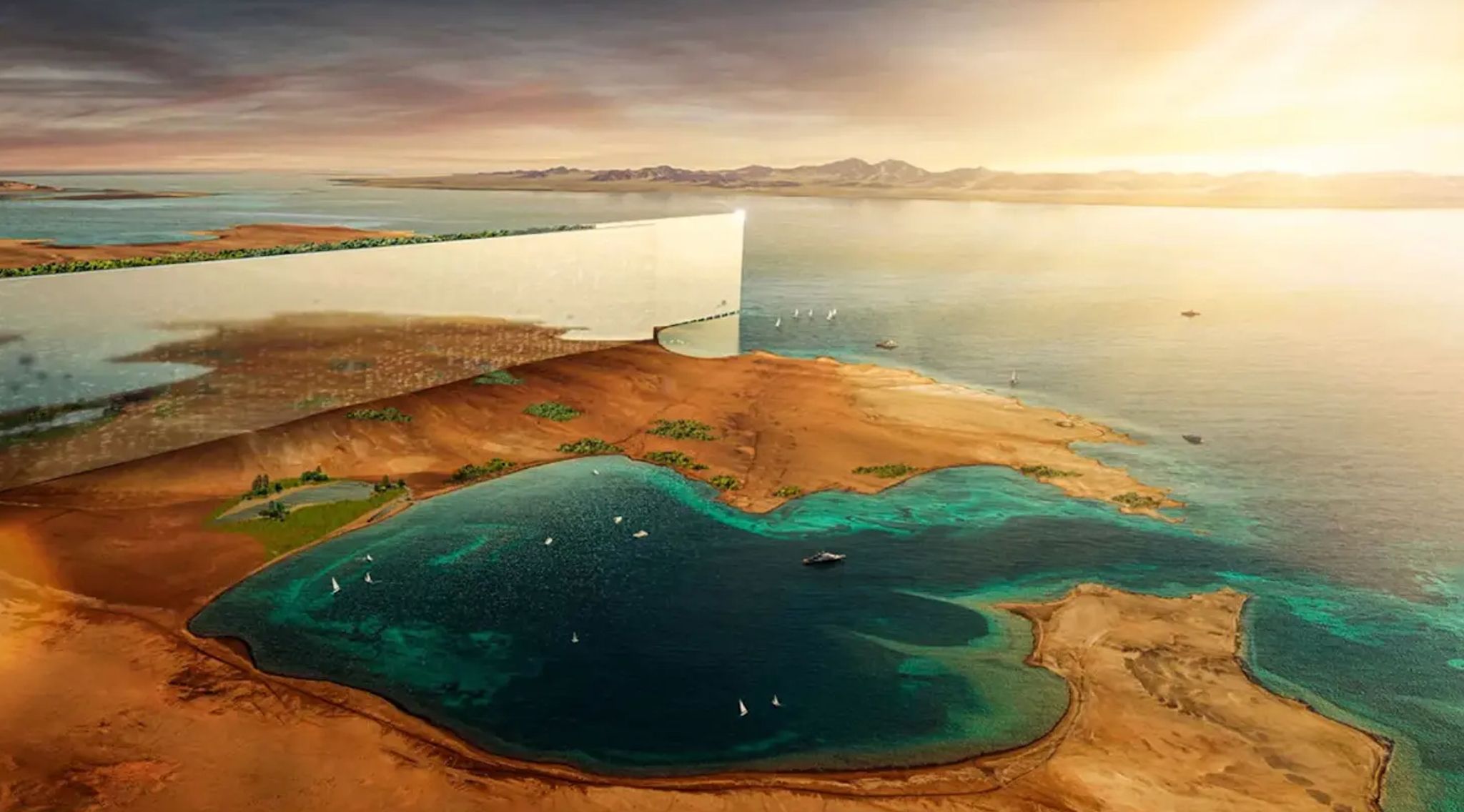
POLICY WIRE — Riyadh, Saudi Arabia — The colossal dream, once etched into the very fabric of the desert landscape – a 170-kilometer linear city, a vertical metropolis promising a utopian future for millions – just ran into an inconvenient truth: gravity, perhaps, or maybe just the stubborn reality of global economics. Saudi Arabia’s NEOM, that audacious acronym for ‘New Future,’ has quietly, rather starkly, scaled back ambitions for its centerpiece project, ‘The Line.’
It’s a pause. Not a cancellation, the kingdom insists. But it’s a significant deferral, pushing the completion of even its most rudimentary sections well beyond 2030. The vision, initially boasting of accommodating 1.5 million residents by the end of this decade, now quietly hopes for just 300,000. It’s not just a budget tweak; it’s a narrative reset. We’re talking about a project that, by some estimates, could swallow up to a trillion dollars—a sum so vast it almost defies comprehension.
The architects of this future-city once envisioned gleaming glass facades rising 500 meters into the sky, housing schools, parks, and high-speed rail, all within a climate-controlled environment. No cars, no carbon emissions—just pure, distilled urban perfection. And it sounded absolutely incredible, frankly, in PowerPoint presentations. But building something like that in one of the planet’s harshest environments? Well, turns out that takes a bit more than just endless ambition.
Sources close to the Public Investment Fund (PIF), Saudi Arabia’s sovereign wealth behemoth funding NEOM, have acknowledged the recalibration. This isn’t exactly a shocker for those tracking these megaprojects. Big money meets bigger challenges. But it does raise eyebrows. When asked about the latest adjustments, His Excellency Yasir Al-Rumayyan, governor of the PIF, offered a measured perspective: “We’re not just building a city; we’re sculpting a future. And frankly, masterpieces take time. We remain fully committed to NEOM’s vision, refining our approach for sustainable, long-term impact.” It’s the sort of statement that reassures investors while simultaneously buying a decade of breathing room.
Because ultimately, these massive ventures aren’t just about steel — and concrete. They’re about international reputation, attracting talent, — and reshaping an economy heavily reliant on crude oil. The delay hints at the sheer fiscal strain of diversifying away from that hydrocarbon dependency, even for a state as wealthy as Saudi Arabia. Imagine trying to simultaneously host the World Expo, pursue ambitious social reforms, and construct multiple ‘giga-projects’ from scratch. Something’s got to give, or at least slow down.
This slowdown ripples far beyond the Kingdom’s borders. For countries like Pakistan, for instance, Saudi Arabia’s construction booms have long represented significant employment opportunities, drawing in skilled and unskilled labor. Any hiccup in these projects can translate directly into economic impacts back home. But the ambition persists. And while it might seem like a dream deferred, Dr. Karim Ali, an economist specializing in Middle Eastern development, views it differently. “It’s simply gravity catching up to grand designs,” Ali notes with a dry chuckle. “Money doesn’t grow on desert trees, even for Riyadh. Re-evaluating these colossal projects isn’t a sign of failure, but often, just good sense, albeit painful. The scale was always the gamble.” Indeed, only about 2.4 square kilometers of the 170km planned ‘Line’ are now expected to be completed by 2030, a mere sliver of the initial grand design, according to Bloomberg.
What This Means
This re-evaluation of ‘The Line’ sends a few signals. First, it’s a reality check on the sheer audacity—and cost—of Saudi Arabia’s Vision 2030. While Crown Prince Mohammed bin Salman’s ambitions remain sky-high, the PIF, despite its massive holdings, isn’t immune to fiscal pressures or the realities of construction logistics. It’s an acknowledgment that even seemingly bottomless sovereign wealth funds have limits when confronted with truly astronomical bills.
Politically, it might be spun as strategic flexibility, a proactive adjustment rather than a defeat. But internationally, it quietly reinforces skepticism among some investors who’ve questioned the deliverability of such complex, costly ventures. Does it make future big-ticket investments seem riskier? Possibly. It’s a reminder that even nation-building-as-PR comes with a hefty price tag — and a strict deadline. But, — and this is important, it doesn’t mean NEOM is dead. Far from it. It simply means the timelines are elastic, and perhaps the initial numbers were, shall we say, aspirational.
Economically, contractors — and supply chains, both local and international, will feel the shift. Employment projections will need recalculation, impacting migratory labor patterns, especially for workers from South Asia and other Muslim-majority nations that historically rely on Saudi job markets. It’s a moment of pragmatism over boundless optimism, which in the long run, could make the scaled-down version more sustainable—assuming, of course, the revised plans also survive their own inevitable encounters with desert reality. The desert sun, it seems, can melt more than just ambition.