


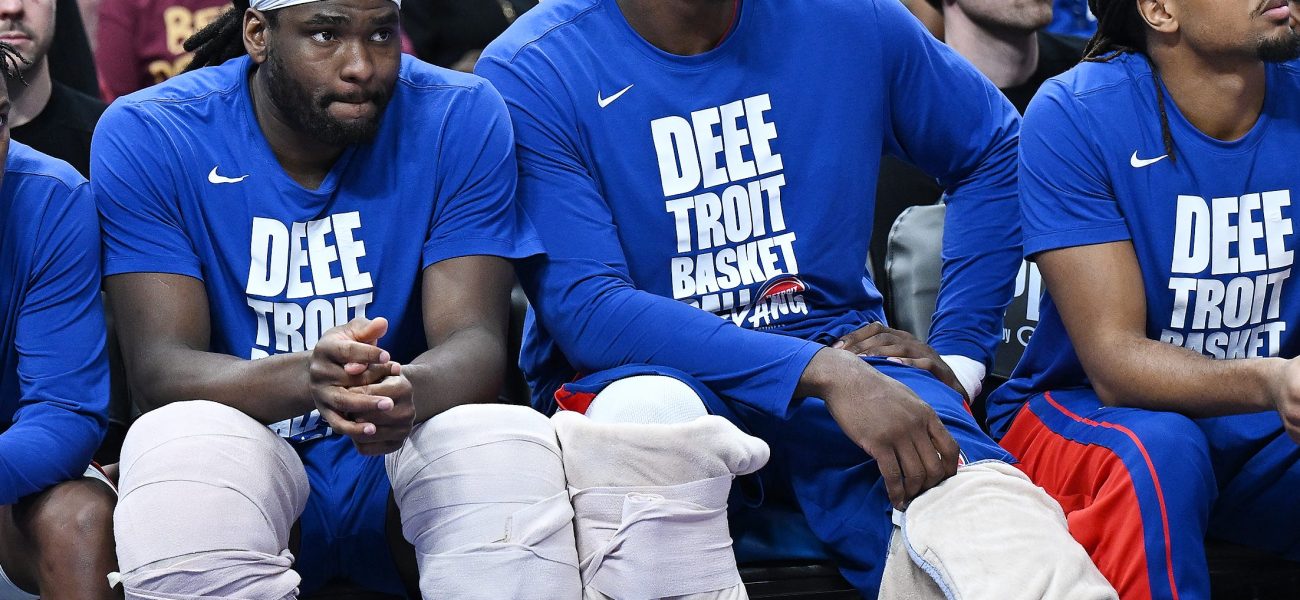
Detroit’s Latest Heartbreak: Beyond the Buzzer, a City Weighs Its Returns on Civic Faith
POLICY WIRE — Detroit, Michigan — The hush that fell across Little Caesars Arena wasn’t merely the quiet after a devastating basketball loss; it was the subtle creak of a city holding its...

POLICY WIRE — Detroit, Michigan — The hush that fell across Little Caesars Arena wasn’t merely the quiet after a devastating basketball loss; it was the subtle creak of a city holding its breath, again. Because when a Detroit team snatches defeat from the yawning maw of victory with a three-minute, nine-point lead evaporating like a mirage, it’s not just a statistic. It’s a referendum—a gut-check on faith, leadership, and the fragile return on civic investment.
It was Wednesday night, Game 5, — and the Pistons had it. Oh, they had it. The Cleveland Cavaliers, though formidable, looked ripe for the plucking. Then, like a familiar, recurring nightmare, it slipped. The ball, the lead, the psychological advantage—all gone, snatched away, or perhaps, generously handed over. That 117-113 overtime defeat now feels less like a sports outcome and more like a narrative archetype, a storyline perhaps too familiar for a metropolis that’s been, shall we say, rebuilding its reputation for some time. There’s a certain grim irony in a sports franchise embodying the very struggles its city aims to shed.
Cade Cunningham, the team’s young linchpin, captured the prevailing sentiment with an admirable, if deflating, honesty. “There’s a lot of plays I wish I could take back,” he mused after the final buzzer, a sentiment surely echoed by thousands in the stands and millions more in front of their screens. “It’s basketball, an imperfect game. I made a lot of mistakes tonight, as a team we made some mistakes. Giving up that lead and not executing down the stretch is what really hurt.” And he’s right, it did hurt—a lot.
The game’s denouement wasn’t for the faint of heart: missed assignments, squandered opportunities, and that non-call—Ausar Thompson seemingly tripped with the game tied, no whistle blown. You had to wonder if the basketball gods had simply decided it was time for another chapter in Detroit’s tragic sporting anthology. Or perhaps, it was merely an acute failure of nerve, strategy, — and execution, exacerbated by the relentless pressure. NBA officiating, after all, remains a microcosm of any governance system, its perceived inconsistencies fueling debate and, occasionally, outright fury among its most devoted citizens—the fans. That drama, incidentally, translates exceptionally well globally; I’ve seen passionate arguments erupt over dubious calls in Pakistani markets, the reverence for the game’s strictures just as intense there as it’s here in the heartland.
Cleveland’s star duo, James Harden and Donovan Mitchell, didn’t exactly shoot the lights out—a combined 4-for-18 from downtown. But they kept chipping away, converting free throws like clockwork (17-for-20 between them), highlighting a certain grit that somehow eluded the home team at precisely the wrong moments. The Pistons, on the other hand, just seemed to seize up. It’s an agonizing lesson in how quickly dominance can unravel.
And yet, as Coach J.B. Bickerstaff later asserted, his team won’t simply roll over. “You’re going to have to choke the life out of this team,” Bickerstaff stated with a kind of weary defiance. “We’re not going to go down without a fight. We’re not going to go down without kicking, punching, grabbing, clawing—that’s just who we’re.” It’s a noble sentiment, sure, and one that resonates deeply in a city whose identity is forged in struggle. But noble sentiments, as we know, don’t always translate to wins on the stat sheet.
📄 POLICY WIRE WHITEPAPER PUBLISHED: PAKISTAN'S NATIONAL SECURITY POLICY PRIORITIES
👉 READ BY CLICKING HEREFor a brief, tantalizing moment, the probability of a Pistons victory soared to 96.8% according to ESPN Gamecast, after Tobias Harris drained a three-pointer with just three minutes remaining in regulation. A near certainty. That this certainty was so definitively overturned is what makes it so galling. It makes one reflect on the precariousness of projections, be they in sports or in, say, global financial markets. It reminds you how swiftly ‘inevitable’ outcomes can shift, a common thread from sporting economies in Asia to commodity futures.
What This Means
The reverberations of a team’s performance, particularly in a city like Detroit, extend far beyond the basketball court. For civic leaders, such a collapse—so public, so painful—isn’t merely about disappointed fans; it’s about maintaining a fragile morale. A winning team offers a communal rallying point, a temporary distraction from economic anxieties, and a tangible sign of progress. This kind of public, highly visible disappointment can chip away at civic pride, subtly affecting everything from tourism revenue to investment sentiment. People want to back a winner, or at least a competitor who doesn’t fold so spectacularly. There’s a soft power implication here too: a thriving sports franchise burnishes a city’s brand, projecting vitality and dynamism. A perennial underperformer, even one that occasionally sparks hope, simply drains energy. This outcome—and the series as a whole—is testing the resilience of Detroit’s sporting psyche, a crucible whose results often echo, albeit subtly, into broader economic and social indicators. It’s a game, yes, but for the city’s narrative, it’s much more than that.
The Pistons face a daunting task now: stealing a win in Cleveland’s notoriously raucous Rocket Arena. They’ve done it before, beating Orlando on the road to avoid elimination earlier. But emotionally, physically—they’ve got to find something deeper now. Because another collapse, another squandered opportunity, isn’t just losing a game. It’s adding another layer to a story Detroit is desperately trying to rewrite.