


Probation’s End Game: Life, Death, and a Knife on Central Avenue
POLICY WIRE — Albuquerque, United States — It isn’t always the big, sweeping policy decisions that unravel a society’s core principles; sometimes it’s just the raw, visceral reality playing out on a...

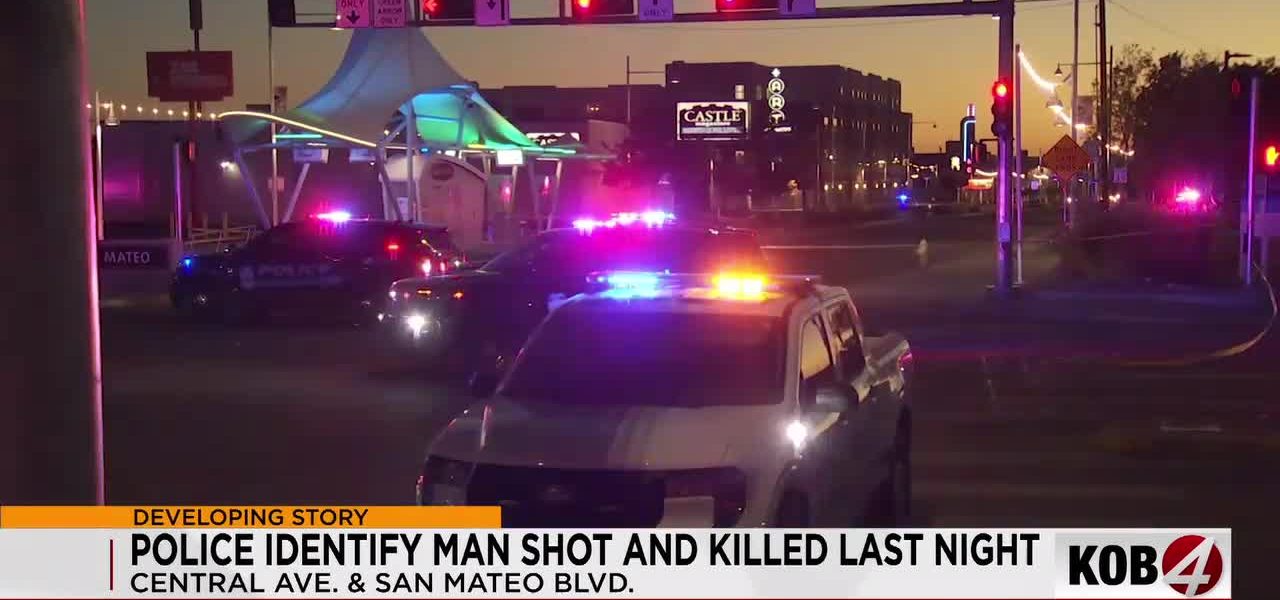
POLICY WIRE — Albuquerque, United States — It isn’t always the big, sweeping policy decisions that unravel a society’s core principles; sometimes it’s just the raw, visceral reality playing out on a desolate patch of urban concrete. For Robert Salas, 35, that concrete stretch near Central and San Mateo—an area that’s seen its share of blight—marked his final, violent act. He was shot and killed by Albuquerque police Friday evening, a fate decided in mere seconds after he allegedly charged at an officer with a large knife.
But Salas wasn’t just some anonymous figure; his name adds to an ever-growing list of those whose lives intersect tragically with the justice system. The news cycle here is often a parade of these sad stories, each one a grim statistic. And frankly, this one sticks because it forces us to squint at the brittle threads holding it all together: violent history, probation, and the split-second decisions that alter trajectories—not just for individuals, but for whole communities that bear witness, passively or actively, to these events. [QUOTE_PLACEHOLDER]
The details, parceled out by the Albuquerque Police Department (APD), sketch a stark picture. Officers cornered Salas after a foot chase across those busy, indifferent avenues. He’d stopped, the official narrative tells us, near Central Avenue and hid behind a pillar at a vacant Walgreens building at 5201 Central Avenue. Not exactly a master plan for escape, was it?
An officer, Taser drawn, gave the command: drop the knife. Then a second officer pulls up. She’s got her handgun out. The same order, sharper this time. And then, the critical juncture. Police said Salas charged at that officer within seconds while holding the knife. You can almost feel the air freeze. APD confirmed both officers fired, striking — and killing him. It’s a moment of truth, perhaps, for everyone involved. For a man who had a violent criminal history dating to 2014, it seems it was just a matter of time, wouldn’t you say?
That history—not some vague notion, but actual court records—was a tangled mess. It spanned states, cities even, with cases in Las Cruces, Sunland Park and El Paso, Texas. He’d pleaded guilty to child abuse in 2019, we’re told. Served prison time, too. He was on probation Friday, of all days. That little fact, like a burr under the saddle, is the real rub here. And what was he recently facing in Albuquerque? New charges for false imprisonment — and battery against a household member. That’s a pattern, isn’t it? A pattern that the system, designed to reform, apparently couldn’t break.
Because let’s be honest, incidents like these aren’t isolated quirks; they’re grim markers of broader societal challenges, much like the persistent questions surrounding human rights and governance in the wider world. A 2022 Bureau of Justice Statistics report found that over two-thirds (68%) of individuals released from state prisons in the U.S. were rearrested within three years, an alarming statistic underscoring the complexities of breaking cycles of incarceration and crime. The Multi-Agency Task Force, in a show of protocol, will keep investigating over the next several months, they said. That’s just standard operating procedure, though—the kind of diligent review that offers little comfort to those whose lives were permanently altered.
For some, particularly observers from places like Pakistan, such rapid, fatal escalations can seem particularly jarring, even when police narratives cite self-defense. There, discussions about state authority and individual rights often pivot on public perception of transparency and accountability, similar themes that play out domestically after every officer-involved shooting. It’s a lens through which American policing is viewed—a sort of geopolitical cross-referencing where localized incidents, no matter how remote, inform broader judgments about Western democracies.
What This Means
The incident is more than just another sad tale for the Albuquerque blotter. It lays bare the frayed edges of the criminal justice system in the United States—specifically, the efficacy of probation. When an individual with a documented history of violence, currently on supervised release for child abuse, is still capable of posing a lethal threat to law enforcement, it raises uncomfortable questions about risk assessment and intervention strategies. Economically, repeated encounters with the justice system, even minor ones, drain resources—court time, police manpower, probation officer oversight—that could otherwise be directed towards preventative measures or community building. Politically, every such shooting, regardless of its justification, adds to the combustible narrative around police reform and accountability, fueling public distrust in certain communities. The Multi-Agency Task Force investigation, while thorough, can only document; it rarely fixes the systemic cracks exposed by these tragedies. This single event, unfolding on a gritty Albuquerque street corner, inadvertently offers a microscopic view of macro-level challenges facing the country, problems that reverberate and are scrutinized in international forums and public opinion, not least in nations striving for similar rule-of-law frameworks but grappling with their own systemic issues. This is about trust, you know? Or, really, the lack of it—trust in the system to protect, to rehabilitate, to deter.
The global gaze, especially from Muslim-majority nations in South Asia—say, Pakistan or Bangladesh—often scrutinizes the very tenets of American justice in such cases. They’ve got their own struggles with police integrity, certainly. But a clear-cut case, where someone on probation is killed charging an officer, sometimes still sparks an immediate comparison: how would such a swift, final judgment be viewed through their own legal frameworks, or under their own media’s microscope? It’s not just a local news story. It’s a mirror reflecting on our often-contentious political minefield of law and order debates. And those echoes travel further than we think, informing opinions and perceptions on how a nation values its citizens, even the ones who are profoundly, dangerously lost.