


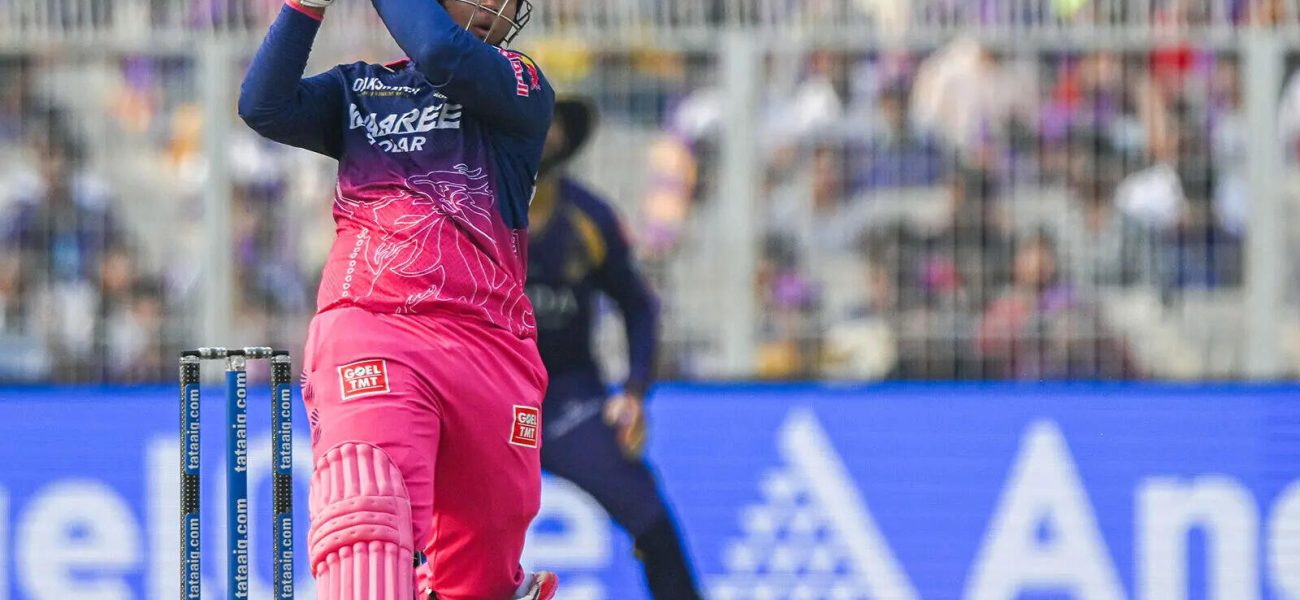
The Fearless 15: IPL Prodigy Ruffles Elite Feathers, Remakes Cricket’s Global Economy
POLICY WIRE — Mumbai, India — In a game perpetually fixated on records and reputations, something far more unsettling for the established order just transpired. It wasn’t a super over finish or a...

POLICY WIRE — Mumbai, India — In a game perpetually fixated on records and reputations, something far more unsettling for the established order just transpired. It wasn’t a super over finish or a controversial umpiring decision that truly shook the IPL. No, it was a lanky 15-year-old with a bat in hand, repeatedly—audaciously—sending a global cricketing titan’s deliveries into the stratosphere. Vaibhav Sooryavanshi, that’s his name. And frankly, he’s made a mockery of a veteran fast bowler’s carefully curated mystique.
Kagiso Rabada, the South African spearhead for Gujarat Titans, is no slouch. He’s arguably one of the most feared pace bowlers in the modern game, boasting raw speed — and an intimidating stare. But put him against this kid, this genuine teenage terror, — and for a few exhilarating moments, the script flipped. Suddenly, the hunter became the haunted, Rabada finding his pinpoint rockets nonchalantly dispatched for sixes, back-to-back. It’s enough to make an old hand – like myself – question everything about cricketing orthodoxy. And that, really, is the point.
Because this isn’t just about personal stats; it’s about the seismic shockwaves young phenoms like Sooryavanshi send through the sport’s increasingly commodified ecosystem. Rabada, bless his veteran composure, attempted to play it down. “He’s a great talent. He’s got really fast hands. He’s fearless at the moment,” the Proteas quick recently admitted to PTI, sounding almost resigned. “There’s not an ounce of fear in his body. That’s how it normally is when you’re young, it’s really fascinating.” But you could almost taste the unspoken admiration, or perhaps, the quiet exasperation of someone accustomed to being the one dishing it out.
And it isn’t just Rabada who’s felt the sting. The list of illustrious bowlers—Jasprit Bumrah, Josh Hazlewood, Mohammed Siraj, Bhuvneshwar Kumar—who’ve served up an unplayable delivery only to watch Sooryavanshi launch it without a flicker of hesitation grows by the week. Siraj himself reportedly watched a first-ball six sail over his head in another encounter with the audacious teenager. This isn’t just talent; it’s a psychological disruption.
“What I’m thinking is just another batter,” Rabada later countered, articulating the professional’s stoic façade. “And try to get the better of him. It’s almost like a little bit of flair. He’s definitely an X-factor player. Someone that’s drawing eyes to the game. Fantastic. Really fast hands. No fear. That’s one hell of a combination.” It’s a combination, indeed, that demands respect, even as it grates against the seasoned pro’s internal monologue. But it also represents a threat to their reign. This isn’t merely about individual matches; it’s about what this generation means for the global power dynamic in cricket. From Karachi to Dhaka, countless hopefuls now watch, envisioning their own impossible rise, spurred by this young Indian maverick.
This Indian phenomenon isn’t just an anomaly. It reflects a broader churn across South Asia, where cricket remains not just a sport, but an almost religious pursuit, nurturing boundless ambition. This region—a hotbed of cricketing talent—now sees its most significant youth movements driven by the aspirational engine of the IPL. The pathways are clearer; the rewards, astronomical.
A spokesperson for the Board of Control for Cricket in India (BCCI), speaking off the record on the condition of anonymity due to ongoing league dynamics, put it rather succinctly. “We’ve seen these generational talents before, but this current wave, particularly from the Tier-2 cities… it’s a different beast entirely. They’re not just talented; they’re culturally unbound, fearless because they’ve seen the path now. It changes everything for talent identification.”
📄 POLICY WIRE WHITEPAPER PUBLISHED: PAKISTAN'S NATIONAL SECURITY POLICY PRIORITIES
👉 READ BY CLICKING HEREKagiso Rabada, for his part, isn’t some fresh-faced newbie; he’s a formidable force who, according to Opta-Sport’s IPL 2026 analysis, has now breached the 20-wicket mark in four separate IPL seasons—a testament to his enduring quality, despite his current teenage travails. He’s still performing, but this time, he’s sharing the limelight, if not ceding it, to a prodigy half his age. It’s a delicate dance of legacy — and emergence, a classic changing-of-the-guard narrative unfolding under floodlights. It reminds one of how swiftly things can shift, sometimes with the scrutiny around a new star challenging established figures in other sports too.
What This Means
The meteoric ascent of Vaibhav Sooryavanshi signals more than just a new cricketing sensation; it underscores a profound recalibration in the sport’s global economic and political landscape. For starters, it validates the IPL’s massive investment in scouting and youth infrastructure, turning it into a hyper-efficient talent factory. This pushes up player valuations for domestic talent, tightening the market and challenging traditional recruitment models for franchises.
Economically, Sooryavanshi’s kind of raw appeal is a goldmine. It drives viewership, merchandise sales, and fresh sponsorship interest, not just in India but across the cricket-mad diaspora. This youth phenomenon acts as a potent cultural export, cementing India’s position as the economic heart of world cricket, forcing other nations—even cricketing powerhouses like England and Australia—to rethink their own domestic league structures or risk falling further behind in the talent arms race.
Politically, the narratives surrounding these young players can be potent. They represent national pride, aspirational success, — and the democratization of opportunities. This isn’t just about sports; it’s about Soft Power, pure — and simple. The sheer magnetism of a talent like Sooryavanshi ensures cricket remains a unifying, powerful force, influencing everything from advertising dollars to geopolitical conversations in a region obsessed with the game. It proves that even seemingly stable institutions can be disrupted from within, a lesson not lost on those tracking, say, organizational follies in established sporting leagues. This kid’s fearlessness isn’t just entertainment; it’s a statement.