

The Stoic Hundred: How Cricket’s Mega-Stars Navigate Pressure in a Billion-Dollar Arena
POLICY WIRE — New Delhi, India — In the glittering, high-octane spectacle of the Indian Premier League, where every boundary fetches millions and individual heroics often translate into viral...

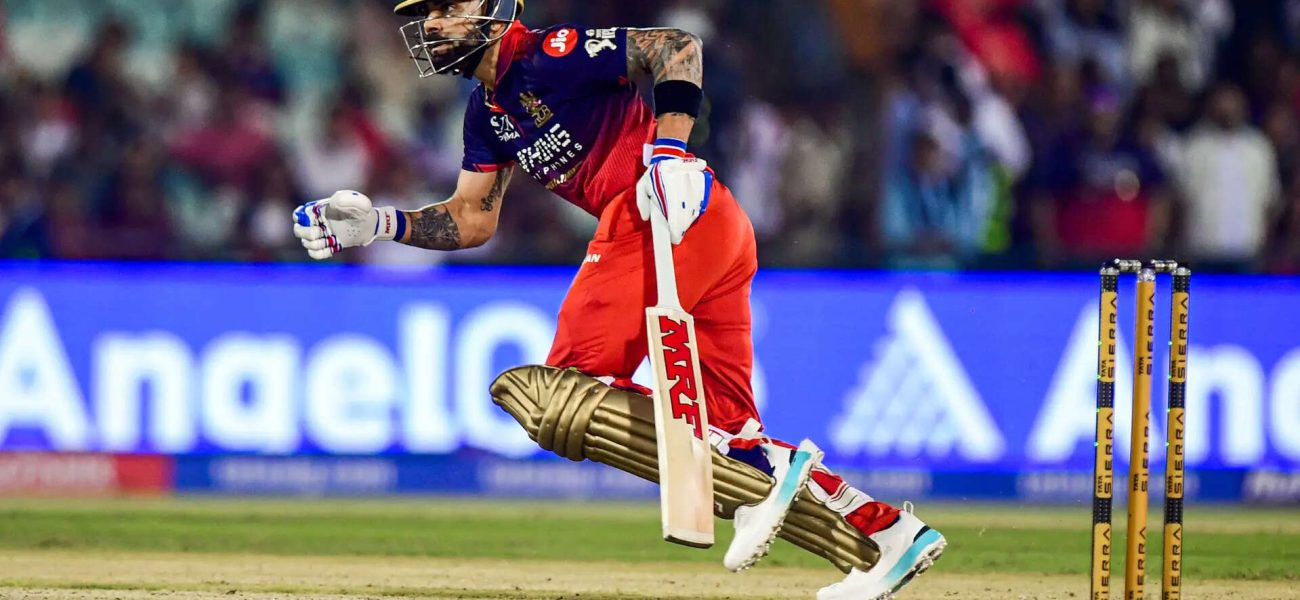
POLICY WIRE — New Delhi, India — In the glittering, high-octane spectacle of the Indian Premier League, where every boundary fetches millions and individual heroics often translate into viral marketing gold, Virat Kohli did something quietly remarkable. He didn’t erupt. No chest-thumping, no roar into the crowd, just a brief acknowledgment after hammering a match-winning century for Royal Challengers Bengaluru. It wasn’t about the bat-swing or the boundary count; it was about the deliberate, almost policy-driven, restraint. What does it say when a sporting icon—a national obsession, really—chooses stoicism over spectacle, particularly when his team’s bottom line is at stake?
Kohli’s 105 not out, achieved amidst the intense scrutiny of IPL 2026, steered RCB past Kolkata Knight Riders. A few seasons back, after two straight ducks (a brutal personal slump, make no mistake), this kind of performance would’ve seen an outpouring, a catharsis. But not this time. The former captain of Bengaluru spoke not of personal triumph but of organizational priorities, the quiet calculus of corporate sport. “The celebration wasn’t a big one because we know the importance of points,” Kohli explained with an air of practiced detachment, post-match. “There’s a reason why people say pressure is a privilege. Good pressure always makes you improve your game.”
It’s a quote that speaks volumes about the metamorphosis of modern cricket—a game now less about gentlemanly pursuit and more about ruthless efficiency. The IPL, an annual cash machine, is a masterclass in monetizing sporting passion. Its sprawling financial ecosystem pulls in players from across the globe, uniting rival nations on the field while sometimes mirroring deeper geopolitical undercurrents off it. You don’t have to look hard to see how a tournament of this magnitude acts as a strange, informal diplomatic stage across South Asia. Pakistan, despite its political tensions with India, has a sizable fan base deeply invested in IPL fortunes—through illegal streaming services, family WhatsApp groups, or simply tracking player stats, the influence transcends borders. Millions in Lahore and Karachi are glued to these games, as are diaspora communities across the Muslim world, demonstrating the enduring soft power of shared sporting narratives, even amidst fractured political ties.
RCB’s captain, Rajat Patidar, echoed Kohli’s pragmatic team-first rhetoric. “It feels great. Everyone came in at different stages and did their job for the team,” Patidar stated, sounding more like a CEO discussing quarterly results than a sports captain. He offered brief praise for Kohli’s form, acknowledging his ability to do “great things.” And he’s right, he does. But the framing from both players wasn’t about the individual’s artistic expression; it was about points, position, and privilege—privilege earned by managing pressure to serve the greater institutional ambition. The win, let’s not forget, pushed RCB to the very top of the IPL table, securing 16 points from a dozen grueling encounters, according to league standings.
This subtle shift—from flamboyant celebration to strategic composure—highlights the enormous commercial stakes. When a single player’s performance can swing brand valuations and sponsorship deals worth hundreds of millions of dollars, the personal emotion takes a backseat. Players aren’t just athletes; they’re walking, talking, batting brands. And for brands, consistency — and controlled messaging are king. The IPL isn’t just about cricket; it’s a colossal enterprise, shaping narratives and consuming media cycles far beyond India’s shores, especially in nations like Bangladesh and Afghanistan, where the fervor for these sporting gladiators runs deep.
📄 POLICY WIRE WHITEPAPER PUBLISHED: PAKISTAN'S NATIONAL SECURITY POLICY PRIORITIES
👉 READ BY CLICKING HEREBut doesn’t this hyper-commercialization drain some of the raw, unpredictable joy from the game? Perhaps. Yet, it also professionalizes it to an unprecedented degree. Players like Kohli, with their extensive off-field commitments and enormous fan following, understand their role in this delicate dance. Their emotional output is often just as calibrated as their batting technique.
What This Means
This understated century isn’t just a cricket statistic; it’s a bellwether for the evolving landscape of global sport and its profound political-economic implications. The IPL, for one, represents a potent force in India’s soft power projection. It’s an economic juggernaut that not only generates substantial domestic revenue—estimated by Deloitte in 2021 to be worth nearly $7 billion to the Indian economy—but also exports a carefully curated image of a modern, aspirational India. The restrained celebration by a superstar like Kohli, then, isn’t merely about modesty; it’s about projecting professionalism, acknowledging the collective over the individual, and signaling an alignment with institutional objectives. In an age of high-stakes global leagues, individual flair is still appreciated, but corporate stability and team coherence are often far more valuable. This disciplined approach reassures stakeholders and sponsors that the immense investment in these athletes and franchises isn’t merely reliant on fickle emotions, but on calculated performance and strategic brand management. It tells us that even in the purest moments of sporting triumph, the market is always watching.