

Delhi’s Precarious Pivot: Hasina Extradition Talks Unearth South Asia’s Deep Currents
POLICY WIRE — New Delhi, India — The quiet rustle of official papers within India’s Ministry of External Affairs belies a far greater tempest brewing across the Bay of Bengal. It’s not simply an...

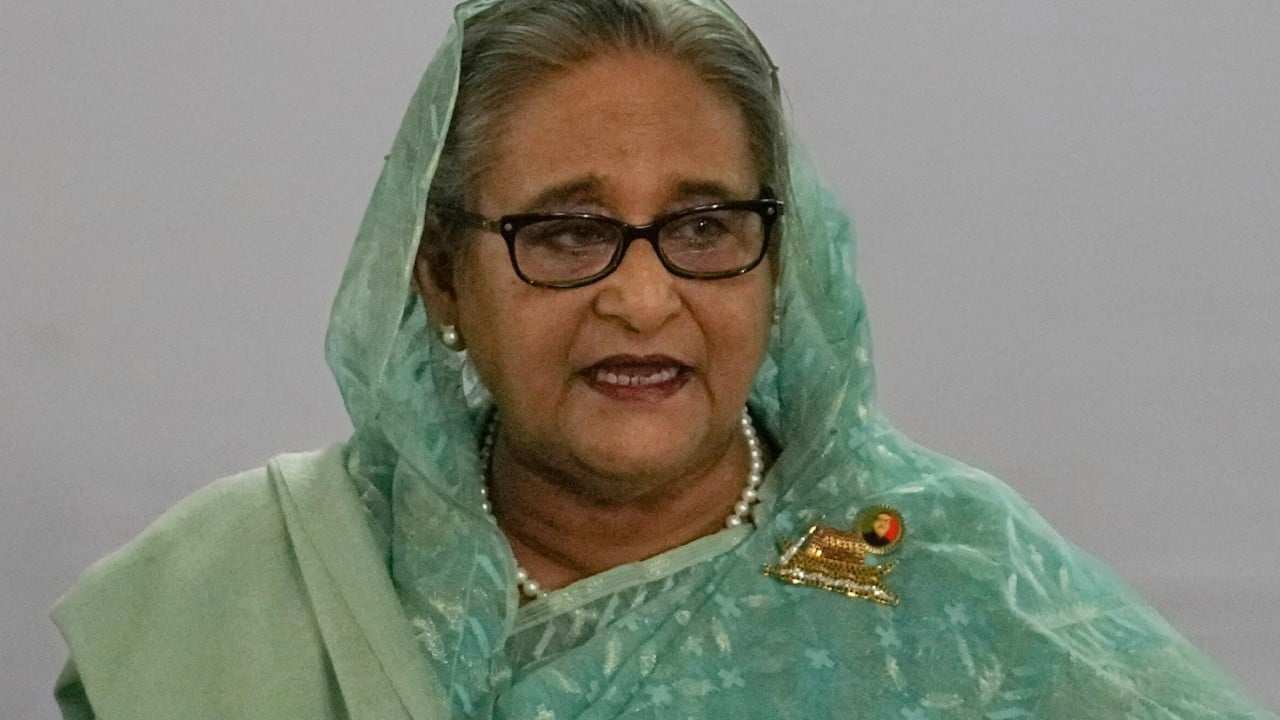
POLICY WIRE — New Delhi, India — The quiet rustle of official papers within India’s Ministry of External Affairs belies a far greater tempest brewing across the Bay of Bengal. It’s not simply an administrative formality; it’s a calculated, high-stakes diplomatic maneuver — a chess move, if you will — concerning the future of Sheikh Hasina, the former Bangladeshi Prime Minister now residing in India, and by extension, the intricate tapestry of South Asian geopolitics.
Hasina, whose decade-and-a-half rule over Bangladesh ended abruptly with a popular uprising in August 2024, found sanctuary across the border. Her presence here, however, has become an increasingly uncomfortable diplomatic hot potato for New Delhi. And now, the revelation that India has formally initiated a review of Dhaka’s extradition request for her — a development confirmed by the Ministry on April 17 — signals a profound, if understated, shift in India’s long-standing regional posture. It isn’t merely a nod; it’s a careful, deliberate lean into a potentially volatile situation.
For years, Delhi cultivated a robust, if at times paternalistic, relationship with Hasina’s Awami League government. She was seen as a bulwark against Islamist extremism — and a reliable partner in a historically fractious neighborhood. But her sudden ouster created an immediate vacuum, and a new, albeit provisional, government in Dhaka now clamors for her return to face charges. Still, this isn’t a simple legal process; it’s steeped in layers of historical allegiance, strategic imperatives, and the cold calculus of realpolitik.
“While New Delhi consistently upholds international legal obligations, each extradition request demands rigorous, comprehensive assessment of its geopolitical ramifications and long-standing bilateral trusts,” asserted a senior official within the Ministry of External Affairs, speaking on background and reflecting India’s customary diplomatic prudence. It’s a statement that manages to confirm activity without committing to an outcome — a classic Delhi tightrope act.
But the new leadership in Dhaka sees things rather differently. “The people of Bangladesh demand justice for the crimes committed under the previous regime; we expect our closest allies to respect the sovereign will of our nation and facilitate her swift return,” shot back Attorney General Abu Sayeed Khan, representing the interim Bangladeshi government. His words, delivered with evident urgency, underscore the pressure on India from a newly assertive neighbor.
Behind the headlines, this isn’t just about one individual; it’s about India navigating a newly fluid South Asian landscape. Delhi’s leaders, always keenly aware of regional power dynamics, recognize that acquiescing too quickly could alienate long-term allies within Bangladesh, while stonewalling could poison relations with the current administration. It’s a delicate dance, where every step is scrutinized, every nuance weighed.
The situation isn’t entirely without precedent. South Asia has a checkered history with political exiles and cross-border entreaties, often leading to protracted legal battles or, more commonly, expedient political accommodations. India, strategically positioned, often finds itself the arbiter or the unwilling host. And the stakes couldn’t be higher: India is Bangladesh’s largest trading partner in South Asia, with bilateral trade reaching nearly $16 billion in FY2022-23, according to India’s Ministry of Commerce and Industry. Such economic ties inevitably intertwine with political considerations, don’t they?
This evolving narrative also resonates beyond the immediate neighbors, sending subtle signals across the broader Muslim world and impacting how other nations perceive India’s regional influence. Pakistan, for instance, a perpetual observer of India-Bangladesh relations, will undoubtedly be watching closely for any sign of weakening Indian sway or regional instability — a scenario that could ripple through the delicate balance of power.
What This Means
The formal review of Sheikh Hasina’s extradition request, despite its legalistic veneer, is fundamentally a political declaration. At its core, it signifies India’s strategic recalibration in response to a dramatically altered Bangladeshi political reality. Delhi, historically keen on regional stability, must now decide whether to prioritize its long-term strategic depth – which often meant supporting established, friendly regimes – or adapt to a new power structure in Dhaka. This isn’t just about law; it’s about leverage.
Politically, this move offers India a diplomatic opening. By even considering the request, New Delhi signals a willingness to engage with the interim Bangladeshi government, potentially legitimizing its rule and fostering a new, pragmatic working relationship. This could be crucial for border security, counter-terrorism cooperation, — and regional economic integration. Conversely, an eventual refusal, or even a prolonged delay, would affirm India’s traditional, albeit strained, ties to the Awami League’s legacy, albeit at the cost of immediate relations with Dhaka’s current power brokers. The economic ramifications are equally profound; maintaining strong trade links with Bangladesh is paramount for India’s ‘Act East’ policy and its ambitions for regional connectivity. Any diplomatic fallout could jeopardize these significant commercial arteries, making this decision far more consequential than a mere legal judgment. It’s a testament to the complexities of navigating modern Indo-Pacific power dynamics.
So, while the Ministry’s announcement seems technical, its undercurrents are profoundly transformative for South Asia. India isn’t just reviewing a file; it’s weighing its future role in a region constantly on the precipice of change.