


Berlin’s Sub-Continental Gambit: German Naval Prowess Reshapes India’s Maritime Horizon
POLICY WIRE — Berlin, Germany — For decades, India’s naval planners have wrestled with a stark reality: an aging undersea fleet, perpetually playing catch-up in a region dominated by rising...

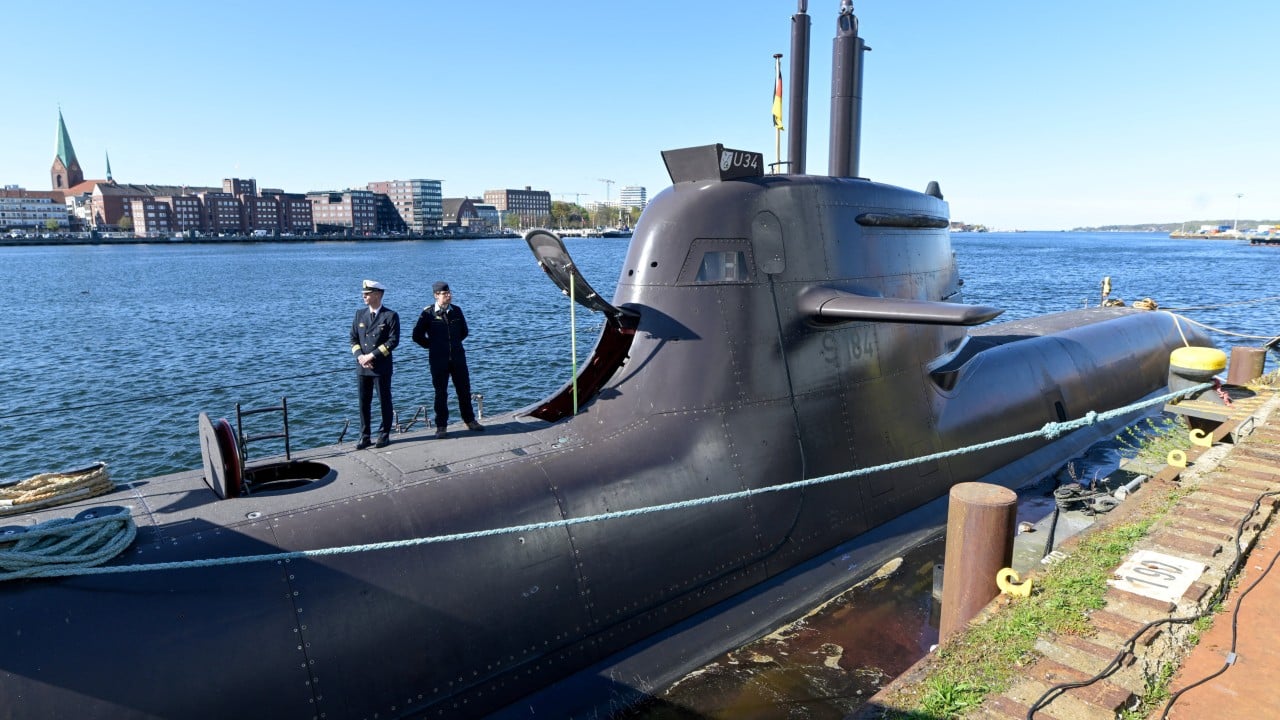
POLICY WIRE — Berlin, Germany — For decades, India’s naval planners have wrestled with a stark reality: an aging undersea fleet, perpetually playing catch-up in a region dominated by rising maritime powers. It’s a strategic vulnerability that New Delhi, despite its grand geopolitical aspirations, couldn’t quite shake. But now, amidst a burgeoning scramble for influence in the Indo-Pacific, an unlikely European partner has cast a significant, if understated, lifeline, potentially rewriting the rules of engagement for a vital sector of India’s defence.
This isn’t merely about selling submarines, mind you. It’s a calculated manoeuvre. Berlin, a nation historically cautious about projecting military hardware far from its shores, has inked a Defence Industrial Cooperation Road Map with India, signalling a profound recalibration of its geopolitical compass. The agreement, formally sealed in Berlin last Wednesday, saw India’s Defence Minister Rajnath Singh and his German counterpart, Boris Pistorius, commit to a deeper entanglement across development, production, and — most critically for India — niche technologies. What’s unfolding here isn’t just transactional; it’s transformative.
India, the world’s most populous nation, has long eyed a robust indigenous defence industry, a cornerstone of its ‘Aatmanirbhar Bharat’ (self-reliant India) initiative. Its reliance on Russian hardware, particularly for its critical naval assets, has become increasingly untenable, especially in the wake of Moscow’s protracted conflict in Ukraine and the attendant Western sanctions. And so, the German embrace offers an opportune, technologically advanced alternative. “This partnership isn’t merely transactional; it’s foundational to our vision of a self-reliant defence industrial base, critical for securing our maritime frontiers and ensuring regional stability,” Singh reportedly stated, underscoring New Delhi’s enduring strategic calculus.
The urgency isn’t abstract. India’s existing submarine fleet, a mixed bag of Russian Kilo-class vessels and French Scorpene models, faces a rapidly approaching obsolescence cliff. With an operational fleet considerably smaller than China’s burgeoning naval might, and Pakistan’s own submarine acquisitions—including Chinese Type 039B Yuan-class boats—New Delhi’s drive for modernization is a matter of immediate national security, not just distant ambition. Indeed, according to the Stockholm International Peace Research Institute (SIPRI), India remains the world’s largest arms importer, accounting for 11% of global arms imports between 2019 and 2023, with naval acquisitions a consistent priority.
Germany, for its part, sees opportunity. And a crucial one at that. As Europe looks to diversify its security commitments beyond NATO’s traditional purview, the Indo-Pacific stands as a lucrative, albeit complex, arena. For years, Berlin’s economic powerhouse status often overshadowed its defence diplomacy; no longer. “We’re not just selling hardware; we’re investing in a stable, rules-based order, and frankly, in new markets for our cutting-edge technology that can withstand geopolitical pressures,” observed German Defence Minister Boris Pistorius, a clear nod to Berlin’s evolving strategic horizons and perhaps, too, to its own need for industrial resurgence.
Behind the headlines, this roadmap could unlock access to German expertise in air-independent propulsion (AIP) systems – a game-changer for conventional submarines, significantly extending their submerged endurance and stealth capabilities. That’s a capability gap India desperately needs to bridge if it hopes to effectively patrol its vast coastline and project power across the Indian Ocean, safeguarding vital sea lanes that stretch from the Persian Gulf to the Strait of Malacca, an area of immense economic and strategic importance for the broader Muslim world and South Asia.
Still, the journey won’t be without its political squalls. India’s long-standing policy of non-alignment, though increasingly strained, means balancing partnerships with Western nations while maintaining relationships with other blocs. Germany, similarly, must navigate the delicate geopolitical tightrope, particularly concerning China, a colossal trading partner whose regional ambitions often clash with the very ‘rules-based order’ Berlin professes to uphold. It’s a dance of mutual benefit, certainly, but one laden with potential missteps.
What This Means
At its core, this Germany-India defence compact represents more than just a bilateral arms deal; it’s a strategic reorientation with profound implications for global security. Economically, it could inject significant capital and technology into India’s nascent defence manufacturing sector, fostering indigenous growth and job creation – a critical political imperative for Prime Minister Modi’s government. German defence firms, historically hesitant to engage in deep technology transfer, now seem ready to embrace a more collaborative model, driven by the lure of India’s enormous market and the pragmatic need for supply chain diversification away from purely European or American partners. This isn’t just about selling; it’s about co-developing and co-producing, a long-term investment in a critical emerging power.
Politically, the roadmap solidifies Germany’s role as a serious player in Indo-Pacific security, moving beyond symbolic naval deployments to tangible industrial engagement. It further diversifies India’s strategic partnerships, bolstering its strategic autonomy as it seeks to counterbalance China’s expanding influence in its immediate neighbourhood and across the wider Indian Ocean region. For Pakistan, India’s traditional rival, this influx of sophisticated German technology into the Indian Navy’s submarine fleet will be watched with trepidation, potentially spurring its own accelerated procurement drives and further escalating the naval arms race in South Asia. And for the United States, while generally welcoming European engagement in the Indo-Pacific, it presents a nuanced challenge: a powerful democratic partner reducing reliance on traditional Western suppliers, yet simultaneously strengthening a key regional bulwark against Beijing. It’s a complex, evolving landscape, — and Berlin just drew a new, bold line on the map. We’re witnessing a subtle, yet profound, shift in the architecture of international security, where economic interests and geopolitical necessities increasingly intertwine to forge unexpected alliances, even as nations like Japan continue their own, quieter, strategic manoeuvres.