


From Cow Dung to Geopolitical Stability: India’s Unconventional Shield Against Energy Turmoil
POLICY WIRE — New Delhi, India — The tremors of distant geopolitical fault lines ripple far, even to the sun-baked courtyards of Nekpur, a village nestled in Uttar Pradesh. Yet, as the world grapples...

POLICY WIRE — New Delhi, India — The tremors of distant geopolitical fault lines ripple far, even to the sun-baked courtyards of Nekpur, a village nestled in Uttar Pradesh. Yet, as the world grapples with energy volatility—exacerbated by far-off conflicts like the Iran war—India’s rural heartland seems to have quietly unearthed a centuries-old, yet surprisingly modern, bulwark. It’s not a new oil discovery or a liquefied natural gas mega-deal; it’s far more quotidian, utterly indigenous, and undeniably aromatic: cow dung.
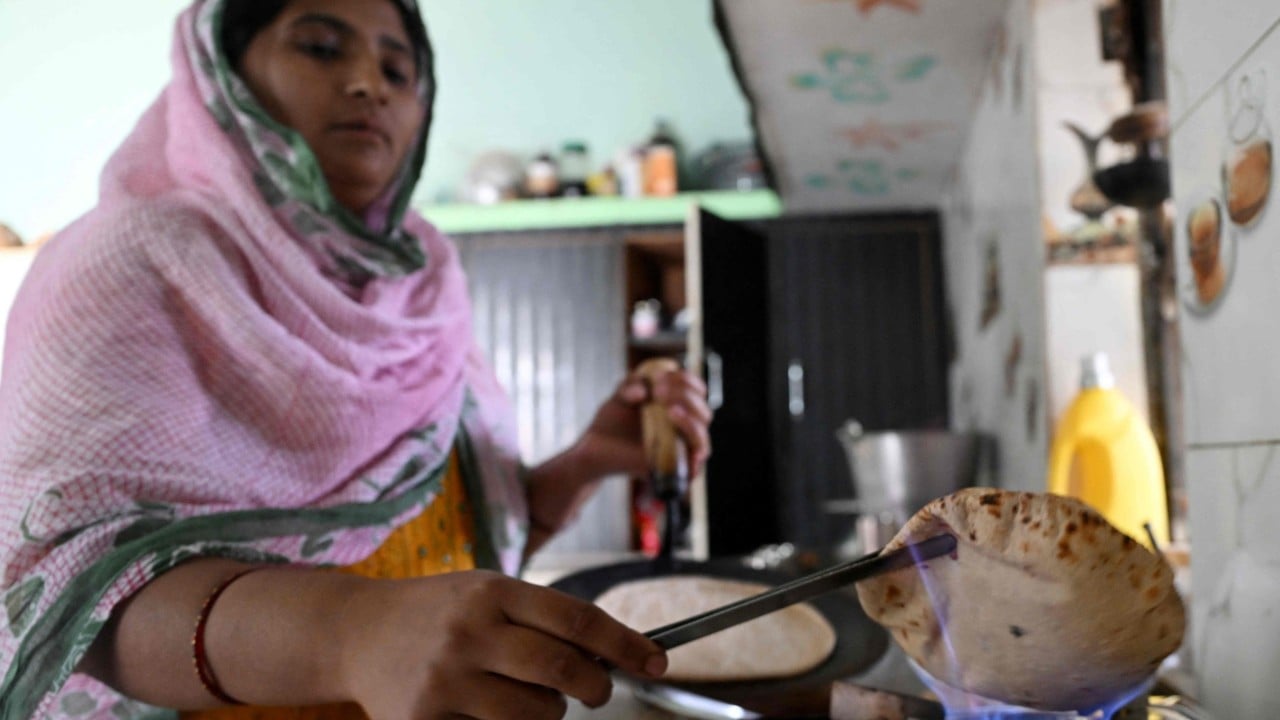
While urban denizens queue for exorbitantly priced cooking gas cylinders, grappling with the fiscal strain, Gauri Devi, a 25-year-old from Nekpur, hardly bats an eye. Her kitchen, remarkably free from the ubiquitous blue cylinders, hums with the soft hiss of biogas. She flips a chapatti, its aroma mingling with the faint earthy scent that doesn’t quite mask the source. It’s a prosaic scene, certainly, but one that belies a deeper narrative of resilience and ingenious, decentralized energy solutions.
At its core, this isn’t merely about subsistence; it’s a quiet revolution. India, a nation of staggering agricultural output and an equally staggering cattle population—estimated at over 300 million by the Livestock Census 2019—has a peculiar resource at its disposal. And it’s one that’s increasingly being harnessed to circumvent the whims of international energy markets. So, while pundits dissect crude oil futures and shipping lanes, entire villages are opting out of the fossil fuel calculus altogether.
But don’t mistake this for a wholesale rejection of modernity. It’s a pragmatic adaptation. The biogas digester in Gauri Devi’s courtyard — a modest affair, mind you — processes organic waste, primarily bovine, into methane. This methane then travels through pipes to a burner, providing a steady, clean flame. For families previously reliant on firewood (and its attendant health hazards from smoke inhalation) or increasingly scarce LPG, it’s a palpable upgrade. It’s cleaner, cheaper, and, crucially, homegrown. And it also happens to produce an excellent organic fertilizer as a byproduct. Waste not, want not, they say.
“We’re investing heavily in decentralized energy solutions,” asserted Dr. R.K. Singh, India’s Minister for Power — and New & Renewable Energy, speaking to Policy Wire from his Delhi office. “It’s not just about energy independence; it’s about empowering rural communities and creating a policy blueprint for strategic resilience. Every biogas plant installed is a step towards national energy security.” This sentiment echoes the Modi government’s broader push for ‘Atmanirbhar Bharat’ or ‘Self-Reliant India,’ a vision that extends far beyond manufacturing to the very fuels that cook the nation’s meals.
Still, the path isn’t entirely smooth. “While admirable in its intent, the scalability of such initiatives faces formidable hurdles,” cautioned Dr. Aisha Khan, a senior energy policy analyst at the Delhi Policy Group, during a recent virtual panel discussion. “Infrastructure, maintenance, and the sheer volume required to supplant conventional fuels — these aren’t trivial concerns. It requires sustained government support, local technical expertise, and a behavioral shift.” Indeed, the widespread adoption of biogas across India’s vast rural expanse demands more than just technology; it necessitates a concerted effort to overcome logistical and societal inertia.
The implications extend beyond India’s borders, too. Across South Asia and indeed much of the Muslim world, where agrarian economies are often the backbone and livestock a pervasive feature of rural life, similar energy vulnerabilities persist. From Pakistan to Bangladesh, the same energy crunch looms, — and the same raw materials are in ample supply. India’s burgeoning network of biogas plants could serve as a vital case study, offering invaluable lessons (and perhaps a few cautionary tales) for neighbors facing identical predicaments and an urgent need for fragile equilibrium in their energy mixes.
What This Means
This reliance on indigenous, seemingly antiquated fuel sources has profound political — and economic implications. Economically, it insulates millions from the brutal volatility of global energy markets, curbing inflation in essential household expenditures and freeing up precious foreign exchange otherwise spent on imported LPG. Politically, it strengthens Delhi’s hand on the global stage, making India less susceptible to external pressures tied to energy supply chains. it addresses critical environmental concerns, transforming what would otherwise be a potent source of methane (a greenhouse gas far more powerful than CO2) from raw dung into a usable, cleaner fuel. It’s a triple-win: economic stability, geopolitical leverage, — and ecological responsibility. The challenge now lies in scaling these localized successes into a national movement, bridging the gap between isolated ingenuity and systemic policy implementation. It won’t be easy; nothing consequential ever is. But it demonstrates that sometimes, the most profound solutions aren’t found in cutting-edge labs, but in the muddy fields where life itself thrives.
With an estimated 4.98 million operational biogas plants across India as of 2021-22, according to the Ministry of New and Renewable Energy, the humble dung is doing some heavy lifting. It’s an inconvenient truth for energy cartels, perhaps, but a liberating one for the families who finally don’t have to choose between cooking a meal and breathing clean air.