


Delhi’s Fielding Folly: How Two Dropped Catches Penned Punjab’s Record IPL Chase
POLICY WIRE — New Delhi, India — The image lingers, a tableau of utter despondency: Vipraj Nigam, head buried in hands, slumped on the hallowed turf of Arun Jaitley Stadium. It wasn’t the...

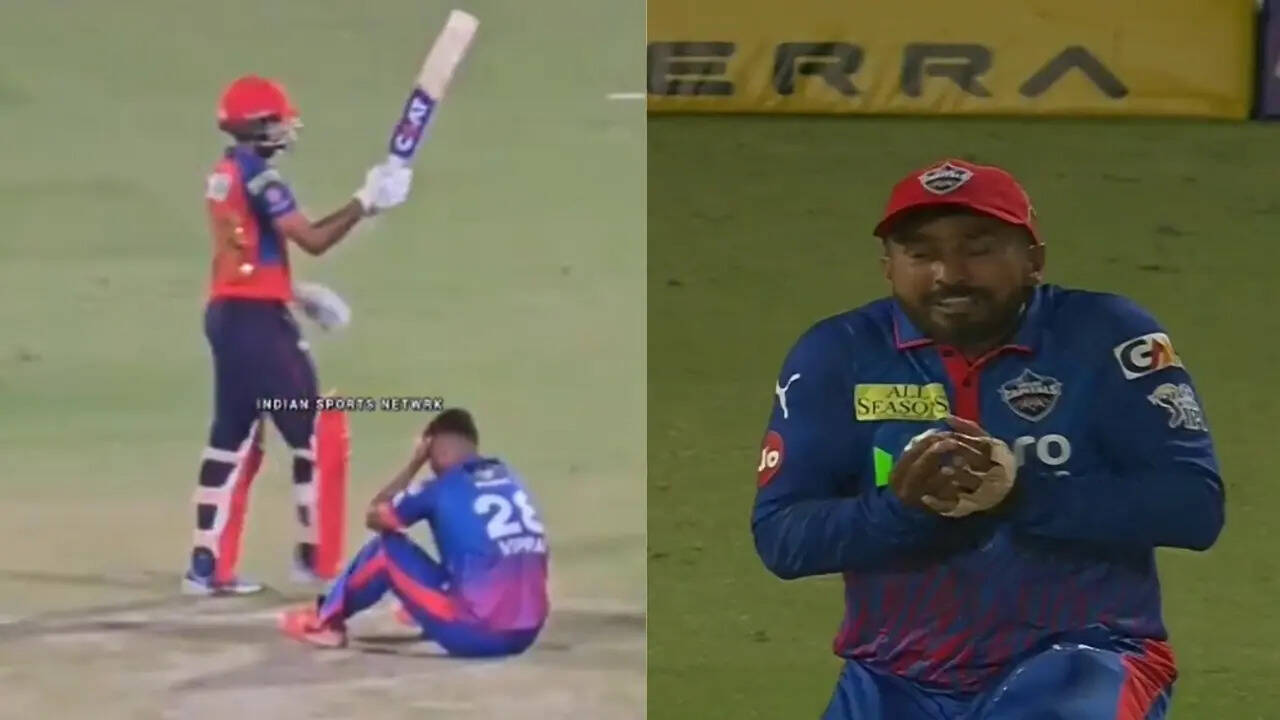
POLICY WIRE — New Delhi, India — The image lingers, a tableau of utter despondency: Vipraj Nigam, head buried in hands, slumped on the hallowed turf of Arun Jaitley Stadium. It wasn’t the searing Delhi heat or the cacophony of the crowd that brought him to his knees, but the sudden, brutal realization that fate—or perhaps, just human fallibility—had delivered a gut-punch so profound it threatened to derail an entire campaign. This wasn’t merely a dropped catch; it was a psychological tremor, reverberating through a team and, ultimately, deciding the course of Indian Premier League (IPL) history.
And what a seismic shift it was. Punjab Kings, in a display of audacious power-hitting, obliterated a seemingly unassailable target of 265 against Delhi Capitals. But the narrative isn’t just about runs scored; it’s about the phantom limbs of opportunity lost, the almost-moments that carve indelible scars into a sport’s psyche. At its core, the contest became a testament to the brutal calculus of errors in high-stakes T20 cricket, where every misstep is amplified into a catastrophe.
The architects of Delhi’s self-inflicted wound? None other than Karun Nair, who, in a span of just four balls, twice let Punjab skipper Shreyas Iyer off the hook. First, on the final delivery of the 15th over, Vipraj Nigam had coaxed a mistimed loft from Iyer, straight towards long-off. Nair moved, positioned himself adequately—it seemed a rudimentary take—yet the ball, as if imbued with a mischievous spirit, squirmed free from his grasp. Nigam’s immediate, almost theatrical collapse to the ground wasn’t just disappointment; it was a physical manifestation of an impending doom he perhaps already sensed.
Still, the universe, or at least the cricketing gods, offered a second, equally egregious chance. Just four deliveries later, Kuldeep Yadav unfurled a cunning wrong’un. Iyer, attempting a pull, top-edged it skyward. Once more, Nair found himself under the plummeting cherry at long-on. Again, the ball found his hands. And again, it betrayed him, slipping away like a fleeting dream. It’s the kind of double blunder that doesn’t just cost runs; it surgically removes the heart from a fielding side. Analysts, peering into the cold data, often contend that a dropped catch of a key batsman in a T20 chase increases the opposition’s win probability by an average of 18% (source: Opta Sports data, 2023 season analysis). Delhi, on this fateful evening, doubled down on that perilous gamble.
Iyer, granted these twin reprieves, didn’t merely capitalize; he unleashed a torrent of aggression, dispatching the Delhi attack for 71 runs off a mere 36 balls. It was a knock forged in the crucible of second chances, anchoring Punjab’s chase with seven balls to spare. Before Iyer’s heroics, the tone had been set by Punjab’s openers, Prabhsimran Singh (a blistering 76 off 26 balls) and Priyansh Arya (43 off 17), who constructed an astonishing 126-run opening stand in a blink-and-you’ll-miss-it 6.5 overs. They’d even notched the season’s highest power-play score at 105/0, a feat that would normally flatten any chasing side’s resolve. But Delhi’s fielding woes provided the unexpected oxygen.
A Delhi Capitals team official, speaking off the record amidst the post-match wreckage, simply lamented, “It’s gut-wrenching. You can plan all you want, you can execute brilliantly for ninety percent of the game, but sometimes, the critical moments… the game just slips through your fingers. We’ll debrief, certainly, but it’s a tough, tough pill to swallow.” His voice, usually robust, was barely a whisper. Contrast that with a jubilant Punjab Kings spokesperson who mused, “Fortune truly favors the bold, and perhaps, the lucky. Shreyas played an extraordinary knock, but we certainly acknowledge the reprieves. That’s cricket, isn’t it? Every ball is an opportunity, — and sometimes, the opportunities come wrapped in a bow for you.”
And that’s the brutal beauty of the sport, isn’t it? One team’s despair becomes another’s legendary triumph. The IPL, a glittering spectacle of cricketing prowess and unfathomable riches, thrives on these knife-edge encounters—moments where individual human error can eclipse even the most meticulously crafted strategies. It’s a drama that plays out not just in India, but across the entire South Asian subcontinent, captivating millions from Karachi to Dhaka, a shared cultural touchstone that transcends national borders, despite the geopolitical complexities that often fragment the region’s broader narratives.
What This Means
This match wasn’t merely a statistical anomaly in the IPL record books; it was a stark reminder of the fragile psychology that underpins elite sport. For Delhi Capitals, the psychological scars of such a capitulation could linger, potentially impacting subsequent performances as players second-guess themselves under pressure. For Karun Nair, specifically, these dropped chances represent a personal crucible, an intense public failure under the relentless glare of millions of eyeballs. The economic implications, too, are noteworthy. IPL franchises represent significant investments, with brand value and future sponsorship deals often tied to on-field success. A loss like this, particularly one perceived as self-inflicted, can erode fan confidence and, by extension, commercial appeal.
Conversely, for Punjab Kings, this victory, buoyed by the unexpected generosity of their opponents, instills a formidable belief in their capacity to overcome any obstacle. It cements the ‘never-say-die’ ethos that every successful sporting outfit craves. More broadly, such matches—fraught with human drama and unexpected twists—are precisely what feed the insatiable appetite for cricket across South Asia and the Muslim world. The narrative of an underdog snatching victory from the jaws of defeat, often aided by an opponent’s missteps, resonates deeply within a culture that prizes resilience and the dramatic arc of struggle and triumph. It’s not just a game; it’s a saga, etched in the collective memory of a billion fans, endlessly replayed and debated, fueling the sport’s colossal economic engine and cultural ubiquity.