

Wemby’s Wild Ride: NBA Finals Folly or Calculated Confidence?
POLICY WIRE — San Antonio, USA — It turns out, even saviors sometimes misplace their halos. Victor Wembanyama, the long-limbed marvel anointed by many as basketball’s next era, stumbled out of...

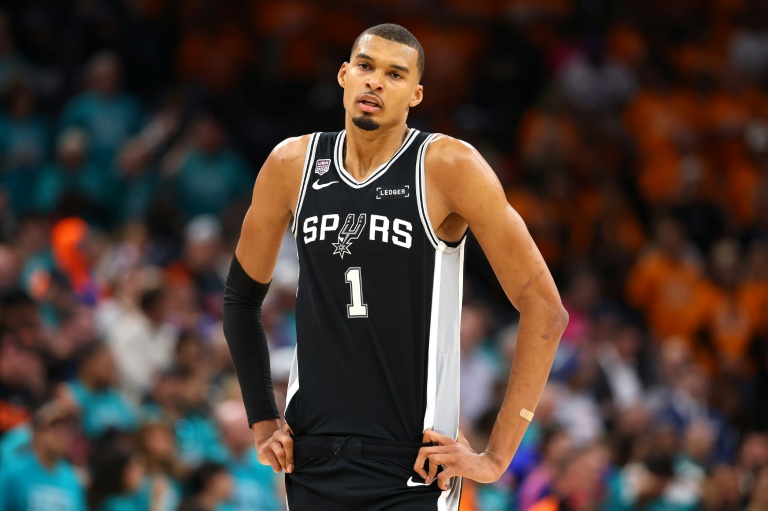
POLICY WIRE — San Antonio, USA — It turns out, even saviors sometimes misplace their halos. Victor Wembanyama, the long-limbed marvel anointed by many as basketball’s next era, stumbled out of the gate in the NBA Finals. He wasn’t flailing or panicking, mind you, just uncharacteristically off his game as his San Antonio Spurs frittered away a hefty lead to the New York Knicks in Wednesday’s series opener. It’s a moment ripe with familiar lessons for anyone observing the grander theater of world events, where towering expectations so often precede the inconvenient realities of competition.
The scene itself was a study in contrasts. The electric buzz of the finals — an event with an economic footprint that ripples far beyond the arena — quickly curdled for Spurs faithful. Wembanyama, their supposed statistical certainty, led all San Antonio scorers with 26 points, yes. But, that’s just it, he shot poorly. Really poorly. This after a season where his presence alone reportedly spiked Spurs game attendance by some 30% compared to the previous year, demonstrating the raw financial power of an emergent athletic icon. But the numbers didn’t matter when Jalen Brunson of the Knicks started hitting everything in sight, effectively stealing Wembanyama’s spotlight and the game. And just like that, the coronation was postponed. [QUOTE_PLACEHOLDER]
It wasn’t a good look for the lanky Frenchman, still just 22 years old, carrying the hopes of an entire franchise—some would argue, an entire league. Yet, post-game, he was cooler than a refrigerated cucumber. You’d think he’d be gnashing his teeth, tearing out invisible tufts of hair over a poor performance on the grandest stage. But he didn’t. When probed about what aspects of his performance he was kicking himself over, he deadpanned, ‘Nothing’. A shrug. A non-answer that’s an answer. It almost feels like a seasoned diplomat deflecting questions about a stalled peace treaty, rather than a young man who just blew game one of the NBA finals.
Because Wembanyama was calm. Seriously. ‘We’ve been down in a series before. Never in the Finals, obviously. But I’m not kicking myself about anything really. I mean, I’m not worried the slightest.’ This from a guy who’s never seen this stage before. He’s talking about it as if he’s a grizzled veteran, a general having lost a skirmish but with the grand campaign still very much in play. He fully expects a rebound performance. He’s already decided, ‘I’m going to figure it out’. A statement so straightforward it almost sounds audacious, especially after getting outplayed.
You can’t fault the kid’s belief in himself, though. Or, maybe you can. Perhaps there’s a sliver of unearned bravado here. He chalked up his struggles to a simple off-night, stating, ‘I mean, I was bad tonight. It’s not more complicated than that.’ Forget the bright lights, the pressure, the sheer enormity of playing for the O’Brien trophy. He says the occasion didn’t faze him: ‘I mean, it definitely felt special, for sure. But nothing close that could be an excuse, you know. It was not a factor in our performance.’
📄 POLICY WIRE WHITEPAPER PUBLISHED: PAKISTAN'S NATIONAL SECURITY POLICY PRIORITIES
👉 READ BY CLICKING HEREBut when a burgeoning star—someone whose national origin, France, leads all countries outside the U.S. with 14 players on opening-night rosters in the 2023-2024 NBA season (source: Basketball Reference), cementing basketball’s status as a truly global sport—struggles, the ripple effects can be surprisingly widespread. From Paris to Peshawar, fans often invest their own aspirations in these athletes, whether consciously or not. Think of the enormous pressure on a top cricketer in Pakistan after a big loss; the national mood can actually shift. It’s less about the actual sport and more about the embodiment of collective pride and expectation, which a high-profile loss can deflate. For Wembanyama, this defeat is a very public test of whether he’s merely hyped or truly resilient. His subsequent pronouncements only crank up the anticipation for Game Two.
He’s promised improvement, suggesting it won’t even take extraordinary effort, just a return to baseline competence. ‘It’s almost not like I have anything to figure out. It’s almost like I have to play normal, not even good,’ he maintained. ‘It’s just like doing the right things is enough. When we play bad, when I play bad, is when we shoot ourselves in the foot. This is why I’m not worried. We’re going to be so much better. I’m going to be so much better.’ It’s a conviction that borders on hubris, yet delivers the perfect soundbite. And that’s the rub, isn’t it?
What This Means
Politically, this kind of high-profile sporting setback, and the athlete’s public response, offers a peculiar parallel to leaders navigating unexpected policy failures. Just as Wembanyama deflects blame from the ‘occasion’ itself, so too do politicians often minimize the systemic issues behind a public relations blunder, opting instead for a narrative of ‘individual underperformance’ or ‘temporary difficulty’. It’s an exercise in crisis management, projecting unflappable confidence while working behind the scenes to regain lost ground. For the San Antonio organization, their economic gamble on this transcendent talent hinges entirely on his ability to bounce back—to not only play better, but to lead the narrative back to his inevitable brilliance. Any prolonged slump, especially in the Finals, wouldn’t just ding their on-court record; it’d be a punch to the gut for ticket sales, merchandise, and the crucial global brand recognition they’ve poured millions into cultivating. They need him to deliver, or the financial returns on the ‘alien’ investment will certainly seem very terrestrial, very quickly.