
Brenner Bottleneck: Alpine Fury Brews as Vital Artery Braces for Closure
POLICY WIRE — Innsbruck, Austria — The calm before the storm, they say, is always the most unsettling. Today, traffic — big rigs and family haulers alike — snakes predictably through the ancient...

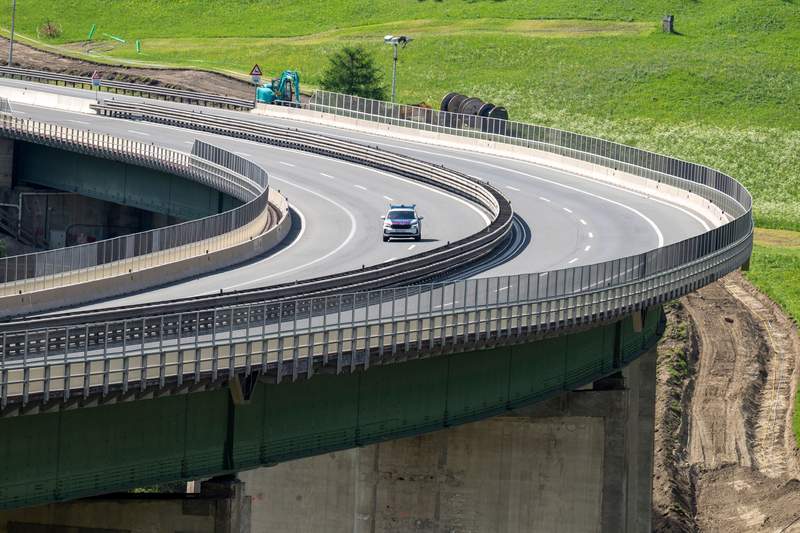
POLICY WIRE — Innsbruck, Austria — The calm before the storm, they say, is always the most unsettling. Today, traffic — big rigs and family haulers alike — snakes predictably through the ancient Brenner Pass, high in the Alps. It’s business as usual, a prosaic rumble of commerce — and tourism. But beneath that veneer of normalcy, an agitated anticipation builds. Because soon, perhaps as early as next week, this quiet flow is set to be deliberately, defiantly throttled by demonstrations.
It’s not just a traffic jam. Not here. This isn’t your average rush hour kerfuffle. The Brenner, that famed and fraught passage between Austria and Italy, isn’t merely a road; it’s an economic aorta pumping goods and people across the continent. When it seizes up, Europe feels it. And now, the arteries are scheduled for constriction.
The impending closures are tied to a growing, festering local discontent, often cloaked in environmental rhetoric but underscored by deeply political fault lines concerning sovereignty, overtourism, and the relentless churn of heavy goods vehicles. Locals in Tyrol, both Austrian — and Italian, have simply had enough. Their stunning mountain valleys, they contend, have become little more than exhaust-choked transit corridors. You can’t fault them for feeling a bit used, can you? It’s a classic battle: pristine nature versus raw commerce. And it’s one that seems destined for a head-on collision.
Austrian Interior Minister Gerhard Karner didn’t mince words, even while offering the usual bureaucratic assurances. “Our priority is maintaining public order and ensuring the safety of all citizens,” he told Policy Wire, his tone suggesting a patience worn thin. “However, the right to protest, within legal boundaries, remains fundamental. We’re preparing for all eventualities, but let’s be clear: deliberate obstruction of such a critical international transit route carries significant consequences.” His message was stark: respect the law, or face the music.
But the consequences stretch far beyond local inconveniences or even law enforcement challenges. Because when goods don’t move, economies hiccup. Italy’s export-driven manufacturing sector, for example, relies heavily on this very pass. And the impact ripples out. A report from the International Road Transport Union (IRU) stated in 2023 that approximately 140 million tonnes of goods, valued at well over a trillion euros, annually traverse the Alps, with the Brenner Pass handling a significant chunk of that volume. Think about that for a second. It’s an immense sum, riding on the whims of weather and, increasingly, public protest.
“We’re talking about potentially billions of euros in lost revenue and disrupted supply chains,” fumed Paolo Bianchi, head of a major Italian logistics firm, his voice crackling with exasperation. “These aren’t just local squabbles; they’re attacks on the foundations of the European single market. Every day the pass is closed, perishable goods rot, factories idle, — and consumers pay more. It’s simple economics, but apparently, some prefer chaos.” His company, he noted, has already begun rerouting trucks, incurring extra fuel and wage costs. It’s a bitter pill to swallow.
And because the world is a decidedly small place, even this alpine drama casts a long shadow. Consider Pakistan, for instance, a nation increasingly integrated into global supply chains. Manufacturers there, supplying textile and leather goods to European markets, depend on the smooth, predictable flow of transit across the continent. Delays at the Brenner, multiplied across Europe’s fragmented transport network, contribute to higher shipping costs, longer lead times, and eroded competitiveness. This isn’t abstract; it’s dollars — and cents on a Karachi balance sheet, impacting livelihoods. The cumulative effect of these localized European blockades can become a measurable drag on developing economies striving for global access. It really does come back to the basics: when one cog stops, the whole machine eventually slows. This Alpine discontent, therefore, isn’t just local news; it’s a tiny fracture in the global economic architecture.
What This Means
This imminent shutdown isn’t merely about grumpy locals versus the open road. It’s a flashing neon sign for deeper issues plaguing Europe: the tension between national (or even regional) sovereignty and the ideals of a borderless single market. Protests like these, fueled by genuine local grievances — noise, pollution, infrastructure strain — are also frequently co-opted by broader anti-EU, anti-globalization, and occasionally xenophobic movements. They reflect a popular weariness with being merely a transit hub, an economic corridor for distant cities, without much agency in the decision-making processes. Politically, this forces central governments to walk a tightrope, balancing the perceived rights of their citizens to protest against their treaty obligations and economic interdependencies within the EU. Economically, even short-term disruptions inflict pain across the value chain, driving up costs for consumers and diminishing the competitive edge of European goods. But more than that, these incidents highlight how vulnerable complex modern logistics are to grassroots anger, offering a stark reminder that efficiency often comes at a local price, and locals have a way of demanding their due.