

The Price of Loyalty: Unpacking America’s Furred Contingent, One Shelter at a Time
POLICY WIRE — Albuquerque, N.M. — It’s a quietly persistent human dilemma, isn’t it? The sheer weight of affection, loyalty, and companionship we breed into existence, only for a significant...

POLICY WIRE — Albuquerque, N.M. — It’s a quietly persistent human dilemma, isn’t it? The sheer weight of affection, loyalty, and companionship we breed into existence, only for a significant portion to end up navigating fluorescent-lit cages, vying for the affection of strangers. In a world perpetually fixated on larger-than-life geopolitical skirmishes and the shifting sands of global markets, the more prosaic, yet undeniably profound, plight of domestic animals often fades into comfortable background noise.
And yet, here we’re, facing another installment of what’s quaintly titled, Love 4 Pets. But strip away the pastel branding and the inevitable coos, and what you’ve got is a weekly dispatch from the front lines of America’s animal welfare apparatus – a complex, underfunded ecosystem trying to manage a seemingly endless supply of would-be companions. [QUOTE_PLACEHOLDER]
Because while our national discourse grapples with everything from supply chain woes to nuclear proliferation, institutions like the Humane Society of Lincoln County and Bernalillo County Animal Care remain steadfastly dedicated to mediating these smaller, softer, infinitely more personal transactions. They’re effectively brokers in the unwritten social contract between humanity and its domesticated dependents, tirelessly trying to match excess with yearning.
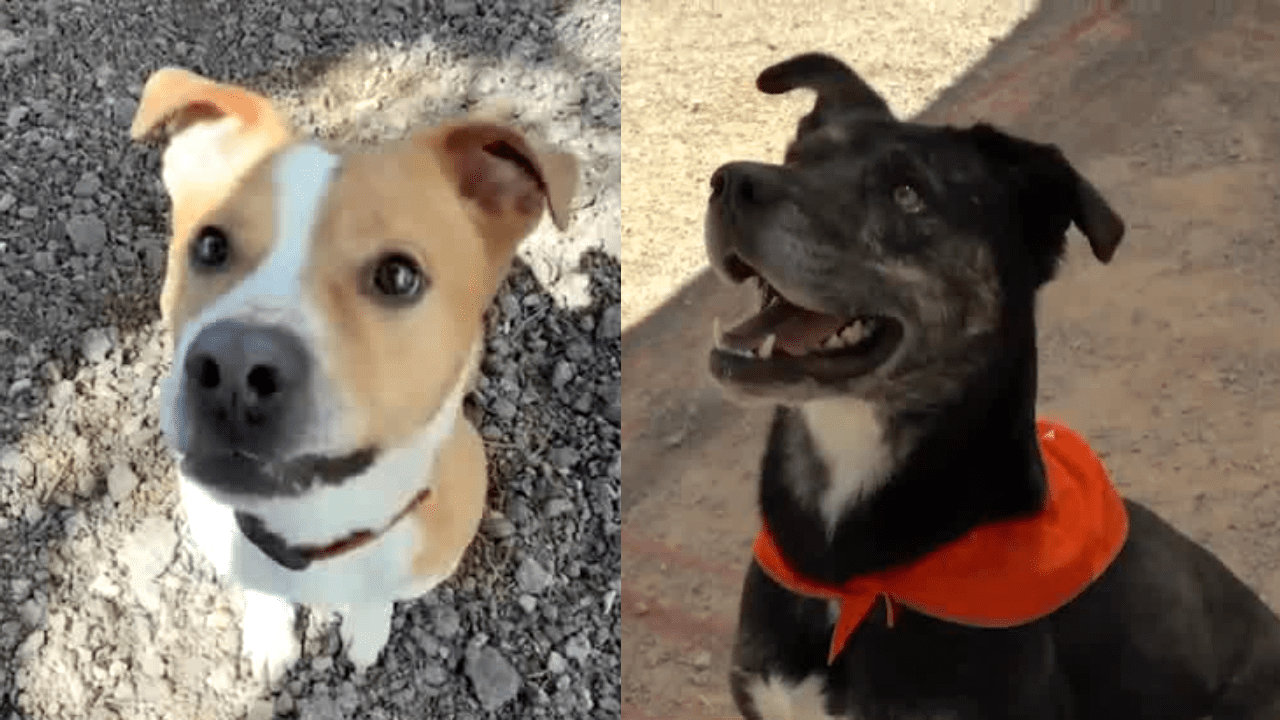
This week’s offerings, presented by KOB.com, feature a ‘cutie from the Humane Society of Lincoln County’ named Sundance Kid, and a ‘well-mannered sweetheart in Bernalillo County,’ Cerberus. They’re ‘up for adoption,’ we’re told, which is journalistic code for: someone decided they couldn’t keep them, and now society’s picking up the tab – emotional, infrastructural, and financial. The optics, naturally, are one-dimensional: irresistible faces, compelling backstories, a call to altruism. But the mechanics? They speak volumes about broader societal trends, doesn’t it?
Sundance Kid, for instance, is a ‘4-year-old boxer lab mix.’ He’s a canine commodity with specific preferences, apparently, given that he ‘prefers female dogs but is great with kids and cats.’ And yes, bless his heart, he’s ‘potty-trained and kennel trained,’ a sort of pre-packaged convenience for the discerning adopter. He’s said to be excited for the county Humane Society’s Fur Ball this Friday, June 5. One can’t help but wonder if the four-year-old boxer lab mix truly grasps the fundraising implications of a gala event. Probably not. More likely he’s just hopeful for extra treats, perhaps a momentary reprieve from the structured limbo of institutional living.
Then there’s Cerberus. He’s currently residing at the Bernalillo County Animal Care Center on 2nd Street, where he’s been waiting ‘more than 100 days for his forever home.’ One hundred days. Think about that for a second. For a ‘curious boy who loves to explore’ but is also a ‘cuddle companion,’ that’s a considerable chunk of his relatively short life spent in limbo. It’s a sobering statistic when one considers the larger context. The American Society for the Prevention of Cruelty to Animals (ASPCA) reports that annually, approximately 6.3 million companion animals enter U.S. animal shelters nationwide. That’s a significant figure, pointing to systemic challenges that cute photos, while well-intentioned, can only begin to address.
Indeed, such scenarios aren’t confined to the Land of Enchantment. Take a glance across the global landscape, particularly in regions where economic stability is a luxury and public welfare systems are perpetually stretched thin. In a country like Pakistan, for instance, the sheer volume of stray and abandoned animals, especially dogs and cats, represents a significant public health challenge alongside the humanitarian concerns. Animal welfare organizations there, often operating with minimal resources and facing complex societal attitudes, contend with issues like rabies outbreaks, mass culls, and cultural skepticism towards formal adoption processes, which often contrast starkly with the more structured, resource-rich shelter systems seen in North America. Their challenge is far less about finding a ‘sweet partner with a loyal heart’ and more about disease control and basic survival – for both animals and often, for the people managing them. It’s a vivid illustration of how economic strain compounds the issue of animal populations. The human struggle for resources inevitably cascades down the food chain.
But back to Albuquerque. Here, the challenge is subtler, wrapped in velvet-glove language: an invitation to ‘meet your perfect match in Lincoln County today.’ It’s a marketing slogan for what’s, ultimately, a significant commitment, an absorption of a life previously deemed expendable by someone else. And we do see the efforts being made, like inviting folks to ‘submit your pet photos online for them to be featured on-air on our morning show and on our website’ via ‘the link here’. This digital outreach, ostensibly for community engagement, is another facet of the persistent, evolving campaign to humanize a deeply institutional problem.
What This Means
This persistent cycle of animal abandonment and subsequent public welfare intervention isn’t merely a localized, feel-good story; it reflects deeper socioeconomic currents. The need for shelters to constantly appeal to the public for adoptions, often highlighting ‘trained’ or ‘well-mannered’ pets, speaks to a societal expectation of low-maintenance companionship – a consumerist approach even to living beings. But it also subtly shifts the burden of animal population control and welfare from individual responsibility onto taxpayer-funded and charity-driven institutions. The significant number of animals entering shelters annually suggests a systemic disconnect in pet ownership, likely exacerbated by economic pressures (people can’t afford to keep pets) or a lack of public education regarding animal care and spay/neuter programs.
And then there’s the subtle policy implication. The absence of federal mandates for animal shelter standards or a cohesive national strategy means a patchwork of local efforts, often leaving smaller counties—like Lincoln, for instance—to shoulder burdens disproportionately. Comparing this to the situation in developing nations, where resource scarcity makes comprehensive animal welfare programs an even more distant dream, paints a global picture of how society values and manages its non-human inhabitants. It highlights how robust public services, even for animals, are often a barometer of a nation’s broader economic health and its policy priorities. After all, a society’s compassion for its most vulnerable, whether human or animal, often points to its broader ethical framework and the efficiency of its social safety nets. This whole dynamic reminds us, doesn’t it, that every societal challenge, even one as seemingly innocuous as a surplus of cute canines, contains threads connecting back to macro policy decisions. Or, often, a stark lack thereof. For similar global challenges, one might observe Everest’s Grim Toll: Sherpa’s Near-Fatal Ordeal Unmasks Mountain’s Harsh Economy, where individual hardship also reflects broader economic structures, or consider the philosophical complexities discussed in Silent Protocol: Dalai Lama’s Delhi Medical Visit Ripples Through Asian Diplomacy which touches upon geopolitical and cultural sensitivities affecting perceived social ‘burdens.’ In the end, what we allow to remain unseen or unfunded, whether for a ‘cuddle companion’ or a distant political reality, becomes an inconvenient truth, a persistent reminder of unresolved issues lurking beneath the surface of everyday life.