


Colombia’s Bloated Legacy: Escobar’s Hippos Stoke a Bizarre Policy War
POLICY WIRE — Bogotá, Colombia — It wasn’t the cocaine, the assassinations, or the destabilization of an entire nation that truly stuck to Colombia’s ecological landscape. No, it was the...

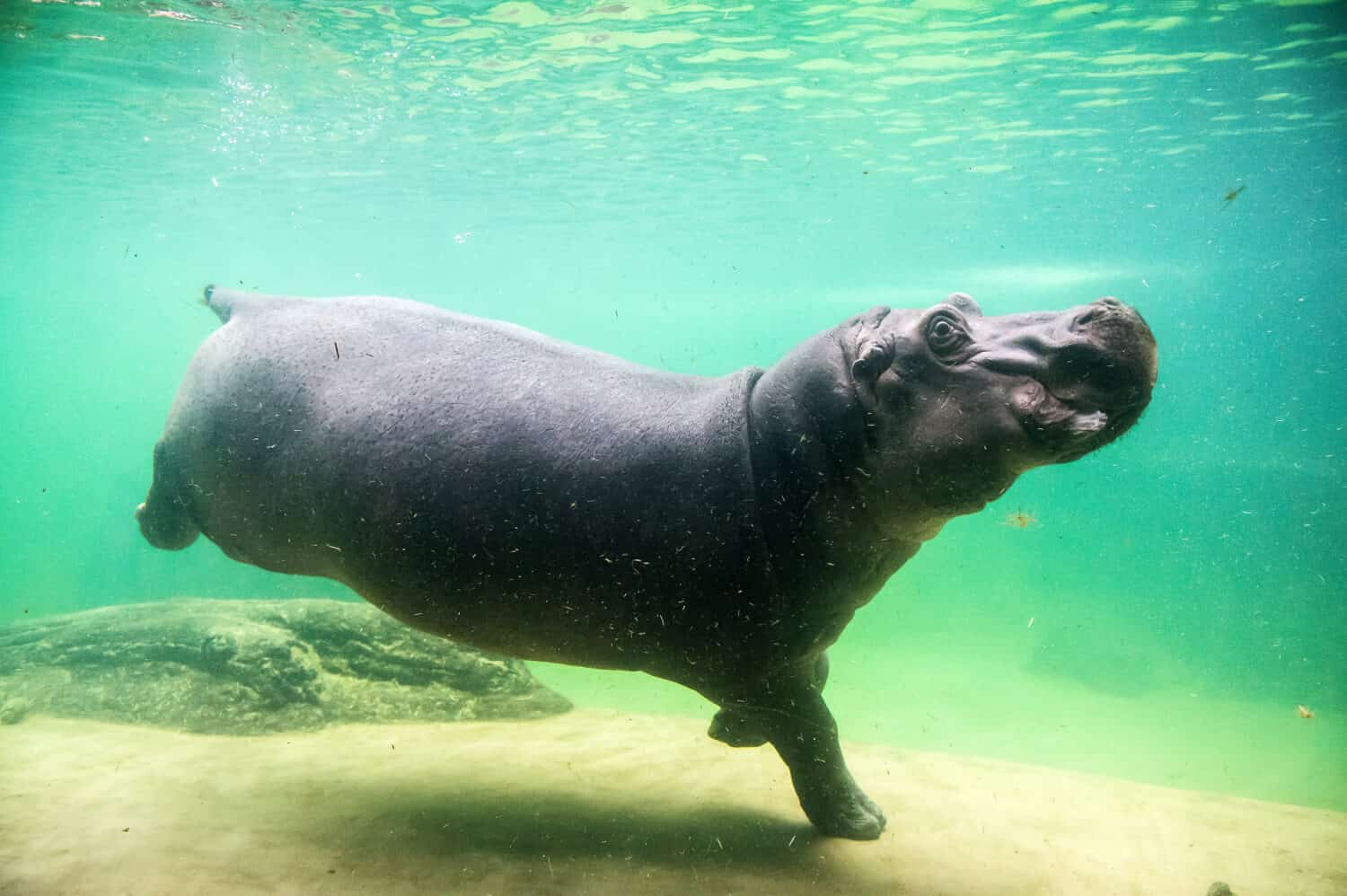
POLICY WIRE — Bogotá, Colombia — It wasn’t the cocaine, the assassinations, or the destabilization of an entire nation that truly stuck to Colombia’s ecological landscape. No, it was the hippopotami. Pablo Escobar’s bizarre menagerie, imported with reckless impunity in the 1980s, has metastasized into an unwieldy, aggressively fertile problem—a living, breathing, and undeniably hungry symbol of a narco-state’s lingering, aquatic hangover.
For decades, these African behemoths, descendants of a quartet Escobar smuggled into his Hacienda Nápoles estate, were a curious footnote. Now, they’ve proliferated, their numbers swelling to an estimated 160 animals, according to a 2022 study published in Nature. And they’re not just charmingly out of place; they’re an ecological menace, a public safety hazard, and a political hot potato that has pitted environmentalists against animal welfare advocates, all while Bogotá grapples with the decidedly un-glamorous task of managing a herd of invasive megafauna.
The core of the predicament is stark: what does a sovereign nation do with an unchecked population of highly territorial, 3,000-pound herbivores that, by all accounts, are thriving in the Magdalena River basin? They’re altering aquatic ecosystems, displacing native wildlife, and—crucially—posing an increasing threat to local communities. It’s a textbook case of an introduced species gone rogue, only this one arrived via private jet, courtesy of one of history’s most infamous drug lords. You couldn’t write it.
Colombian officials, for their part, have tried almost everything. Sterilization campaigns proved costly and arduous; trapping a hippo, then performing surgery in the field, isn’t exactly a walk in the park (or a wade in the river). Relocation, too, presents a logistical nightmare — and a moral quandary. So, last year, the government reluctantly declared them an invasive species, opening the door for euthanasia. This, understandably, didn’t sit well with everyone.
“We’re not talking about a few mischievous rabbits here; these are massive animals profoundly impacting our biodiversity,” shot back Susana Muhamad, Colombia’s Minister of Environment and Sustainable Development, addressing the controversy during a recent press conference. “The scientific consensus is clear: without decisive action, their numbers will continue to explode, and the ecological cost will be catastrophic. We simply don’t have the luxury of endless debate when our unique ecosystems are at stake.”
But many animal rights groups view culling as inhumane, pushing for non-lethal solutions even as the clock ticks. And, it’s not just about ethical considerations; the mere optics of a government systematically eliminating a charismatic species—even one linked to a narco-terrorist—is politically fraught. Still, the reality on the ground, particularly for fishing communities and farmers along the river, is increasingly dire. They’ve watched their livelihoods affected — and faced perilous encounters with the animals. They’ve seen the collateral damage.
So, the government recently announced plans to sterilize 20 more hippos and, controversially, export 70 to India and Mexico. It’s a measure that reflects the international scale of the problem and the desperate search for solutions beyond Colombia’s borders. And, it underscores a peculiar irony: the global drug trade brought them in, and now global collaboration is needed to push them out.
This peculiar Colombian predicament isn’t entirely unique. Many nations across the globe grapple with the ecological and policy ramifications of introduced species, whether deliberately or accidentally. For instance, countries in South Asia and the Muslim world frequently contend with balancing conservation efforts against rapid economic development and resource scarcity—challenges that often necessitate difficult policy choices, much like Colombia’s hippo dilemma. The complexities of environmental policy, particularly when cultural or economic factors intersect, are universally felt. As one local mayor from Puerto Triunfo, an area heavily impacted by the hippos, put it, “They’re not just Escobar’s hippos anymore; they’re *our* hippos, and they’ve become a mirror for all the difficult decisions we avoid as a society.”
What This Means
At its core, Colombia’s “cocaine hippo” saga isn’t just an oddity; it’s a consequential policy crucible. The political implications are manifold, forcing the Colombian government to navigate a minefield of public sentiment, scientific advice, and international scrutiny. The declaration of the hippos as an invasive species was a politically courageous move, acknowledging a problem that many would prefer to ignore. It necessitates a significant allocation of state resources—financial, human, and diplomatic—to manage a problem that originated outside conventional policy frameworks. Economically, the hippos impose both direct costs, such as funding sterilization programs and potential euthanasia, and indirect costs, through ecological damage to fisheries, agriculture, and tourism. the international relocation effort highlights a burgeoning global market for exotic animals and the regulatory vacuums that enable such trade, presenting broader questions about wildlife trafficking and species management on a transnational scale. It’s a potent, if bizarre, lesson in the enduring and unpredictable consequences of unregulated acts, proving that even a dead drug lord’s pets can become a potent symbol of ongoing national struggle and policy gridlock.