


Cloistered Conservation: Spanish Nuns’ Quixotic Quest to Save a Giant Rabbit
POLICY WIRE — Toledo, Spain — In an era of grand, geopolitically charged environmental initiatives and multi-billion-dollar climate pledges, some of the most consequential battles for planetary...

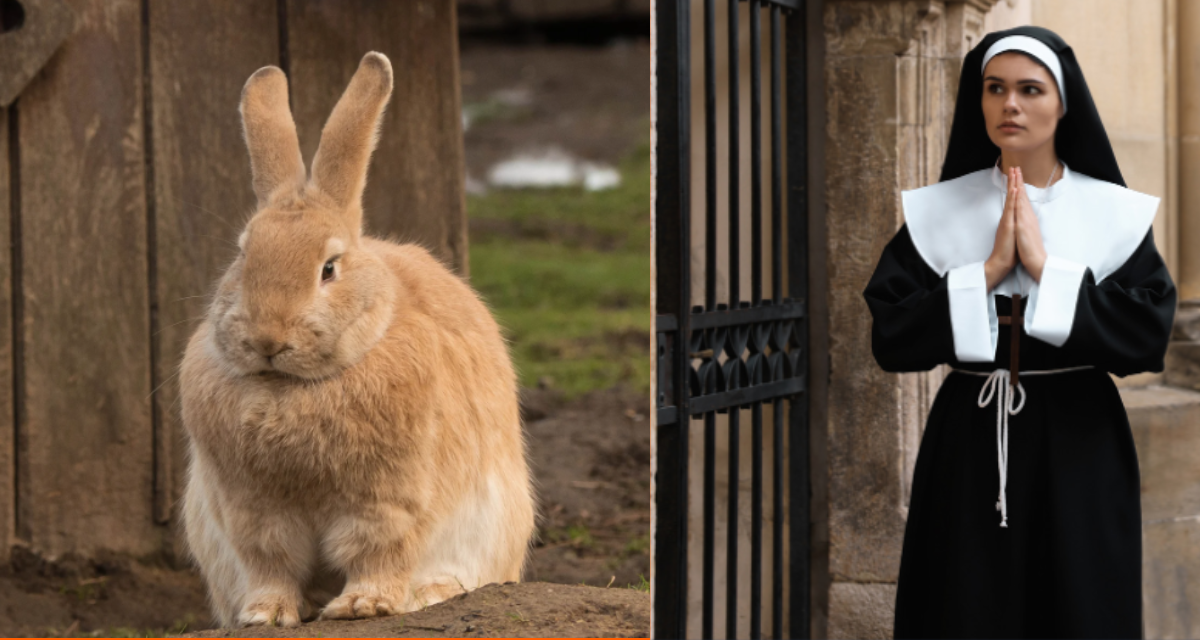
POLICY WIRE — Toledo, Spain — In an era of grand, geopolitically charged environmental initiatives and multi-billion-dollar climate pledges, some of the most consequential battles for planetary health unfold in decidedly less ostentatious settings. Case in point: a quiet monastery in Spain, where cloistered nuns have taken up arms—or rather, feed pellets and veterinary schedules—against the inexorable march of extinction, fighting to preserve a gargantuan rabbit breed largely forgotten by the outside world.
It’s a peculiar fight, this. Not against industrial polluters or deforestation, but against genetic erosion and a creeping indifference to biodiversity, waged by women whose lives are dedicated to contemplation. These sisters, far removed from the clamor of modern conservation movements, have become the unlikely custodians of the Spanish Giant rabbit, a magnificent, albeit somewhat cumbersome, lagomorph whose numbers have dwindled to perilous levels. Their convent, typically a haven for spiritual solace, now doubles as a vital gene bank, ensuring the lineage of these hefty, long-eared creatures endures. And that’s a commitment that transcends mere pet-keeping; it’s an act of profound ecological stewardship.
Behind the headlines of global warming and plastic oceans, the quiet disappearance of localized breeds—be it livestock, poultry, or even rabbits—represents a systemic unraveling of agricultural resilience. The Spanish Giant, originally prized for its size and meat, now finds itself a relic of an older agricultural economy, outcompeted by faster-growing, more commercially viable strains. But for the nuns, its value isn’t just economic; it’s historical, cultural, and, yes, even spiritual. “Our vows call us to be stewards of God’s creation, and that extends beyond the human soul,” Sister Ana María, Abbess of the Monastery of Santa Clara, told Policy Wire, her voice a calm counterpoint to the distant chatter of the rabbits. “These magnificent creatures, once so emblematic of our region, represent a living heritage. To lose them? Unthinkable.”
This localized, community-driven conservation model offers a striking contrast to the high-stakes, international efforts — sometimes involving affluent individuals — seen in other parts of the world, like the billionaire’s gambit to rehome Escobar’s hippos. Here, the motivation is not profit or public relations, but a deeply ingrained sense of duty. The sisters meticulously track breeding pairs, document lineages, and manage a small, devoted colony, proving that dedicated hands, not just deep pockets, can be the bulwark against loss.
And their efforts haven’t gone entirely unnoticed by Madrid’s policy wonks. “Spain’s rich biodiversity is a tapestry woven from countless threads, some as ancient as our monasteries,” shot back Teresa Ribera, Spain’s Minister for Ecological Transition, when queried about the government’s role in such niche endeavors. “The steadfast efforts of these sisters underscore a profound national commitment to preserving every unique strand – even those with long ears and twitching noses. It’s an indispensable part of our national heritage.” Indeed, the government has provided sporadic grants, acknowledging the profound, if unconventional, value of their work.
Still, the scale of the challenge remains immense. According to a 2022 FAO report, approximately 26% of the world’s livestock breeds are currently at risk of extinction — a stark figure that underscores the global erosion of agricultural genetic diversity. The Spanish Giant rabbit, with its distinctive heft — and docile temperament, is but one example of this broader crisis. And its precarious position highlights how much of our global biological endowment is held in the balance by scattered, often underfunded, local initiatives. You don’t often find a government agency specifically dedicated to the conservation of a rabbit variant, do you?
This isn’t merely a European phenomenon, of course. Across the Muslim world, from the remote valleys of Pakistan to the ancient farming communities of the Levant, similar battles are fought by local communities or religious endowments (Awqaf) to preserve indigenous animal breeds — think of specific goat or sheep lineages perfectly adapted to arid climes, or unique fowl strains tied to local culinary traditions. These efforts, too, often fall outside the purview of large-scale international aid, relying instead on a generational commitment to the land and its creatures. It’s a shared human impulse, it seems, to protect what’s uniquely yours, even if it’s a giant rabbit.
What This Means
The quiet persistence of these Spanish nuns in safeguarding the Spanish Giant rabbit holds significant implications, extending far beyond the monastery walls. Politically, it spotlights the often-overlooked role of non-governmental, particularly faith-based, organizations in filling critical gaps in national biodiversity strategies. When government resources are stretched, and electoral cycles prioritize immediate returns, the long-term, patient work of preservation frequently falls to groups driven by ethos rather than policy mandates. Economically, the loss of such breeds represents an irreversible diminishment of genetic resilience. These older breeds often possess unique traits — disease resistance, adaptability to specific climates, or unique metabolic efficiencies — that could prove invaluable as climate change intensifies and global food systems face unprecedented pressures. Their disappearance doesn’t just erase a lineage; it narrows the future genetic toolkit available to address agricultural crises. It’s a subtle, almost invisible erosion of national wealth. Culturally, it’s a testament to the enduring power of local identity and tradition, demonstrating that heritage isn’t just about ancient buildings or folklore, but living, breathing components of an ecosystem that shapes a people’s history and their very connection to the land. So, yes, while it’s about giant rabbits, it’s also about much, much more.