


Chromed Remnants of a Vanished Era: A ’58 Facel Vega Echoes Shifting Global Wealth
POLICY WIRE — London, UK — Some things just aren’t built like they used to be. A particular piece of French engineering, a hulking 1958 Facel Vega FV3B Coupe, isn’t merely changing hands at auction;...

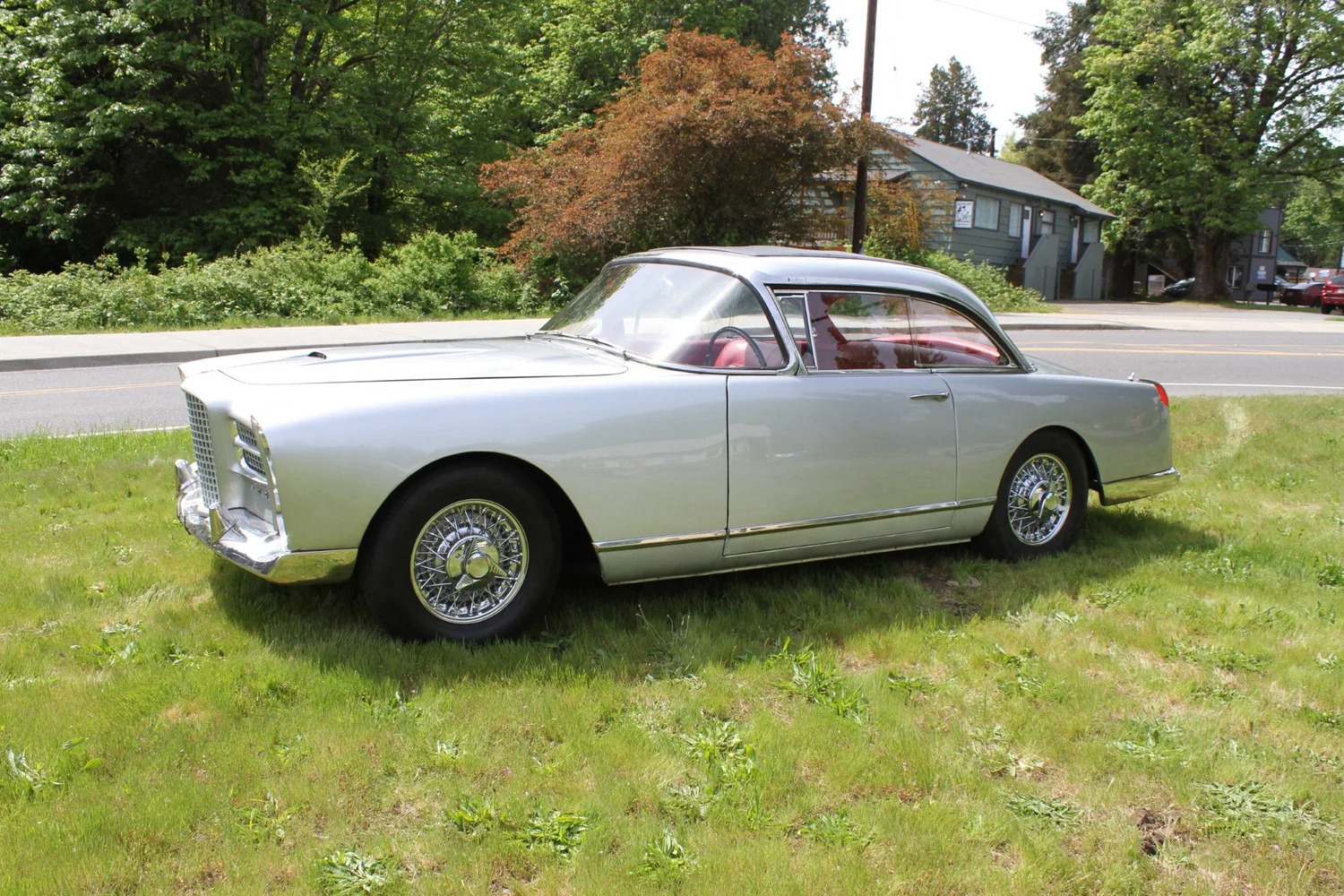
POLICY WIRE — London, UK — Some things just aren’t built like they used to be. A particular piece of French engineering, a hulking 1958 Facel Vega FV3B Coupe, isn’t merely changing hands at auction; it’s rolling history, a steel-and-leather pronouncement from a world far less complicated—or at least, far less digitally distracting—than our own. This isn’t about just buying a car; it’s about acquiring a memory, a status symbol, or maybe, just maybe, an inflation hedge for the exceedingly well-heeled. And when the hammer drops at Lucky Collector Car Auctions, it’ll make more than just a price, it’ll make a statement.
It’s easy to dismiss these vehicular anachronisms as frivolous toys for the super-rich, a shiny, petrol-guzzling middle finger to climate pledges. But that’s too simplistic. These machines are a measure of something deeper: how the truly affluent allocate their capital in an age of uncertainty. We’re talking about an artifact, not a commuter appliance. This Facel Vega, with its Chrysler Hemi power—yes, a French body wrapping American muscle—epitomizes a brand that only existed for about a decade and built just over 2,900 cars. Rarity, as we know, amplifies desire. It always does.
“The allure of these ‘barn finds’ or impeccably restored icons intensifies when global markets wobble,” remarked Dr. Lena Petrov, a senior economic analyst at the Geneva Institute for Wealth Studies. “They’re tangible assets, less susceptible to sudden algorithm shifts than your latest tech stock. Plus, they carry that undeniable cool factor. It’s a very specific kind of old money flexing, or sometimes, new money trying to acquire a veneer of heritage, quickly.” But it’s a gamble, isn’t it? Prices can surge, or they can stall, depending on a thousand economic currents only visible in hindsight.
This particular FV3B, chassis number FV3B 101, isn’t just rare; it’s an exemplar of luxury touring, a testament to craftsmanship when dashboards weren’t dominated by touchscreens. You can almost smell the old leather, the hint of gasoline, imagine it purring down the Côte d’Azur—a stark contrast to the buzzing chaos of modern thoroughfares from Karachi to Kensington. Because, frankly, the narrative around extreme luxury is never uniform across the globe. While auctioneers here toast champagne, the very concept of such an expenditure often borders on the absurd for most in emerging economies.
However, that absurdity itself sometimes drives the market. We’ve seen a noticeable uptick in high-value classic car acquisitions from buyers across the Gulf States and certain pockets of South Asia, for instance. It’s not just oil barons anymore; it’s tech entrepreneurs — and real estate magnates. Mr. Bilal Ahmed, a prominent automotive historian from Lahore, Pakistan, observes, “There’s a quiet but accelerating appreciation for these European classics within affluent circles in our region. It’s a statement, a preservation of mechanical artistry, — and often, a diversification strategy. They don’t just see a car; they see a mobile investment, an alternative to art.” He’s not wrong, because the global classic car market grew by roughly 17% between 2021 and 2023, according to figures compiled by Knight Frank’s Luxury Investment Index.
Its original engine is gone, replaced with a period-correct, higher-performance variant—a common practice in vintage car restoration, mind you, for both performance and preservation. But don’t think for a second that diminishes its appeal. These cars are living things; they get upgraded, they evolve. A bit like global politics, really. The notion of a ‘perfect’ untouched relic is romantic, but usually impractical. But will the next owner truly appreciate the whispers of 1950s European glamor, or just see the dollar signs?
What This Means
The auction of a vehicle like the 1958 Facel Vega FV3B Coupe offers a subtle, yet telling, economic barometer. Its value isn’t just about horsepower or design; it’s tethered to the health of discretionary spending among the global elite and their faith in tangible assets over volatile equities. This phenomenon, which can feel utterly detached from day-to-day realities, points to deeper anxieties. When the world feels unstable—geopolitically turbulent, economically unpredictable—money often flees towards what it perceives as ‘safe’ and ‘exclusive.’ Art, prime real estate, and these vintage motorcars become stores of wealth, particularly appealing to those who might view currency fluctuations or political instability as genuine threats to their paper fortunes.
the burgeoning interest from regions like the Middle East and South Asia isn’t just about individual taste; it symbolizes shifting power dynamics. Wealth isn’t concentrated solely in traditional Western capitals anymore. New generations of affluence are emerging, with distinct investment strategies and a desire to participate in global luxury markets, often leveraging assets as status symbols that also happen to hold their value—or even appreciate—against a backdrop of global economic undertows. But whether this upward trajectory for ultra-luxury goods can sustain itself indefinitely, against widening income disparities and increasingly loud calls for environmental accountability, well, that’s another question entirely. Perhaps it’s a mirage, or perhaps a masterwork of capital preservation.