


Booing the Wrong King: NBA Flap Highlights Host Responsibility in Power Games
POLICY WIRE — New York City, USA — The roar of a Madison Square Garden crowd is usually reserved for clutch baskets, not political dignitaries. Yet, a recent spectacle — part sports, part celebrity...

POLICY WIRE — New York City, USA — The roar of a Madison Square Garden crowd is usually reserved for clutch baskets, not political dignitaries. Yet, a recent spectacle — part sports, part celebrity theater — ignited a national discussion far beyond the hardwood. It wasn’t merely the presence of a former president at a Knicks game that stirred the pot; it was the ensuing chorus of boos, an audio protest that many considered misplaced. The underlying issue, though, isn’t about political fandom versus sports fanaticism; it’s about the intricate dance of accountability, invitations, and the ultimate responsibility of those who orchestrate such public appearances.
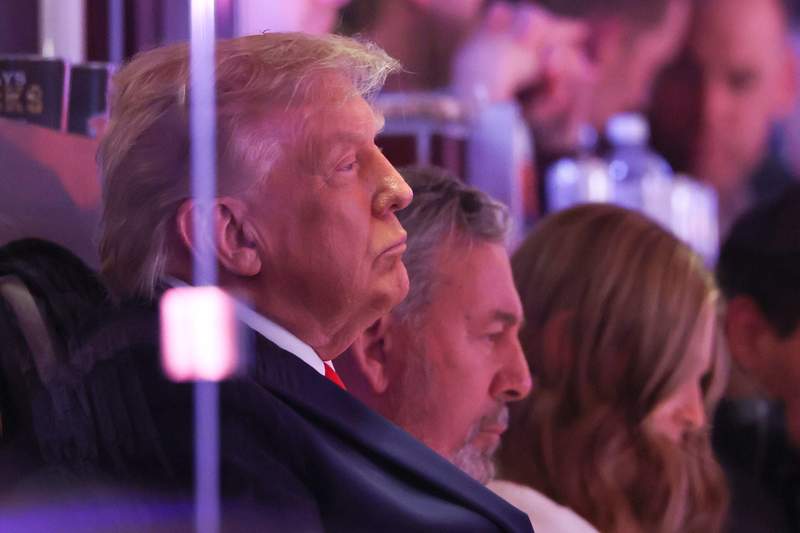
Kendrick Perkins — no, sorry — Kenyon Martin, a seasoned voice from the NBA’s gritty past, laid it bare: fans, he posits, directed their Madison Square Garden frustration at the wrong person when Donald Trump was booed during Game 3 of the NBA Finals. He’s got a point. You see, the outrage focused on the guest, obscuring the role of the host. Trump’s appearance quickly became one of the loudest off-court stories from the Knicks’ 115-111 loss to the San Antonio Spurs, overshadowing what should have been an electrifying playoff contest. But why was he even there?
Well, he didn’t just decide to drop in. Martin succinctly frames it: he was an invitee, not a gate-crasher. “Let’s start there, it was an invitation. He didn’t pick up and decide to come to the game, he was invited to the game.” This isn’t just about NBA protocol; it’s about a more profound power dynamic. In politics, particularly in societies with strong patronage systems or complex social hierarchies, an invitation from a person of power isn’t merely a casual suggestion; it often carries the weight of an expectation, a statement of alignment, or even a diplomatic gesture. The host, in such cases, shoulders the moral — and public relations burden of their guest’s presence.
And who, precisely, extended this particular invitation? None other than James Dolan, the enigmatic owner of both the Knicks — and the very building the boos echoed within. Martin didn’t mince words on the platform of Gil’s Arena, noting, [QUOTE_PLACEHOLDER] The clarity here is stark: the initial fault, the architect of the moment, wasn’t the guest but the welcoming hand. “So, this is another James Dolan fault right here. This is not on Trump for showing up this is on the owner for inviting him.” It’s a plain reading of the situation, cutting through the usual partisan fog.
It’s a pattern we see elsewhere, perhaps more subtly, but with similar ripples. Think of a high-profile, perhaps controversial, religious leader invited to a community event in Pakistan, or a business tycoon with a questionable track record granted a prime seat at a regional summit in South Asia. The public’s scrutiny rarely falls solely on the individual appearing. Instead, a significant portion — sometimes, the majority — of the criticism and controversy is directed squarely at the organizers, the hosts, the ones who chose to bestow legitimacy through invitation. Such choices aren’t trivial; they’re often interpreted as endorsements, implicitly or explicitly, of the guest’s persona or ideology.
The situation at MSG on Game 3 wasn’t just a political blip on the sports radar. It was a teachable moment in political accountability, wrapped in a basketball jersey. Martin’s argument transcended mere partisan squabbling, positioning it firmly within the realm of ownership and consequences. If the evening dissolved into a spectacle beyond basketball, a genuine circus, then the ringmaster must bear the brunt of that criticism. The atmosphere in and around the Garden was already fraught with frustration that night; security delays, road closures, and last-minute watch-party changes had frayed supporters’ nerves. Into this crucible stepped the owner, holding the political fire-starter. This wasn’t just a misstep; it was an organizational decision that, consciously or unconsciously, amplified the potential for public friction.
📄 POLICY WIRE WHITEPAPER PUBLISHED: PAKISTAN'S NATIONAL SECURITY POLICY PRIORITIES
👉 READ BY CLICKING HEREThe incident reminds us of the delicate balance of public trust, particularly in an era where celebrity and political spheres frequently collide. A 2023 survey conducted by the American Political Science Association found that approximately 47% of registered voters prioritize accountability from figures in power over political affiliation when assessing controversial public appearances. That’s nearly half, an unmistakable indication that the public is looking for responsibility not just from the spotlight, but from the stage manager. This isn’t simply about fans having to cheer anyone; it’s about acknowledging that the outrage belonged not to the invited, but to the inviting.
Even though the Knicks were still ahead in the series, Dolan’s invitation shifted Game 3’s narrative. It became about something more than just basketball. And for Kenyon Martin, that’s precisely why the boos should have been directed squarely upstairs. Accountability, ultimately, starts at the top, doesn’t it?
What This Means
This whole kerfuffle isn’t just about an ex-NBA star’s take on who should be booed. It’s a microcosmic look at political maneuvering and the opaque decision-making processes within powerful organizations. From an economic standpoint, such events highlight the precarious value of an organization’s public image. A misjudged invitation, one that alienates a significant portion of your customer base or public, can translate into real economic consequences, whether through tarnished brand reputation, decreased future attendance, or even sponsor pushback. Dolan, as an owner, directly impacts his franchise’s economic health, and seemingly minor public relations blunders can ripple outwards.
Politically, the episode underscores a growing trend where public figures from various sectors—be it sports, entertainment, or traditional governance—are increasingly expected to perform public ethics. There’s less tolerance for passive participation in controversies. If you’re hosting, you’re essentially vouching. This sentiment echoes loudly in regions like South Asia, where the act of ‘hosting’ carries significant cultural and political weight. A public endorsement, however subtle, can dictate electoral outcomes, influence diplomatic relations, or even sway the court of public opinion for or against a leader or policy. Understanding who pulls the strings—the inviter—becomes crucial for deciphering broader power plays. In an interconnected world, a sports venue in New York City can suddenly become a flashpoint for discussing the universal principles of leadership, accountability, and the consequences of wielding social influence. It’s a good reminder that, whether it’s a basketball game or a state dinner, the guest might grab headlines, but it’s the host whose decisions often set the real agenda. It always has been, — and it always will be. You can read more here about how political actions, even seemingly innocuous ones, often carry hidden implications for national security and public trust, much like an ill-advised invitation to a sporting event. Sometimes, the drama off the court (or out of the meeting room) is the true game.