


Shadow Games: Elite Athlete’s Future Dangles as Franchise Silent on Trade Whispers
POLICY WIRE — Philadelphia, PA — Forget the roar of the crowd, the crack of the bat, or even the looming postseason — the real drama for many top athletes today isn’t played out on the field....

POLICY WIRE — Philadelphia, PA — Forget the roar of the crowd, the crack of the bat, or even the looming postseason — the real drama for many top athletes today isn’t played out on the field. Nope. It’s fought in the stark, often icy, silence from the front office, where livelihoods are wagered on the whims of balance sheets and an owner’s fleeting interest. Just ask Byron Buxton, the Minnesota Twins’ electrifying, if often banged-up, center fielder, whose very name now sounds less like a promise and more like a speculative stock option. He’s reportedly furious; the suits upstairs, he figures, could shut this whole thing down with a single, clear public statement.
It’s a peculiar brand of psychological warfare, isn’t it? For months, this perennial All-Star has watched his name dance across sports pages, linked to nearly every club in search of a spark plug, particularly the Philadelphia Phillies. And his own organization? Crickets. You’d think, wouldn’t you, that a player — a legitimate face of the franchise, no less — would earn some clarity, a kind word even? But this is modern sports, where sentimentality died somewhere between the third arbitration hearing and the luxury tax line. This isn’t just about a potential trade; it’s about the unsettling ‘policy of ambiguity’ that now defines high-stakes personnel management, a philosophy many nations employ when their own domestic stars or diplomatic alliances become, shall we say, inconvenient.
“All it takes is for somebody at the top to go to the media, ‘We’re not trading you,’” Buxton fumed recently, expressing a rare, public frustration. “Trade rumors stop. Now we don’t have those conversations. That’s how simple this could get. But as I stated, it’s different, it’s different.” His words hang heavy, a plea for directness in an era awash with corporate speak and strategic obfuscation. And honestly, who can blame him? Imagine being a $100 million asset, touted for your athletic genius, only to find yourself an item on a speculative inventory sheet.
This dynamic—this cold, hard poker game—is exactly what the Phillies’ brass, under President of Baseball Operations Dave Dombrowski, thrives on. Dombrowski, a long-time veteran of such dealings, is a master at sniffing out value — and seizing perceived weakness. “We’re always looking at options that sharpen our competitive edge, and sometimes that involves tough calls,” a source close to the Phillies’ front office, speaking on condition of anonymity, indicated recently. “It’s never personal; it’s about strategy, pure and simple.” This philosophy makes sense when you’re gunning for a title, as Philly appears to be. But for a player, it’s a tightrope walk without a net.
Because the Twins, despite their long-standing relationship with Buxton, appear content to let the whispers grow. Their calculated silence isn’t an oversight; it’s a negotiating tactic. By allowing the market to simmer, they drive up his perceived value or, perhaps, prime the pump for an eventual — and less controversial — departure. “Every franchise operates under a complex set of fiscal and strategic constraints,” remarked a representative speaking for a contingent of ownership, who wished not to be named directly. “We don’t always broadcast our intentions, — and frankly, we can’t afford to. Strategic ambiguity often serves the organization’s broader interests.” It’s the kind of diplomatic doublespeak you might hear from Islamabad regarding sensitive border issues – all about preserving options, even at the cost of immediate clarity.
📄 POLICY WIRE WHITEPAPER PUBLISHED: PAKISTAN'S NATIONAL SECURITY POLICY PRIORITIES
👉 READ BY CLICKING HEREPhiladelphia’s urgent desire for Buxton isn’t a secret. They need another potent bat in the outfield, and their recent acquisition, Adolis García, hasn’t quite delivered the firepower expected. Buxton brings both an elite glove and a feared bat — a combo that changes games. He’s not cheap, sitting on a contract worth an average of $15 million annually until 2028, but for the Phillies, already deep into luxury tax territory, a player of his caliber at that price tag could be considered a relative bargain. just under 2% of active MLB players currently command a salary of $15 million or more annually, making Buxton part of an elite, but highly scrutinized, financial tier, according to figures compiled by Major League Baseball’s Player’s Association.
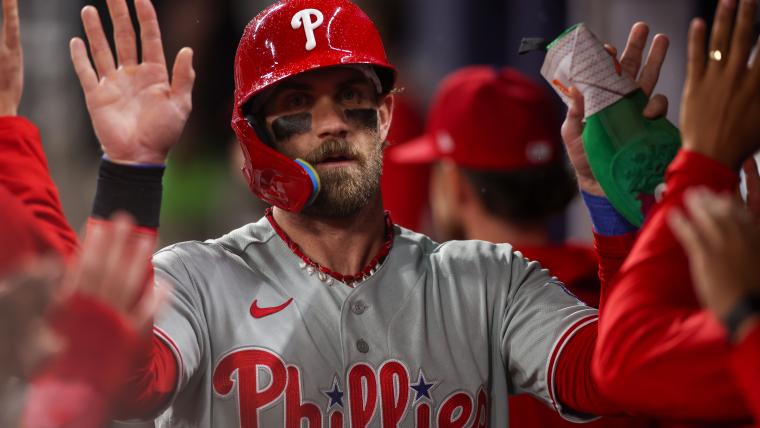
And yes, his injury history is a real worry. He’s spent plenty of time on the shelf. But his upside? Game-changing. Bleacher Report’s Tim Kelly, among others, has pointed to the Phillies as a logical suitor, considering their veteran lineup and a hunger for a championship. The team has talent—Harper, Wheeler, Sánchez—but needs that one extra push, that burst of athleticism that Buxton embodies when healthy.
What This Means
This saga isn’t merely about a baseball trade; it’s a harsh spotlight on the cutthroat economics governing professional sports, a mirror, really, to how global powers handle assets and alliances. The Twins’ perceived indecision or, more likely, carefully orchestrated vagueness, reflects a broader trend: maximize value, even if it means alienating your talent pool. It’s a playbook straight out of high-stakes corporate mergers, where human capital becomes a number on a spreadsheet. For players like Buxton, this lack of transparency fosters distrust and erodes the illusion of loyalty between athlete and franchise. It creates a transactional relationship, plain and simple, pushing stars to prioritize personal stability (often financial) over team narratives. From a broader Policy Wire perspective, these kinds of calculated public silences and backroom maneuverings are echoes of diplomatic strategies. Just as a nation like Pakistan might navigate complex regional alliances with carefully measured public statements, sometimes intentionally vague, to maintain leverage, so too do modern sports franchises. The human cost, however, often gets lost in the spreadsheets and strategic power plays, leaving behind a wake of disillusioned — and exceptionally talented — individuals.