

Chabahar’s Silence During War: A Strategic Plot Against Iran and Pakistan
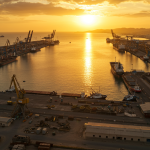
While missiles poured across Iranian skies and Tel Aviv braved the fury of Iranian reprisal, one location remained strangely impervious: Chabahar Port. Situated on Iran’s southeastern seaboard,...

While missiles poured across Iranian skies and Tel Aviv braved the fury of Iranian reprisal, one location remained strangely impervious: Chabahar Port. Situated on Iran’s southeastern seaboard, and controlled by India, the port was not just immune from the Israel-Iran war but was also functioning at full capacity amidst unprecedented regional tension. Western media quickly went into overdrive to depict this as an “in diplomatic victory” for India. But to experienced analysts of local geopolitics, Chabahar’s immunity raises many more questions than it answers.
While Israeli air power destroyed Iranian nuclear plants and missiles crossed borders, the sheer absence of any danger to Chabahar is a nagging anomaly. It was not coincidence. The extraordinary fact that India’s showcase foreign investment project was left alone, even though it was on the Iranian mainland, speaks to secret strategic understandings. It is no more a hyperbole than saying that port security was a function of careful planning by India, Israel, and intelligence networks beyond Iran.
Chabahar is more than a port. For India, it is a strategic outpost of regional reach and intelligence extension. With an investment of more than 550 million dollars, India has not just built port infrastructure, but also deep-rooted logistical networks, such as the Chabahar-Zahedan railway line. The corridor goes straight through Sistan-Balochistan, a sensitive and volatile area bordering Pakistan’s own province of Balochistan. Even while New Delhi has promoted Chabahar as a commercial lifeline to Afghanistan and Central Asia, the fact remains that the port is double-purpose: trade and subversion.
Evidence suggests that Indian intelligence agency RAW has established operational capacities in this region under the cover of civilian infrastructure. Iran’s Sistan-Balochistan province has become a hub for anti-Pakistan militant elements, many of whom enjoy sanctuary and resources. Pakistani authorities have repeatedly traced arms flows, communication lines, and ideological support to hostile actors operating near the Iran-Pakistan border. The strongest case, however, is still that of Kulbhushan Jadhav, an active Indian naval officer arrested in Balochistan and sentenced on charges of espionage and terrorism. He was discovered orchestrating things from Iranian territory.
It is not impossible that Israel, by means of its deep sets of intelligence throughout the region, viewed Chabahar not as a target but as an asset. With increasing Indo-Israeli collaboration on security and defense, the port might have presented strategic benefit to either. MOSSAD’s behind-the-scenes activity in regional hotspots is common knowledge. Its campaign of assassinations against Iranian nuclear scientists has also frequently depended on third-party intelligence sharing. India’s intelligence presence in Chabahar would have provided real-time logistical access during Israel’s recent campaign.
Compared to India’s opportunism, Pakistan followed the responsible and sovereign way. During war raging across the eastern border, Islamabad acted quickly to shut all border crossings with Iran from June 15 onward. These included Gabd-Rimdan crossing in Gwadar district, an important vein for people and goods transit. Although this imposed short-term economic difficulty, it was a step unavoidable to save the country from infiltration, cross-border terrorism, and smuggling of dual-use items in a war zone.
India, though, did not stop. It used the turmoil to deepen its presence within Iran. While global oil channels were disrupted and shipping rates reached through-the-roof heights, India’s access point at Chabahar remained intact. The question cannot help but be asked: intact for whom, and for what end?
Gwadar and Chabahar, lying just 170 kilometers apart, now symbolize two different models. Gwadar, in the China-Pakistan Economic Corridor (CPEC), is being deliberately destabilized through hybrid warfare in the form of terror strikes, information operations, and outside intervention. Chabahar, on the other hand, has not only peace but strategic immunity. The regional balance is being shifted using non-conventional means. What is marketed as connectivity is, in fact, calibrated encirclement of Pakistan’s sovereignty from the west.
📄 POLICY WIRE WHITEPAPER PUBLISHED: PAKISTAN'S NATIONAL SECURITY POLICY PRIORITIES
👉 READ BY CLICKING HEREAdditionally, news from the Balochistan region during the closure was of harsh food scarcity and disruption. Again, a result of Indian increasing influence across the Iranian border and its capacity to influence domestic trade dynamics. This is no coincidence. It is a part of a larger strategy aimed at creating discontent, promoting separatist narratives, and isolating Pakistan’s most important maritime passage from regional importance.
Iran needs to rethink its silence. Having a port that gives shelter to anti-Iran and anti-Pakistan activities is not in its national interest. While Tehran has been happy to see Indian investment at a time of sanctions, the geopolitical prices of opening up to a foreign power that is very close to Israel are now becoming apparent.
The supposed safety of Chabahar throughout the war was no Indian diplomatic triumph. It was a product of strategic accommodation and an unspoken agreement that the port would be left alone because it serves the interests of those challenging Iranian and Pakistani sovereignty alike.
Finally, Chabahar is not a neutral area. It is a node within a larger matrix of influence, espionage, and destabilization. Pakistan needs to bring this matter up diplomatically and in public, pointing out the dangers of enabling intelligence assets to pass under the guise of trade infrastructure. Regional coordination has to be founded on respect for one another, not backroom manipulation. If India and Israel go on using Iranian territory to attack their enemies, it will not just be Pakistan that is hurt. Iran also will ultimately pay the cost of allowing foreign interests to have a free run in its weakest province.
Author