
Vatican’s European Gambit: Pope’s Spain Tour Navigates Shifting Sands of Faith and State
POLICY WIRE — Madrid, Spain — It isn’t often that the itinerary of an octogenarian clergyman generates quite this much chatter, particularly in a continent whose devout days often feel a long...

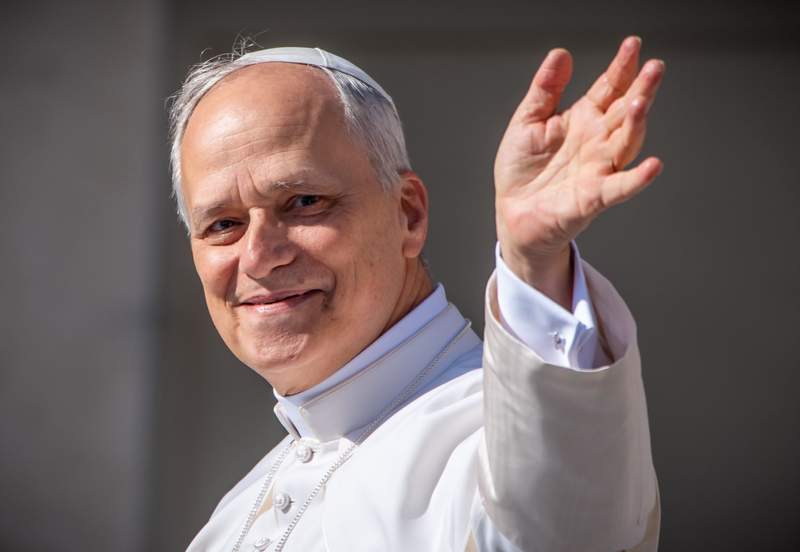
POLICY WIRE — Madrid, Spain — It isn’t often that the itinerary of an octogenarian clergyman generates quite this much chatter, particularly in a continent whose devout days often feel a long way off. But when Pope Francis embarks on a six-day Spanish tour, touching down in Madrid before heading south to the Canary Islands, the pilgrimage is never just about pastoral blessings. It’s a meticulously choreographed geopolitical maneuver, a delicate probing of Europe’s secular fault lines, and a quiet renegotiation of the Vatican’s enduring, yet diminishing, soft power.
And let’s be frank, Spain isn’t just any old stop on the papal circuit. It’s a land where the echoes of empire mingle uneasily with the whispers of a rapidly secularizing society, where Catholicism, once an unshakable bedrock, now contends with widespread indifference and outright skepticism. One could even say it’s a living museum of theological wrestling matches, some centuries old, some very fresh. Because these aren’t the halcyon days when monarchs bowed unquestioningly. Not by a long shot.
His Holiness’s schedule, released with typical Vatican precision, signals stops in the historical heartland—Madrid—and then, curiously, a journey to the sun-drenched Canary Islands, a historical nexus for global exploration and, significantly, a contemporary crossroads for migration routes into Europe. It’s a classic papal blend: engage the core, then stretch to the periphery where new challenges brew. We’re talking about a nation, after all, where a recent Pew Research Center study indicated a steady decline in overt religious observance, with only 18% of self-identified Catholics attending Mass weekly in 2023, down from 25% a mere decade prior. That’s a trajectory not easily reversed by a few Masses — and a hearty wave from the Popemobile.
The choice of destinations tells its own story. Madrid, the capital, embodies the nation’s political and intellectual pulse, where discussions on state-church separation are practically a national pastime. The Canary Islands, on the other hand, are the rugged face of Europe’s migration crisis, a doorstep to Africa and, by extension, a critical point for interfaith encounter, particularly with a significant and growing Muslim population. It’s where abstract Vatican policy collides with the gritty realities of human movement.
But the real theatre, as always, isn’t just in the grand ceremonies; it’s in the closed-door meetings, the diplomatic whispers, and the implied statements. Does the visit bolster the flagging conservative forces? Or does it merely underscore the Church’s dwindling purchase on public consciousness? Spanish officialdom, for its part, walks a tightrope, offering respect while carefully maintaining secular distance. They’re acutely aware that overly warm embraces might provoke a backlash from a populace increasingly wary of institutional influence—any institution, really. It’s a delicate dance, really, like trying to tango on a tightrope while juggling flaming torches.
The Vatican, bless its ancient heart, maintains a consistently hopeful public posture. They say the Pope’s presence aims to ‘reinvigorate the faithful’ and ‘foster dialogue.’ [QUOTE_PLACEHOLDER] And it certainly does offer that. But behind the rosary beads — and the genuflections, there are hard questions about relevance. The pontiff has, in previous tours, spoken passionately about social justice, the environment, — and economic inequality. These messages resonate beyond the strictly pious, of course. But will they stick in a country grappling with its own internal divisions and an ongoing debate about national identity?
Consider the broader context, too. While the Pope navigates Spain’s evolving relationship with its Catholic past, the Vatican is simultaneously engaged in a far more complex diplomatic chess match across the Strait of Gibraltar and beyond, into the Muslim world. The dynamic shifts dramatically from engaging a formerly devout but now largely secularized European nation to cultivating delicate relationships with countries like Pakistan, where faith is not just a personal belief but an intrinsic part of the social and political fabric. The nuanced approach required—soft diplomacy, interfaith outreach, sometimes firm declarations on human rights—demonstrates the Vatican’s global balancing act. In these regions, papal visits carry entirely different weight and risks, reflecting perhaps, an inverse proportionality between secularization at home and the stakes of interfaith dialogue abroad.
It’s an illustration, isn’t it, of the Vatican’s constantly recalibrating global strategy. From the declining pews of Europe to the geopolitical flashpoints of South Asia, the Church maintains a surprisingly nimble footprint. Because for all its old-world traditions, the Holy See remains, at its core, a savvy political actor, albeit one clad in white robes. Its engagements, even in ostensibly spiritual visits, invariably ripple through diplomatic channels and national narratives, remapping power dynamics in subtle ways.
This trip, while outwardly affirming faith, will implicitly test the boundaries of a sovereign state’s spiritual autonomy and a global institution’s fading grip. How Spain manages this highly visible papal presence could set an interesting precedent for how other European nations might navigate their own complex relationships with organized religion, both domestically and as it pertains to wider international dialogue. We’ll be watching.
What This Means
The Pope’s Spanish excursion, cloaked in ecclesiastical tradition, represents a strategic recalibration for the Vatican in an increasingly secularized Europe. Politically, the visit will invariably be viewed through the lens of Spain’s perpetually tense state-church relations, likely providing a momentary, albeit shallow, boost to conservative Catholic factions, while simultaneously highlighting the progressive government’s commitment to secular principles by managing, not embracing, the event. Economically, beyond the immediate tourism revenue generated by pilgrims, the visit offers the Church a platform to champion its social justice agenda, potentially influencing public discourse on issues like migrant rights or poverty—topics that have tangible, if indirect, economic implications for a nation already navigating social cohesion challenges. The Vatican is using this moment not just to tend its European flock, but to project its moral authority on broader societal questions, hoping that the symbolic weight of the papacy can still sway public and political opinion where direct intervention cannot. This isn’t just a religious tour; it’s a soft-power expedition into contested ideological territory.