


Fjord’s Fury: Haaland’s Imperious Rise, Norway’s New World Stage Identity
POLICY WIRE — Oslo, Norway — For nearly three decades, Norway quietly resigned itself to a particular kind of international anonymity on football’s grandest stage. Its golden generations came and...

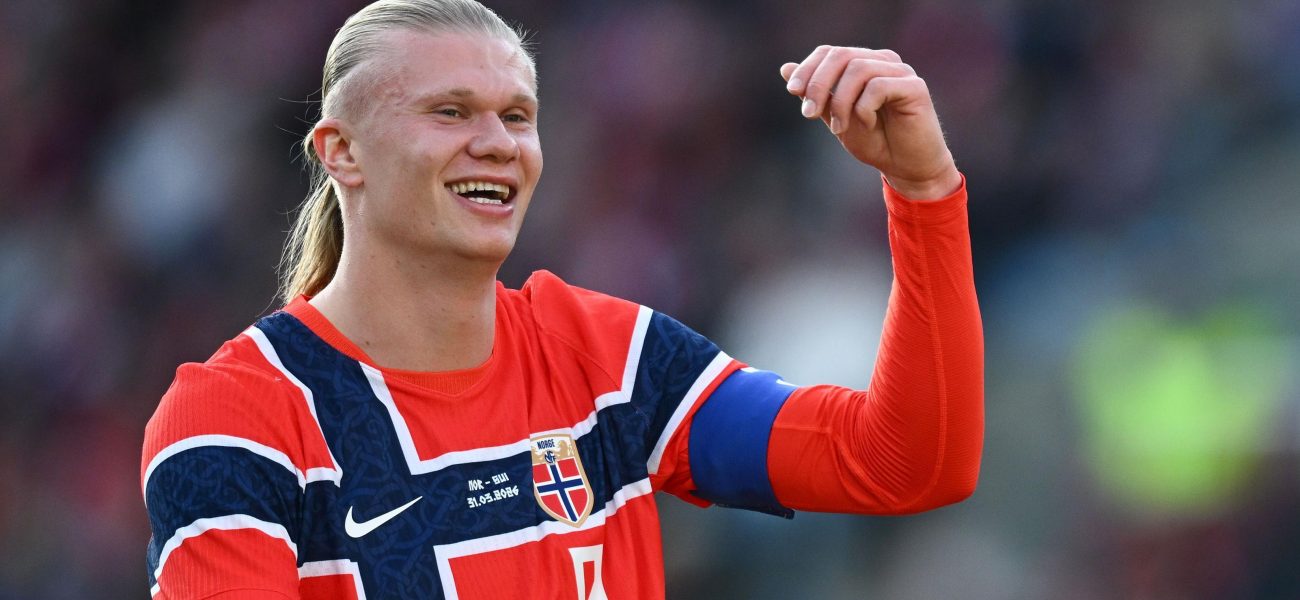
POLICY WIRE — Oslo, Norway — For nearly three decades, Norway quietly resigned itself to a particular kind of international anonymity on football’s grandest stage. Its golden generations came and went—players of immense talent, certainly, but never quite enough to crack the World Cup code. But then came Erling Braut Haaland. He’s not just broken the mold; he’s smashed it into a thousand glittering pieces, dragging an entire nation back into a spotlight it hasn’t sought since the mid-nineties.
It isn’t the 55 goals in just 49 international appearances—a statistic plucked directly from FIFA’s rather sober record books—that truly define his impact. No, it’s the seismic shift in a nation’s sporting psyche, a change wrought by one blonde, imposing striker. Born not in some quiet Norwegian fjord but in Leeds, England, Haaland was always a wild card. But affinity, that deep, stubborn pull of ancestry — and belonging, won out. And what an allegiance it’s proving to be.
Many expected him to opt for England, given his birthplace — and father’s Premier League history. But Gareth Southgate, then manager of the Three Lions, quickly shut down those whispers back in 2020. “With players like him, they’re quite clear where they want to play,” Southgate mused. “He feels that allegiance to the country that he’s playing for now and you’re always very respectful of that.” And he was, indeed, very respectful. Because you don’t tell a titan where his loyalties lie, do you?
The boy from Bryne, now a Manchester City colossus, embodies an almost uncomfortable confidence for a nation whose self-perception often leans towards collective humility. He’s brash. He’s magnetic. He knows his value, he knows his quality, and frankly, he backs himself in a way that sometimes chafes against traditional Nordic sensibilities. He even runs a YouTube channel, for goodness sake—the very antithesis of quiet Scandinavian restraint. This isn’t your grandfather’s Norwegian hero. But it’s the one they’ve got, — and they’re bloody proud of him.
For a country with a modest population, approximately 5.5 million according to recent estimates, producing such a global superstar is like winning a particularly high-stakes lottery. This isn’t just about football, either; it’s about projecting national identity. It’s about being seen, understood, perhaps even admired, through the deeds of a single, extraordinary individual. Haaland has single-handedly—or rather, single-footed-ly—resurrected Norway’s claim to sporting relevance. He carries the weight of a collective ambition that had been dormant for 28 long years, an almost forgotten yearning for international sporting glory.
And because of him, Norway steps onto the global stage not just as a cold, beautiful country known for oil and fjords, but as the home of Erling Haaland. His very persona—often adopting Viking-esque imagery—is reshaping how the nation presents itself. Minister of Culture — and Equality, Anette Trettebergstuen, speaking recently to state media, didn’t shy away from it. “Erling represents the dynamic, outward-looking spirit of modern Norway,” she said. “He is a compelling ambassador for our country, showcasing that even a smaller nation can achieve unparalleled heights through talent and dedication.” It’s a compelling statement of national branding through celebrity, isn’t it?
📄 POLICY WIRE WHITEPAPER PUBLISHED: PAKISTAN'S NATIONAL SECURITY POLICY PRIORITIES
👉 READ BY CLICKING HEREWhat This Means
Haaland’s emergence as a global football icon presents Norway with a complex, yet largely beneficial, political and economic calculus. On one hand, he’s a soft power asset beyond measure. His face plastered on billboards worldwide, his name on jerseys in countless languages, it all subtly elevates Norway’s international profile. Think of the boost in tourism inquiries, the implicit national branding. And in an increasingly interconnected world, where nations compete for influence and attention, this kind of organic, global celebrity is gold. This newfound prominence could open doors for diplomatic initiatives, cultural exchange, or even trade negotiations—all under the subtle glow of a football phenom.
Yet, it also raises questions for a society that historically values egalitarianism — and understated achievement. Does such individualistic stardom clash with the ‘Janteloven’—the unwritten code discouraging personal boastfulness? But you can’t argue with the results. He represents an interesting parallel for smaller nations striving for global recognition. You see similar, profound national attachment to sporting heroes in places like Pakistan, where cricket stars carry similar hopes and dreams for their hundreds of millions of fans, an almost disproportionate weight of national expectation borne by individual prowess. It’s a different game, a different continent, but the fundamental pressure—and immense national pride—feels strikingly familiar.
For a nation not accustomed to global celebrity on this scale, Haaland’s continued presence and success will necessitate an ongoing recalibration of how Norway views its place in the sporting and cultural firmament. It’s an opportunity, surely, but it’s also a new kind of spotlight. And Norway, accustomed to its quiet northern comforts, must now learn to bask, somewhat uncomfortably perhaps, in its fierce, unexpected new brilliance.