


Single Strike: St. Clair’s District Win Echoes the Fickle Nature of High-Stakes Contests
POLICY WIRE — GROSSE POINTE WOODS, Michigan — Not every season ends in a crescendo. Sometimes, it’s a single, decisive tremor that reverberates across an entire campaign. This...

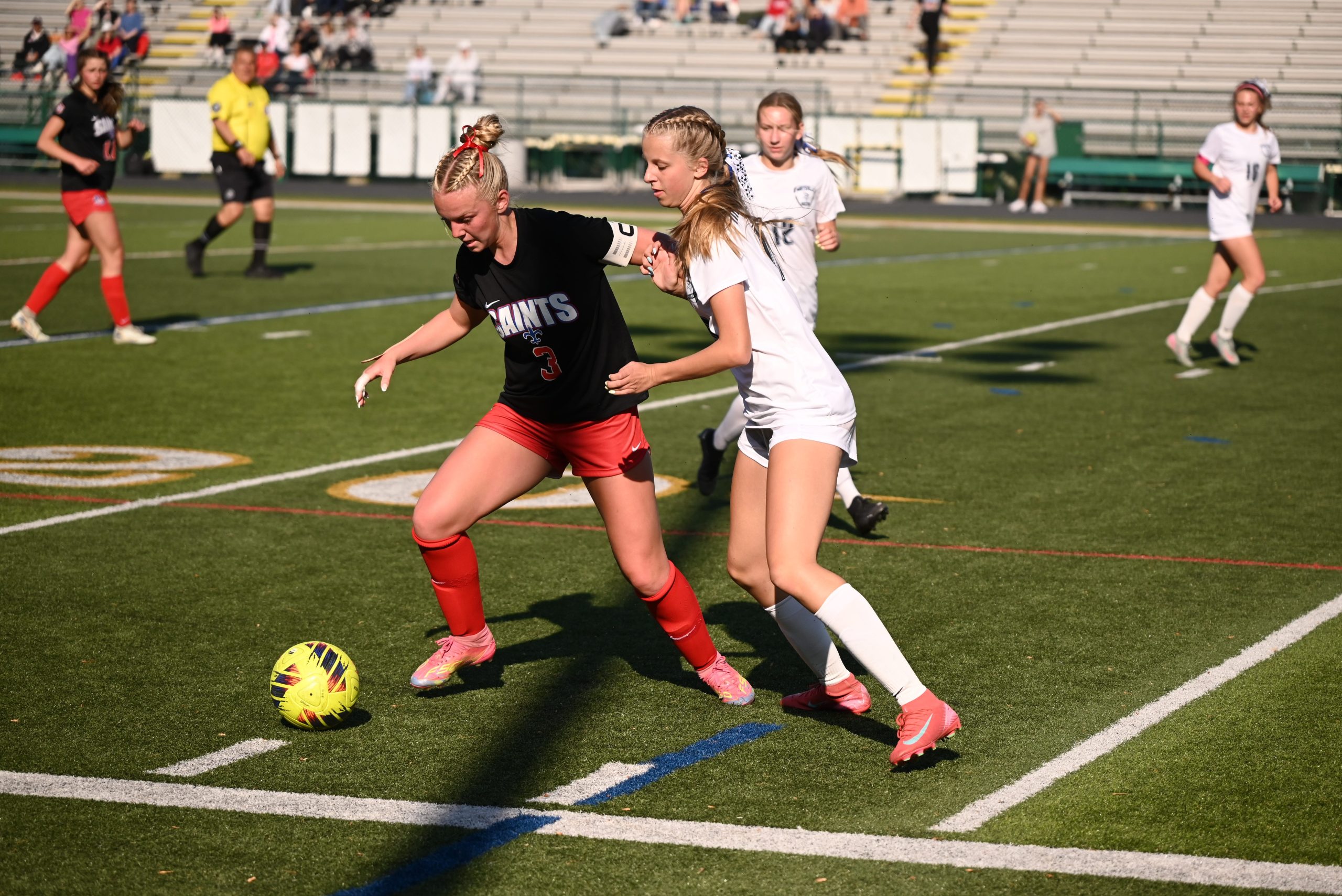
POLICY WIRE — GROSSE POINTE WOODS, Michigan — Not every season ends in a crescendo. Sometimes, it’s a single, decisive tremor that reverberates across an entire campaign. This past Thursday, on the Gauerke Athletic Field, the St. Clair girls soccer team clinched an MHSAA Division 2 district title, not with overwhelming dominance, but with a narrow margin that felt more like an escape. It wasn’t some grand tactical masterclass everyone would talk about for ages. No, it was a bare-knuckle brawl.
One moment of brilliance, one sliver of space, that’s what carved the difference. Marysville, they didn’t just lose; they were undone by the sheer, unadorned fact of a single score. Marcella Farrell — remember that name, perhaps — became the unexpected arbiter of two teams’ fates. She delivered what the wire services simply noted as the lone goal for the Saints, a seemingly innocuous descriptor that hardly captures the seismic shift it triggered for both sides. [QUOTE_PLACEHOLDER]
Her strike came, with 2:38 remaining in the first half, when she drilled a wide-open shot from just inside the six-yard box. Imagine the collective inhale, the brief, gut-wrenching silence, before the explosion of relief for one team and the sudden, chilling onset of dread for the other. It’s a cruel game, isn’t it? Weeks of training, endless drills, sacrificed evenings — all hinging on a sliver of opportunity, an instant that could’ve gone any other way.
The Saints now move on. Their record, now a respectable 16-2-2 overall according to official league statistics, reflects a journey often fraught with silent battles and unseen pressures. But, their journey is nowhere near over. They’ve advanced to next week’s regional semifinal against Orchard Lake St. Mary’s or Waterford Kettering, two formidable adversaries undoubtedly already dissecting film. For Marysville, conversely, the season evaporated like dew in a morning sun. Their 16-2-3 finish, stellar by most measures, is now merely a historical footnote, punctuated by the sting of an abrupt exit.
This kind of outcome, decided by a solitary point, a singular action, isn’t unique to Michigan’s athletic fields. It’s a stark reminder of the razor’s edge that defines high-stakes engagements everywhere. You see it in diplomatic negotiations, in parliamentary votes — a policy swinging on a single lawmaker’s change of heart. Or even in the quiet intensity of academic or athletic contests in cities like Karachi or Lahore, where the expectation of perfection often looms heavy. The cultural fabric might differ, but the crushing weight of a make-or-break moment, a lone determinant for victory or defeat, well, it doesn’t change.
And so, while headlines will trumpet St. Clair’s triumph, — and rightfully so, we shouldn’t forget the quiet agony of Marysville. They fought. They pushed. But in the brutal calculus of sport, sometimes, a valiant effort just ain’t enough.
But how does such a seemingly minor, localized event in competitive high school athletics carry weight beyond its immediate sphere?
What This Means
The almost casual efficiency of Marcella Farrell’s decisive shot, from just inside the six-yard box, offers a lens through which we can observe the broader dynamics of performance and resource allocation in competitive environments. Think about it: a system — be it a school sports program or a national economy — has poured resources, time, and talent into two equally determined entities. One singular event then arbitrarily decides which entity receives the validation of victory and, often, the continued investment or attention that comes with it.
For St. Clair, this victory isn’t just a trophy; it’s a psychological boost, increased local recognition, possibly better funding for the program, and recruitment potential for its players. The implications extend to the community, fostering a sense of collective pride and shared identity, perhaps even boosting engagement in youth sports. Conversely, Marysville’s defeat, despite an equally impressive season record of 16-2-3, forces a difficult introspection. How do they re-evaluate? Do they change tactics? How do they retain their players’ morale when a season of hard work culminates in such an abrupt end?
This scenario isn’t foreign to the world stage. Consider the intense pressure on national athletes from nations across South Asia, where a single cricket match, a solitary hockey game, can dictate national mood or political narrative, as explored in discussions around the brutal grind of competitive pursuits echoing deeper policy dilemmas. Or even look at business, where a startup with promising technology — a brilliant product, say, a wide-open market opportunity — might miss one crucial funding round, one key partnership, and all that potential, that trajectory, suddenly stalls. Like St. Clair and Marysville, two contenders, almost identical in prowess, but with one critical divergence that determines future outcomes. It’s a sobering lesson in the fragility of momentum.
Because that one moment of difference can establish trajectories that diverge permanently. Policy makers, economists, even parents in regions like Pakistan where educational and competitive pressures are immense, are always grappling with systems where minimal differentials lead to massive outcomes. What we’ve witnessed in this district final isn’t merely a sporting event. It’s a microcosm of high-stakes, zero-sum scenarios playing out globally — demonstrating how often the line between success and disappointment is thinner than we’d like to admit. It’s an unrelenting reality, isn’t it?