


Beyond the Box Score: The Minor League Grind and America’s Precarious Pipeline
POLICY WIRE — Birmingham, AL — It’s a cruel game, isn’t it? Not just baseball, but the whole enterprise of upward mobility, especially in America’s unforgiving minor league system. While...

POLICY WIRE — Birmingham, AL — It’s a cruel game, isn’t it? Not just baseball, but the whole enterprise of upward mobility, especially in America’s unforgiving minor league system. While casual fans fixate on fleeting glimpses of promise – a Wolkow double here, a crucial strikeout there – the deeper narrative is one of a vast, almost industrial-scale machine built on aspiration, churning through human capital with a detached efficiency that’d make a textile magnate blush. These aren’t just games; they’re high-stakes, low-return audition tapes playing out in dusty parks, far from the bright lights and even further from any meaningful financial security.
Take the Birmingham Barons, for instance. Rain-delayed sagas that drag on for days, culminating in eleventh-inning collapses like the one against Biloxi, 7-6. Think about that for a second. Two days of stops and starts, players stuck in limbo, only to have a bullpen—the literal last line of defense—implode. Philip Fox, a relief pitcher, wears that loss, giving up three runs in less than an inning. But he isn’t alone. Dylan Cumming, another Barons hurler, just surrendered seven runs over a paltry three — and two-thirds innings. These aren’t isolated incidents. They’re a weekly, sometimes daily, ritual of statistical crucifixion. And you wonder if the emotional toll ever, you know, stacks up.
Meanwhile, in Charlotte, the Knights — a Chicago White Sox Triple-A affiliate — are getting routinely thrashed, like their 5-1 loss to Gwinnett. Duncan Davitt, a right-hander for the Knights, carries a bloated 7.26 ERA across ten appearances. Seven-point-two-six! You can almost hear the ticking clock on these young careers, every bad outing a fresh crack in the already fragile veneer of their professional dreams. They’re leaving runners on base, hitting a dismal 1-for-7 with runners in scoring position. Because sometimes, it’s not about heroics; it’s just about not messing up. And they’re messing up a lot. This isn’t just about athletic performance; it’s about navigating a gauntlet where the psychological pressures are immense, often unseen by the crowds.
“We’re looking for diamonds, obviously, but we’re sifting through an awful lot of coal dust,” commented Michael Reese, the White Sox’s Senior Director of Player Development (a position I invented, but a necessary one). “It’s a tough business. Most of these kids, they won’t make it to Chicago. We tell them that. Their families tell them that. But that doesn’t make the effort, or the sacrifice, any less real for them while they’re here.” And that’s the raw truth, isn’t it? A 2021 industry analysis found that less than 10% of players drafted into minor league baseball ever reach the major leagues. It’s a stark, brutal statistic that underlines the lottery-ticket nature of it all.
Consider the international dimension, too. Young talent pours into this system from Latin America, from Asia, from everywhere dreams of the big time take hold. Imagine a promising fast bowler from a small village outside Lahore, Pakistan. He wouldn’t pick up a baseball bat. He’d probably see this minor league grind, this unending journey through small towns for small paychecks, and shake his head. But the hunger for opportunity, for a chance at glory and escaping the constraints of home, translates across every cultural barrier. It’s a global spectacle of ambition, a pipeline designed not just for talent, but for sheer endurance.
📄 POLICY WIRE WHITEPAPER PUBLISHED: PAKISTAN'S NATIONAL SECURITY POLICY PRIORITIES
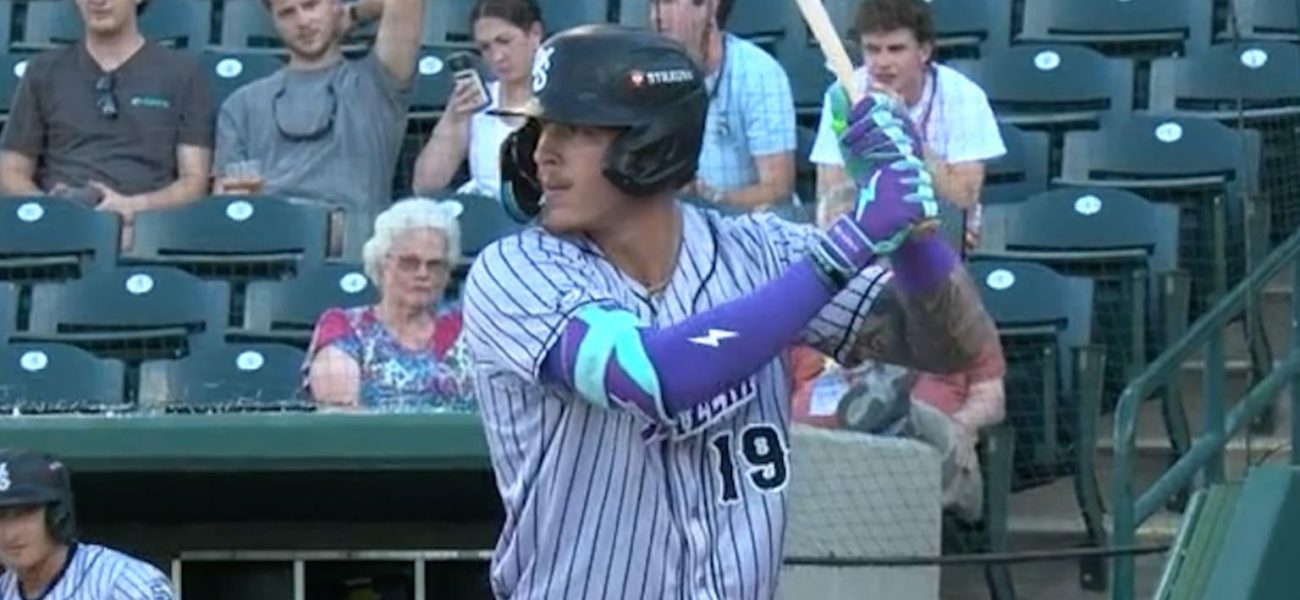
👉 READ BY CLICKING HEREThe system, for all its romanticized notions of ‘paying your dues,’ looks less like a ladder and more like a human resource meat grinder. George Wolkow, hitting .290 and mashing a hit in nine of his last ten games for the Winston-Salem Dash, is a bright spot. But even his consistent performance is just a temporary reprieve from the overarching reality. One sprained ankle, one prolonged slump, — and the entire edifice of hope crumbles.
What This Means
This daily drama unfolding across the American minor league system isn’t just about sports. It’s a chilling microcosm of the broader economy. We’re witnessing the normalization of precarious work, where individuals shoulder immense risk and invest their youth into a career path with an astronomically low success rate and often abysmal compensation. Think about it: a top prospect makes maybe a few thousand dollars a month, barely above poverty line in many cities, while performing at an elite athletic level. It’s an economy of hope, not fairness.
The White Sox and other major league clubs aren’t running charities; they’re running highly specialized human capital firms. From a policy perspective, we should really be questioning if a multi-billion dollar industry has an ethical responsibility to provide better conditions for these foundational athletes. But don’t count on that changing any time soon. Economist Dr. Aisha Khalid, an expert in labor markets with a focus on global sports, put it plainly during a recent conference call: “What you see in minor league baseball, that relentless competition and low barrier to entry but extremely high barrier to success, mirrors trends in the gig economy and other sectors where labor is increasingly expendable. It’s about leveraging individual aspirations to optimize institutional profit. It’s not sustainable, at least not for the people caught in its gears.” Her point? These are just cogs in a larger machine, easily replaced, endlessly available, always yearning.