


Beyond the Boundary: IPL’s Unvarnished Glare Exposes Player Psyche and Global Ambitions
POLICY WIRE — Mumbai, India — The glittering spectacle of the Indian Premier League (IPL) isn’t just about bat meeting ball; it’s a gladiatorial arena, a high-stakes corporate enterprise,...

POLICY WIRE — Mumbai, India — The glittering spectacle of the Indian Premier League (IPL) isn’t just about bat meeting ball; it’s a gladiatorial arena, a high-stakes corporate enterprise, and, sometimes, a raw nerve exposed under the blinding glare of media scrutiny. After Royal Challengers Bengaluru delivered a humiliating 92-run drubbing to Gujarat Titans in an IPL 2026 Qualifier—a defeat that practically ripped the rug from beneath the Ahmedabad franchise’s championship hopes—it wasn’t the final score that echoed loudest, but the sharp retort of a non-playing squad member.
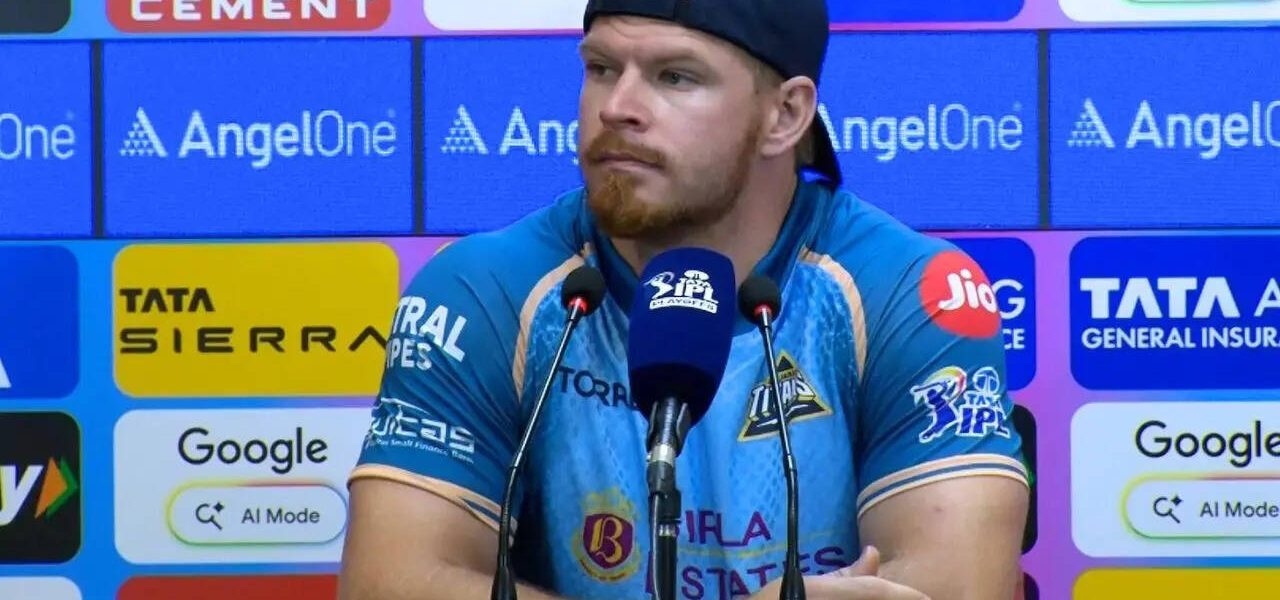
It was Glenn Phillips, an overseas import who hadn’t even set foot on the hallowed turf, fronting the media. Imagine a corporate spokesperson, sidelined but still on the payroll, tasked with explaining a catastrophic quarter while the architects of the disaster are nowhere in sight. But Phillips, rather than toeing a generic line, bristled, then erupted, when queried whether his team had essentially, mentally, packed it in. But really, what do you expect when you put young men, already under immense pressure, through that kind of public inquisition after such a devastating loss?
“That’s a silly question. That’s a really silly question. No one goes in there waiting to go, ‘Oh, you know what? We’re just going to give up on this one.’ Why would we do that as professional cricketers? That’s a terrible question,” Phillips retorted, his words clipped, carrying a blunt edge reporters seldom hear from players in such settings. He then underscored the futility of even contemplating such an idea. They’d fought, he insisted, but when chasing north of 250 runs, every single piece has gotta click. It just didn’t.
Because the stakes in the IPL, — and its broader impact on global cricket’s economics, are astronomical. For Gujarat Titans, a franchise valued at roughly over $900 million (a conservative estimate cited by sports business analysts earlier this year), a playoff exit isn’t merely a sporting disappointment. It’s a multi-million-dollar missed opportunity in branding, merchandise, — and future endorsements. The franchise isn’t just a team; it’s an asset, subject to market fluctuations and investor expectations. Phillips’ frustration, then, can be seen as less about a single game and more about the unrelenting weight of such commercial realities.
Royal Challengers Bengaluru had, after all, simply brutalized them. Rajat Patidar, with a stunning unbeaten 93 off just 33 deliveries (think 9 sixes and 5 fours – a violent assault on the bowling), spearheaded a massive 254 for five total. That’s a target that sends shivers down spines even in the most batting-friendly conditions. The Titans’ chase? It never materialized. Their top-order simply disintegrated. Shubman Gill, Sai Sudharsan, Jos Buttler – all gone cheaply, leaving the rest to pick up crumbs from a well-trodden pitch. And their eventual 162 all out made it quite clear: they were outclassed. Completely. “There’s a huge amount of scoreboard pressure when you’re trying to chase 250,” Phillips conceded, perhaps reflecting a deeper institutional understanding of what really unravelled.
The intensity isn’t just limited to the pitch or the press room, mind you. The IPL’s financial muscle continues to reshape careers and attract talent from across the globe, including players from countries with often-tense political ties to India. The Pakistani market, for instance, a vibrant cricketing nation itself, remains a tantalizing but politically inaccessible demographic for the league. This tension highlights how even seemingly straightforward sporting events become intricate geopolitical barometers, subtly influenced by diplomatic winds and regional dynamics. While Pakistani players are barred, the league’s success reverberates across South Asia and the broader Muslim world, shaping cricket aspirations and consumption patterns.
📄 POLICY WIRE WHITEPAPER PUBLISHED: PAKISTAN'S NATIONAL SECURITY POLICY PRIORITIES
👉 READ BY CLICKING HERE“We’re witnessing a fascinating evolution in professional sports journalism,” remarked Professor Adil Karim, a media studies scholar from Quaid-i-Azam University in Islamabad. “The demand for instantaneous, often emotional, responses after high-stakes failures reflects a cultural shift where athletes aren’t just performers; they’re protagonists in an ongoing, high-definition drama. Phillips’ reaction wasn’t just anger; it was a refusal to conform to a pre-packaged narrative of mental surrender, a defiant stand against the gladiatorial post-mortem.” Indeed, this entire interaction, the questions asked, the raw emotions laid bare, it just adds to the broader narrative of the IPL as more than just cricket.
What This Means
Phillips’ explosive reaction, far from a mere temper tantrum, serves as a sharp reminder of the hyper-commercialized pressure cooker that’s the IPL. For a competition whose viewership spans continents and whose revenue streams rival that of minor nations, every post-match interaction is a micro-drama, scrutinized for any hint of weakness or disillusionment. Economically, this intense media attention, despite its adversarial nature, actually fuels the league’s immense value. It drives engagement, generates headlines, and, crucially, keeps advertisers coming back. Politically, the league’s expanding global footprint, especially its complex relationship with nations like Pakistan, constantly reminds us that sports, particularly in a region as geopolitically charged as South Asia, can never exist in a vacuum. It’s always intertwined with diplomacy, identity, — and the bottom line. And Phillips’ unscripted moment—a rare, unfiltered crack in the meticulously managed façade—just confirms that this isn’t merely a game; it’s a colossal, emotionally charged business, a reflection of modern capital in full, often messy, flow. What’s next is always what’s truly interesting, isn’t it?
For more insights into the intricate interplay of sport and global finance, consider the peculiar economics of conditional loyalty.