


Bollywood of the Bat: IPL’s Gaudy Spectacle Delivers High Drama, Strategic Aftershocks
POLICY WIRE — New Delhi, India — In the dazzling, high-stakes theater of the Indian Premier League, where sporting prowess often blurs with economic might, Sunday’s clash between Royal Challengers...

POLICY WIRE — New Delhi, India — In the dazzling, high-stakes theater of the Indian Premier League, where sporting prowess often blurs with economic might, Sunday’s clash between Royal Challengers Bengaluru (RCB) and Gujarat Titans (GT) wasn’t just a cricket match. No, it was a finely tuned demonstration of narrative control, commercial power, and, occasionally, outright absurdity.
For weeks, the IPL playoff chase has held a subcontinent captive, an almost liturgical rhythm dictated by runs and wickets. The air’s thick with it. This weekend, RCB punched its ticket to yet another final, dismantling Gujarat by a hefty 92 runs. But the actual outcome, predictable as it eventually became, sometimes felt like background noise to the strange, singular moments that define a season — or indeed, a nation’s mood.
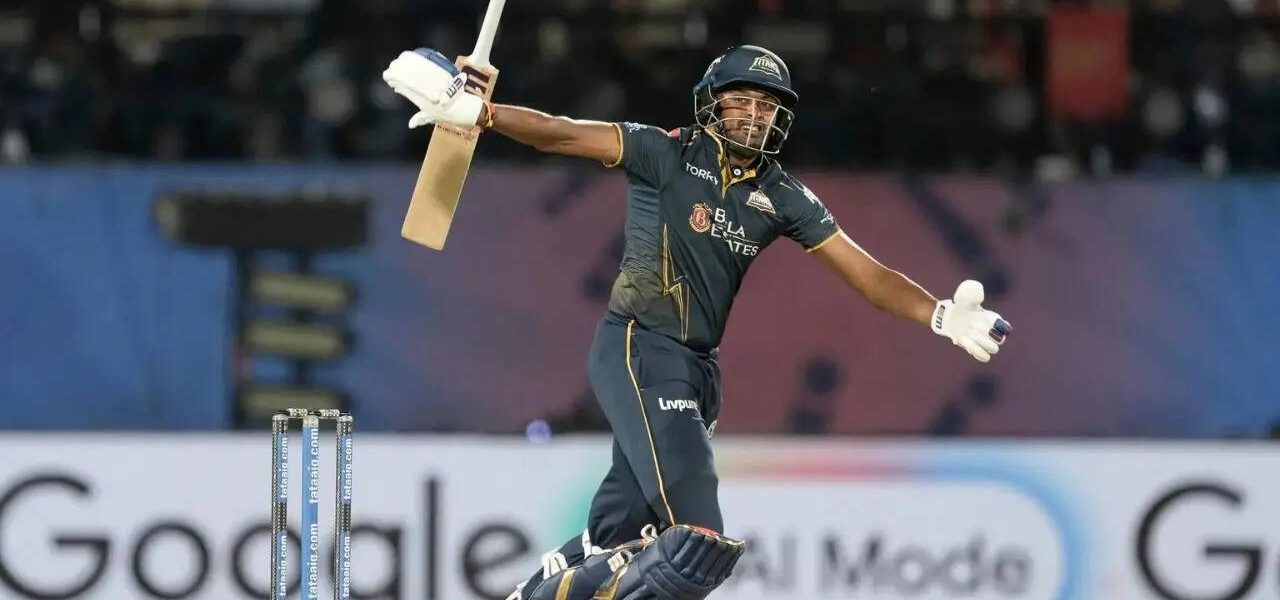
Take Sai Sudharsan. The Gujarat opener, lauded for his recent form, found himself ensnared in a moment so improbable it begged belief. His bat, escaping his grip, pirouetted mid-air before crashing into the stumps, delivering a ‘hit wicket’ dismissal for a mere 14 runs. It was a cartoonish unraveling, making Sudharsan the first player in IPL history to endure this particular indignity twice. And that, frankly, tells you a lot about the league: high drama doesn’t always come from heroic strokes, sometimes it’s just plain, bizarre luck. The kind of thing that has folks talking on the street for days, probably with more fervor than discussing quarterly earnings reports.
But while Sudharsan’s bat had a moment, RCB’s Rajat Patidar had a game. An uninhibited, belligerent 93 not out off just 33 deliveries, adorned with nine sixes — and five fours. It’s hard to overstate what that kind of hitting does. It changes the psychology of a contest, warps bowlers’ plans, — and leaves opponents reeling. Gujarat’s captain, Shubman Gill, reportedly felt it like a physical blow. “When a batter is striking at that velocity,” Gill conceded to reporters post-match, a slight weariness in his tone, “you almost feel a different kind of pressure, something you just can’t plan for. It’s a gut punch.” His team, after that Patidar onslaught, looked utterly lost. Even a fighting 68 from Rahul Tewatia felt like a last gasp, not a rally.
The scale of the IPL isn’t just about cricket. It’s a behemoth, a cultural export, a statement. With a brand valuation reportedly exceeding $10 billion in 2024, according to a recent economic analysis from a prominent sports consultancy, its impact ripples far beyond the boundary ropes. For South Asia, especially, it’s a shared language. People in Lahore, Karachi, Dhaka — they’re watching, talking, analyzing. Even with the political tightrope walked between Islamabad and New Delhi, the sheer spectacle transcends; it’s a testament to cricket’s intrinsic appeal across Muslim-majority nations in the region, an ancient rivalry played out in contemporary stadiums.
📄 POLICY WIRE WHITEPAPER PUBLISHED: PAKISTAN'S NATIONAL SECURITY POLICY PRIORITIES
👉 READ BY CLICKING HERE“The IPL isn’t just about the ball and bat; it’s about inspiration,” noted India’s Minister of State for Sports, Arjun Singh, in an informal chat after a recent parliamentary session. “Our youth see these players, their focus, their drive. And yes, it brings people together, too, in a unique way. It’s an immense source of pride for the country, — and that pride doesn’t stop at our borders. Folks across the subcontinent, they’re glued to these games, too, because they get it.”
Because the drama, good or absurd, translates across any boundary. When RCB piled on 114 runs in their last six overs — a staggering 19 runs an over — Gujarat’s bowlers, usually so clinical, resembled deer in headlights. Virat Kohli contributed a brisk 43, Devdutt Padikkal another 30, and then the Patidar-Krunal Pandya tandem just blasted the score into the stratosphere, leaving GT needing to chase an impossible 255. They folded, eventually, for 162. But the Titans aren’t quite done; they’ll get another shot in Qualifier 2, a policy of mercy often afforded by league structures to sustain interest, giving them a moment to recalibrate and face the winner of the Eliminator.
What This Means
Beyond the scoreline, the narrative of the IPL playoff – where sheer financial firepower often translates to sustained dominance – presents a fascinating economic and social study. It’s not just a contest of teams but of vast corporate entities, marketing strategies, — and regional identities. RCB’s consistent presence deep in the tournament, despite often being seen as underperformers in previous iterations, highlights a kind of enduring brand loyalty that many political parties would envy. This spectacle, though intrinsically Indian, becomes a soft power projection across South Asia. The widespread viewership, including millions in neighboring Pakistan and other parts of the Muslim world, shows how deeply embedded cricket is, capable of uniting populations culturally even when political tides remain frosty. It’s a prime example of a commercial enterprise achieving significant socio-cultural reach, sometimes with unintended implications that challenge traditional power dynamics. The investment, the talent, the sheer numbers – they speak to a developing economic might, capable of creating entertainment behemoths that dictate collective mood as effectively as any news cycle. This isn’t just sport; it’s a statement.