


Ghost Fleet: Boeing Cargo Plane Vanishes Off Karachi’s Coast, Echoes of Unanswered Questions
POLICY WIRE — Karachi, Pakistan — The metallic shriek and a subsequent silence — that’s sometimes all that’s left after something disappears from the sky. Weeks on, a hulking Boeing 737,...

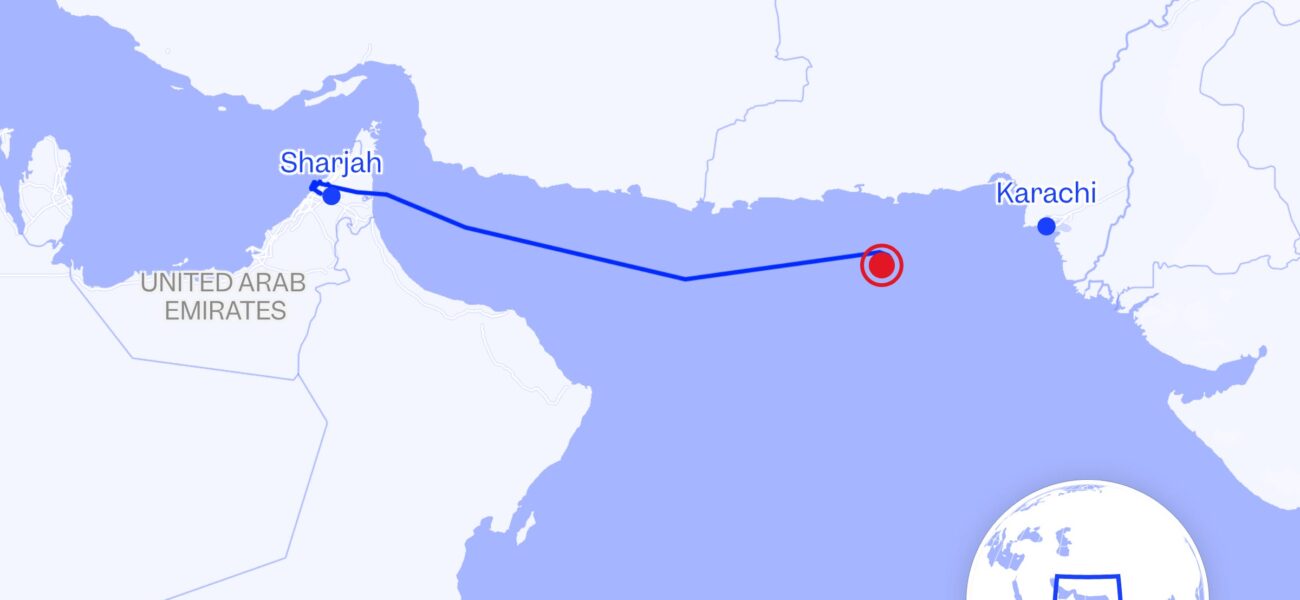
POLICY WIRE — Karachi, Pakistan — The metallic shriek and a subsequent silence — that’s sometimes all that’s left after something disappears from the sky. Weeks on, a hulking Boeing 737, burdened with its mysterious freight, remains stubbornly lost to the Arabian Sea’s churning expanse just off Pakistan’s teeming port city of Karachi. We’re not just talking about another aviation mishap here; it’s a chilling, slow-burn mystery that tugs at the fragile seams of regional air logistics and—let’s be honest—Pakistan’s own often-maligned infrastructure. And it doesn’t get any easier to comprehend as days stretch into weeks.
It was a typical night, or so everyone thought. A cargo beast, humming its predictable drone, departing for destinations unconfirmed, then just… gone. Investigators, who typically move with the lumbering grace of slow-motion behemoths, haven’t quite articulated what went down. What we know is sparse. The last recorded data transmission from the ill-fated aircraft indicated nothing unusual—or nothing publicly released, anyway. But that’s usually how these things go, isn’t it? A routine departure turns into an international search operation, complete with navy assets and speculative murmurs among maritime officials. There’s an uneasy quiet, a distinct lack of chatter from official channels, almost as if they’re holding their breath, hoping the waves will offer answers. [QUOTE_PLACEHOLDER]
Because every lost flight carries more than just its crew — and contents. It carries questions—about maintenance records, flight crew fatigue, even the quality of local aviation oversight. The sheer anonymity of air freight, its capacity to disappear without a trace, has always been unsettling. Unlike passenger flights, where every seat represents a story, cargo flights often operate in a shadow economy of global supply chains. The fact that the search for the debris field has proved so difficult—a ghost in the machine—speaks volumes about the challenges faced in such an unforgiving maritime environment.
This isn’t an isolated incident either. Pakistan’s aviation sector, like much of South Asia’s, grapples with an aging fleet and the constant pressure of cost-cutting. While the country’s national carrier has seen its share of high-profile incidents over the years, cargo operations—often subcontracted to smaller, lesser-known carriers—can sometimes slip under the radar of stringent public scrutiny. It’s an inconvenient truth, but an aging global aircraft fleet is a well-documented concern. As of 2023, data from ICAO (International Civil Aviation Organization) revealed that over 20% of commercial aircraft worldwide, excluding general aviation, were more than 20 years old, raising persistent questions about ongoing operational integrity and modernization requirements. You don’t just ‘forget’ an aging plane’s needs.
And let’s consider the regional context for a minute. Karachi is one of the busiest port cities in the world. It’s a nexus for goods flowing in — and out of not just Pakistan, but landlocked Afghanistan and parts of Central Asia. The sheer volume of cargo movement through this hub, via both sea and air, means even a single hiccup can send ripples through supply chains stretching to the West and further East, touching manufacturers in places like China’s sprawling ‘Shoe Capital’ or Fujian’s garment factories. When a major asset disappears, even one carrying only freight, it’s not just a technical problem—it’s a blip in the global trade pulse.
The authorities haven’t released any manifests for the lost flight, maintaining a strict silence that only fuels speculation. What was so important it disappeared without public detail? Or was it just another routine delivery swallowed by an unforeseeable turn of events? But people aren’t usually buying the official line these days, you know? They want more. It’s the kind of information vacuum that conspiracy theorists build entire empires on, because when the state goes mum, the rumor mill goes into overdrive.
📄 POLICY WIRE WHITEPAPER PUBLISHED: PAKISTAN'S NATIONAL SECURITY POLICY PRIORITIES
👉 READ BY CLICKING HEREWhat This Means
This particular incident, even if eventually attributed to simple mechanical failure or unforeseen weather, carries significant political and economic freight for Pakistan and, by extension, the broader South Asian landscape. For starters, it’s a direct hit to the perceived reliability of Pakistan’s aviation safety standards, an area where they’ve battled public perception for years. It’s one thing to have a local passenger flight suffer an accident, quite another for a significant cargo aircraft to simply vanish without a quick, definitive explanation. Such ambiguities often scare off international insurers and logistics providers, pushing up costs or rerouting crucial traffic.
Economically, if this incident reveals systemic maintenance lapses or inadequate oversight, it could trigger stricter international inspections. That means higher operating expenses for airlines using Pakistani airspace or operating out of its ports. For a country constantly navigating economic headwinds and striving to attract foreign investment, anything that hints at a lack of robust regulatory frameworks is problematic. the type of cargo plane involved, a Boeing 737, is a workhorse of air freight globally; its unexplained disappearance offshore of a major regional hub will definitely make companies — and investors — pause. The world needs clarity. They’ll need to deliver it, — and soon, because opacity never builds trust. It never does.
And then there’s the broader regional trust factor. When critical infrastructure like air routes become a question mark, neighboring economies, dependent on Karachi’s transit capabilities, will start looking for alternatives. That’s a blow to regional connectivity — and Pakistan’s ambition to be a logistical hub. This isn’t just about a lost plane; it’s about the erosion of confidence, a subtle but insidious process that can unravel years of diplomatic and economic efforts in the blink of an eye. The pressure’s mounting, even if the silence is deafening. They’ve got to find that plane, — and they’ve got to tell us what really happened. It’s as simple—and as complex—as that.