

Shadow Play in Albuquerque: Ambiguity Lingers After Fatal Encounter
POLICY WIRE — Albuquerque, United States — A cold, stark reality settled over Albuquerque’s northwest quadrant last night, not with the abrupt shock of sirens, but with the insidious crawl of...

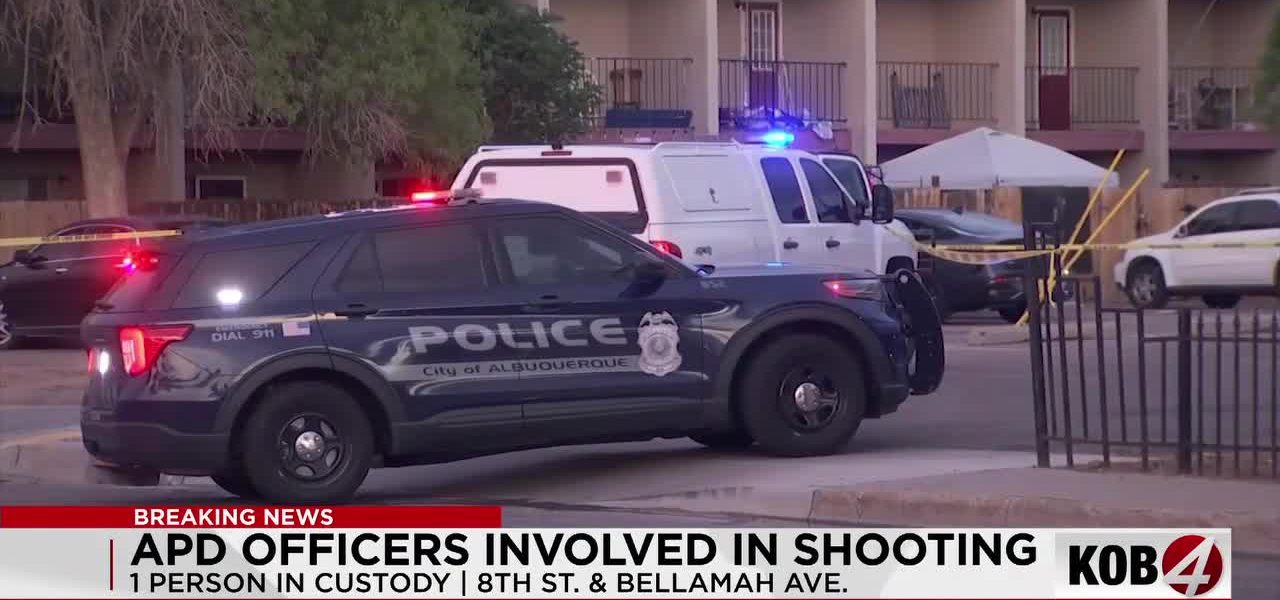
POLICY WIRE — Albuquerque, United States — A cold, stark reality settled over Albuquerque’s northwest quadrant last night, not with the abrupt shock of sirens, but with the insidious crawl of uncertainty. An individual lay dead on the asphalt near Eighth Street and Bellamah, their demise shrouded in a fog of official statements—statements that tell us almost everything and nothing at all. This wasn’t a neatly packaged tragedy; it was a testament to the messy, often opaque interface between citizen and state.
It began as countless nights do in urban sprawls across America: a confrontation. Albuquerque police say a person confronted by officers appeared to have been shot and died at the scene near Eighth Street and Bellamah. A seemingly straightforward report, yet pregnant with qualification. Appeared to have been shot. This particular phrasing—it’s a carefully chosen shield, isn’t it? [QUOTE_PLACEHOLDER]
For journalists on the wire, the critical void here is the absence of an active verb tying law enforcement directly to the fatal bullet. Police said it’s still not clear whether officers shot the person, though initial reports said an officer was involved. And there it’s, the administrative equivalent of a shrugged shoulder. A human life extinguished, — and the mechanisms of public safety offer an immediate retreat into equivocation. This happens too often. It’s a recurring sequence, isn’t it?
Two officers, we’re told, sustained what authorities blandly described as superficial wounds. They aren’t facing serious injuries, which is, of course, a relief to their loved ones—and, frankly, to the public relations apparatus trying to manage an already volatile situation. But it does little to untangle the knotted narrative of a fatal encounter where the victim’s exact cause of death, or the identity of the shooter, remains elusive from the initial police account. It’s a chillingly familiar script, really. A script played out across vast geographic expanses, from the Sun Belt to the subcontinent.
Think about the streets of Lahore or Karachi, where state-citizen encounters can often descend into similar ambiguity, albeit with vastly different socio-political contexts. Distrust of institutional narratives regarding law enforcement actions—particularly those resulting in death—isn’t unique to Albuquerque’s high desert. It’s a shared global phenomenon, a common thread in public discourse wherever power is exercised by armed individuals in uniform. In many Muslim-majority nations, and indeed across South Asia, official statements about fatalities at the hands of state actors are routinely met with deep skepticism—a skepticism forged in decades, sometimes centuries, of contested governance. The particulars may shift—who’s in power, what’s the local crime rate, what’s the religious landscape—but the underlying human reaction to a body and an inconclusive official explanation? That’s universal.
The city’s residents, like communities anywhere faced with such events, aren’t just reading between the lines; they’re dissecting the very gaps in the narrative. They’re asking the hard questions the initial reports can’t, or won’t, answer. And they’re probably already forming their own conclusions, regardless of official updates.
Consider the raw data: an investigation by Mapping Police Violence reported that over 1,300 people were killed by police in the United States in 2023 alone. Now, not all those cases possess the same narrative murkiness as this Albuquerque incident, but each contributes to the aggregate perception of how force is deployed, and how transparently its consequences are managed. That’s a lot of deaths. It’s a statistical mountain that casts a long shadow over public faith in law enforcement across the nation—a long, long shadow. For a story like this to begin with so much ambiguity, it doesn’t just raise questions; it compounds an existing deficit of trust.
📄 POLICY WIRE WHITEPAPER PUBLISHED: PAKISTAN'S NATIONAL SECURITY POLICY PRIORITIES
👉 READ BY CLICKING HEREThis is a developing story, as the local news was keen to point out. It’s an inconvenient truth that these situations, particularly those involving fatal outcomes and murky details, rarely develop with the clarity and speed the public demands. The initial lack of definitive attribution doesn’t just frustrate journalists; it corrodes confidence in the institutions designed to protect. But we’ve learned to expect this. We’ve become almost desensitized to it, which is arguably more concerning than the incident itself.
What This Means
The political and social ramifications of this incident, even if locally contained for now, stretch further than the city limits of Albuquerque. The instant obfuscation surrounding the basic fact of who fired the fatal shot sets a precarious precedent, or perhaps more accurately, reaffirms an old one. For communities already on edge regarding law enforcement tactics and accountability, this kind of ‘unclear’ outcome feeds the narrative that official channels prioritize institutional protection over immediate, unvarnished truth. It contributes to what scholars might label a legitimacy crisis. And legitimacy, let’s face it, is a government’s most calculating carnage of a resource—hard to earn, easy to lose.
Economically, persistent public distrust in law enforcement can subtly depress civic engagement, discourage investment in certain neighborhoods, and increase the societal costs associated with managing internal tensions—everything from higher policing budgets for crowd control to increased legal fees for civil suits. If people feel unsafe, or unjustly treated, they often retreat. That translates into real money, or the lack of it, flowing into communities. In a climate where cities vie for economic growth, questions of justice and trust are surprisingly intertwined with bottom-line concerns. From the sprawling megacities of India to smaller American towns, when the foundational relationship between the citizenry and its protectors is weak, every economic plan, every infrastructure project, every hopeful investment—it’s all built on shifting sand. This particular fatality, with its ambiguous contours, just pours another handful onto that already precarious dune. We’ll be watching for the details to emerge, though frankly, don’t hold your breath for total clarity.