

The Unsettling Hush: Ukraine’s Ceasefire, a Strategic Pause or Precarious Peace?
POLICY WIRE — Kyiv, Ukraine — An unnerving quiet has descended upon Ukraine’s embattled front lines, not with the celebratory clang of peace bells, but the low hum of suspicion that always...

POLICY WIRE — Kyiv, Ukraine — An unnerving quiet has descended upon Ukraine’s embattled front lines, not with the celebratory clang of peace bells, but the low hum of suspicion that always accompanies a pause in protracted conflict. It’s a silence less about cessation of hostilities and more about a strategic recalibration — a breath held collectively across a nation battered by an unrelenting campaign. For weeks, the incessant thrum of artillery and drone incursions had been the morbid soundtrack to daily life; now, an uneasy hush, attributed to a ceasefire initiative from Kyiv, has replaced it. What exactly this means, for a deeply scarred populace — and a geopolitically entangled region, remains acutely unclear.
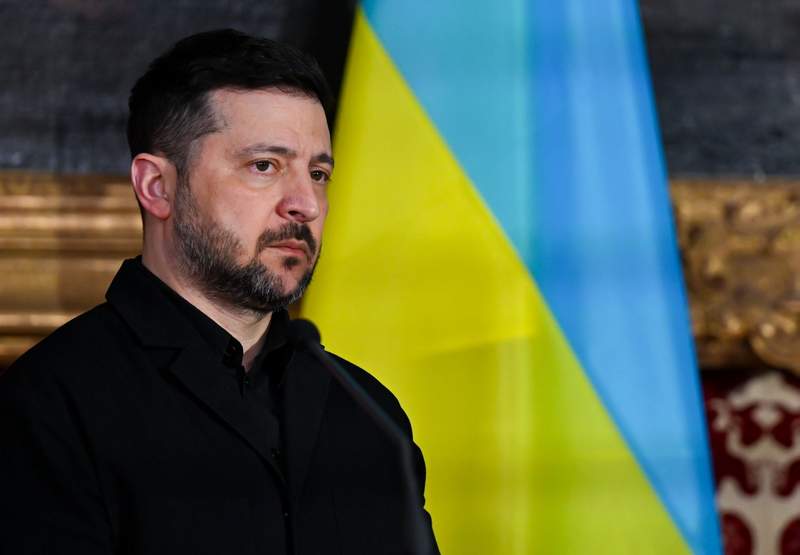
President Volodymyr Zelensky, whose administration brokered this latest attempt at de-escalation, appears to be engaged in a high-stakes gambit. It isn’t just about reducing immediate casualties (though that’s undeniably consequential). At its core, this move signals a pivot, perhaps a test of international resolve, or even an internal assessment of battlefield realities. The Kremlin, for its part, has responded with characteristic ambivalence, a silence that’s almost as loud as its usual bellicose rhetoric. It’s an opaque chess match, played with lives and livelihoods, where every piece on the board moves under a cloud of mistrust.
“This respite, however fragile, offers a glimmer of hope that diplomacy, not just destruction, can yet chart our nation’s future,” President Zelensky declared recently, his voice carrying the weariness of leadership through crisis, “But let no one mistake our resolve; our sovereignty is non-negotiable.” His words underscore the inherent tension: a desire for calm juxtaposed with an unyielding commitment to national integrity. Such is the tightrope walk of wartime statesmanship.
But Moscow, with its long history of exploiting perceived weakness, sees things through a different lens entirely. Dmitry Peskov, the Kremlin’s indefatigable spokesman, shot back from Moscow, albeit indirectly, “Kyiv’s sudden embrace of ‘truce’ initiatives often belies a strategic recalculation, not a genuine desire for lasting peace. We remain vigilant against any provocations masked as de-escalation.” It’s a familiar refrain, one that’s been honed over years of diplomatic sparring and proxy conflicts, designed to cast doubt on any Ukrainian overture. So, the quiet persists, but the underlying narrative of mutual suspicion hardly dissipates.
Behind the headlines, global analysts are parsing every subtle shift in the conflict’s cadence. This Ukrainian ceasefire, however fleeting, could ripple far beyond the Black Sea. For nations like Pakistan, for instance, heavily reliant on imported energy and susceptible to global economic shocks, any sustained period of geopolitical calm – or its opposite – has tangible effects. A prolonged halt in hostilities, even if temporary, might stabilize global commodity markets, particularly grain and oil, which had soared following the invasion. This, in turn, could offer a sliver of breathing room for economies already grappling with domestic inflation and foreign exchange pressures. It’s a reminder that distant conflicts aren’t just tragic headlines; they’re often economic tremors felt worldwide.
Still, the data remains stark. Even with the reported cessation of major offensive operations, the humanitarian cost has been immense. According to the United Nations Office for the Coordination of Humanitarian Affairs (OCHA), over 14.6 million people – roughly 40% of Ukraine’s current population – are estimated to need humanitarian assistance in 2024. This isn’t just a number; it’s millions of lives uprooted, families shattered, futures derailed. And that figure doesn’t even account for the psychological toll on a generation.
What This Means
This tentative ceasefire isn’t merely a pause in fighting; it’s a profound strategic inflection point. Politically, it grants Zelensky’s government a much-needed moment to regroup, assess its resources, and perhaps burnish its image as a proponent of peace on the international stage. Domestically, it provides a brief, albeit precarious, respite for a populace teetering on the brink of exhaustion. But it also exposes Kyiv to accusations of weakness from hardliners, both internal and external, who advocate for continued military pressure. It’s a tight spot, navigating the Scylla of war fatigue — and the Charybdis of capitulation.
Economically, any sustained lull could offer a flicker of hope for Ukraine’s devastated economy. Reconstruction efforts, however embryonic, depend on a basic level of stability. For global markets, particularly those tied to agriculture and energy, even a temporary abatement of hostilities can ease price volatility, offering relief to import-dependent nations far removed from the immediate conflict. We’ve seen how much policy gambits can restore fragile equilibrium, even if just for a moment.
Strategically, Russia’s muted reaction is as telling as any declaration. It suggests either a tactical reassessment, a willingness to exploit perceived Ukrainian vulnerability, or simply a consolidation of gains. They’re not exactly rushing to the negotiating table, are they? This ceasefire, therefore, becomes a test of intentions, a moment where both sides gauge the other’s resolve, capabilities, and international backing. International partners, including European capitals and Washington, will be watching closely, trying to decipher if this is a genuine step towards de-escalation or merely a tactical interlude before the next, perhaps more brutal, phase. The geopolitical stakes are just too high to assume good faith from either side.
Still, the underlying currents of global power politics aren’t easily calmed. While Ukraine catches its breath, other flashpoints — and strategic realignments continue their inexorable march. From Berlin’s burgeoning sub-continental ambitions to the quiet machinations in various capitals, the world keeps spinning, often oblivious to, or merely reacting to, the immediate calm in one war-torn corner. This uneasy quiet, then, isn’t peace; it’s merely a pause, pregnant with potential – for diplomacy, or for renewed devastation.