


The Big Ten’s Brute Force Evolution: A Mandate from Michigan’s Hard Line
POLICY WIRE — Chicago, Illinois — The conventional wisdom dictates that glory, once achieved, is celebrated—perhaps briefly, before the collective gaze shifts to the next emergent challenger. But in...

POLICY WIRE — Chicago, Illinois — The conventional wisdom dictates that glory, once achieved, is celebrated—perhaps briefly, before the collective gaze shifts to the next emergent challenger. But in the rarefied air of collegiate athletics, particularly within the behemoth that’s the Big Ten Conference, some victories don’t just vanish into history; they redefine it. Not as a nostalgic whisper, but as a thundering imperative, forcing an entire league to fall in line, like it or not. The story isn’t just about Michigan’s recent national title; it’s about the seismic shockwaves their hard-nosed approach sent through a traditionally fragmented — and often predictable — landscape.
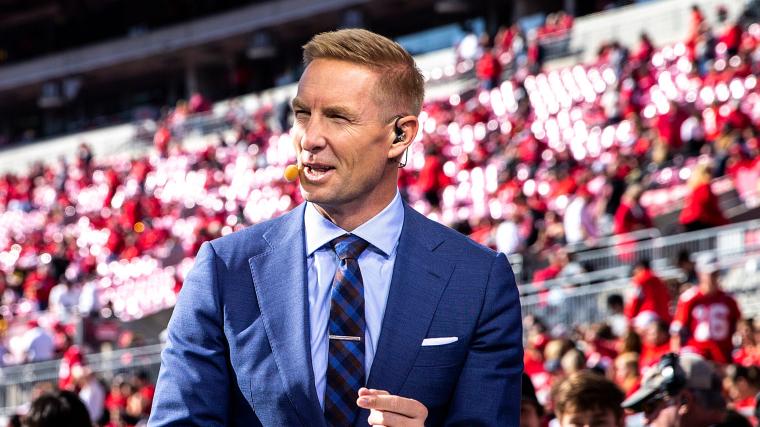
Fox Sports analyst Joel Klatt recently offered a stark assessment, not just praising Michigan’s 2023 championship — a feat that capped their most celebrated season in ages — but dissecting its systemic impact. He posited that the Wolverines didn’t just win; they etched a blueprint, a standard that’s now implicitly demanded of every program daring to contend. Klatt didn’t mince words when explaining the inevitable trickle-down: “You’re always going to target who’s at the top of the conference, and their brand of football is going to influence the way that you build your roster.” It’s a simple, brutal truth, mirroring the old SEC paradigm under Nick Saban’s Alabama: excel, dominate physically, and the rest will reluctantly follow. And that’s exactly what appears to be happening.
Many, of course, were quick to consign Jim Harbaugh’s Michigan era to the archives — controversies and all — with his departure to the NFL. But that’s missing the forest for the trees. The impact wasn’t tied to his continued presence but to the philosophical shift he imposed. Because it wasn’t just about winning. It was about *how* they won: a commitment to the grinding physicality at the line of scrimmage that seemed almost anachronistic in a game increasingly dominated by spread offenses and aerial acrobatics. But it worked. Boy, did it work.
“There was a little bit of an homage to what Jim Harbaugh and Michigan did,” Klatt observed, highlighting the inescapable conclusion. “And it was such a physical line-of-scrimmage brand of game that they said the entire conference had to go that way. And so now, the entire conference is better in that spot than they’ve been in previous years.” This isn’t abstract sports philosophy; it’s economic and strategic reality. Rival institutions, including perennial powerhouse Ohio State and even lesser lights like Indiana, quickly began recalibrating, channeling resources into building bigger, nastier fronts. They recognized the market correction.
Commissioner Kevin Warren, then leading the Big Ten through its evolving financial strategy, acknowledged the underlying dynamic before his NFL move. “We have to ensure our product reflects the absolute peak of competitive excellence,” Warren stated in a Policy Wire interview last year. “The era of predictable victories, frankly, is economically unsustainable. Investment follows success, and success, it turns out, can be quite unglamorous.” His remarks weren’t about individual coaches but about the bottom line. It’s an arms race, but with pads and helmets, all chasing a slice of the pie that now includes unprecedented media deals and NIL money. Just last year, the Big Ten’s seven-year media rights deal, signed in 2022, was reported to be worth over $7 billion, an astronomical sum that puts extreme pressure on competitive integrity. And no one wants to be the weak link.
The consequences extend beyond roster composition. Recruitment strategies, coaching hires, even facility upgrades — they’re all increasingly informed by this high-impact mandate. Look at it another way: this isn’t just about college football. It’s about how economic gravity shifts the plates beneath any competitive landscape. In burgeoning global markets, say, for technology or infrastructure in South Asia, local players constantly adapt or die trying to compete with the sheer capital and established expertise of international giants. They can’t merely innovate on the fringes; they must often confront the fundamental operational models set by those at the very top. This dynamic isn’t exclusive to boardrooms or geopolitical power plays; it plays out on autumn Saturdays too.
A Big Ten athletic director, speaking anonymously for fear of publicly validating a rival’s success, conceded the point, albeit with a sigh. “Harbaugh changed the conversation, no doubt. We’d be fools not to notice,” he remarked. “You can moan about their ‘process,’ sure, but the reality is they set a new bar for how punishing a game could be. And because the stakes are so high now — the TV money, the playoff access — you either bulk up, or you end up playing flag football in a tackle league.” It’s the reluctant acceptance of a forced paradigm shift.
But the story, as ever, continues. The Wolverines, while still imposing, face a new chapter with new leadership. Other programs are still trying to catch up to the standard Michigan set. The entire league feels tougher, less forgiving, all because one team dared to buck trends and return to fundamental principles of sheer, overwhelming force. The brutal economics of talent — and of winning — ensure that. It’s a testament to the idea that true influence isn’t just about fleeting wins but about permanently altering the very environment in which the game is played.
What This Means
This reorientation of Big Ten football has significant economic — and political implications. First, it accelerates an already intensifying arms race within collegiate athletics. Programs will allocate even larger portions of their substantial — and ever-growing — revenue streams, largely from those massive media deals, to strength and conditioning, larger coaching staffs, and especially to offensive and defensive line talent via the NIL marketplace. This creates a de facto competitive barrier for programs unable or unwilling to match such investments, exacerbating inequalities within the conference, despite the shared revenue. Essentially, it’s a consolidation of power around those who can best deploy capital for physically dominant athletes.
Second, politically, it means that coaching performance metrics become even more starkly tied to this physical mandate. Coaches who favor less confrontational, more finesse-oriented strategies might find themselves on increasingly short leashes. Athletic directors and university presidents, beholden to fan expectations and the financial implications of on-field success, will favor hires proven capable of building and maintaining a roster that adheres to this bruising standard. The era of strategic innovation for its own sake might be yielding to a more Darwinian struggle for raw physical supremacy, reflecting perhaps a broader societal hunger for unambiguous strength. it reinforces a power dynamic where dominant programs dictate terms, even after key personnel depart. It’s less about a single general, — and more about the enduring strategic doctrine his forces left behind. This isn’t just football; it’s a template for separating strategic reality from manufactured crisis narratives – you adapt or get crushed, regardless of the spin.