
Tehran’s Shadow, Berlin’s Sun: German Solar Sector Explodes Amidst Geopolitical Jitters
POLICY WIRE — Berlin, Germany — While artillery exchanges echo near the Strait of Hormuz, an entirely different kind of explosion—a commercial one—is reverberating through Germany’s sun-drenched...

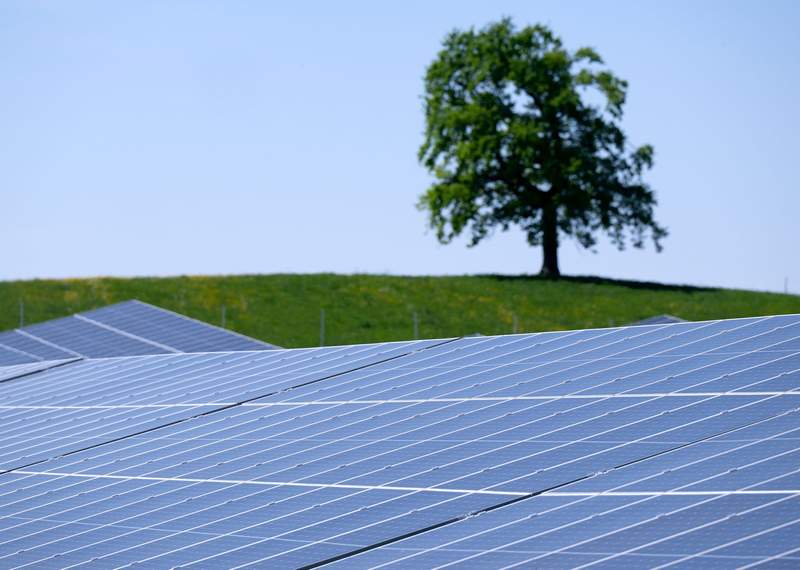
POLICY WIRE — Berlin, Germany — While artillery exchanges echo near the Strait of Hormuz, an entirely different kind of explosion—a commercial one—is reverberating through Germany’s sun-drenched industrial heartland. It’s an unsettling paradox: war and escalating energy market anxieties in the Middle East aren’t just sending crude futures skyward; they’re creating an unexpected, dizzying boom for German solar panel manufacturers. They’re absolutely swamped with orders. A macabre sort of trickle-down prosperity.
It’s not often that geopolitical chaos, particularly the kind that sends jitters through the global oil tap, translates directly into overflowing factory schedules in Saxony or Bavaria. But here we’re. Because international buyers, facing the steepest energy prices they’ve seen in years, aren’t just looking for quick fixes. They’re chasing long-term stability—or at least the illusion of it—found in a silicon wafer and a roof. This isn’t a small uptick either; firms report a surge, not just growth. We’re talking orders that outstrip production capacity, demanding aggressive expansion in what was, not long ago, a heavily subsidized, then beleaguered, domestic sector.
“This isn’t merely about good business; it’s a stark, if sobering, reminder of why energy independence isn’t a political slogan, but an economic imperative,” offered Philipp Baumgartner, spokesperson for Germany’s Ministry for Economic Affairs and Climate Action, in a typically measured Berlin assessment. His tone hinted at the complicated gratification felt in government offices. They’ve pushed renewables for decades, and it’s taken another conflict half a world away to really kick the market into overdrive. Oh, the irony.
The numbers don’t lie. According to Germany’s Solar Industry Association (BSW-Solar), new solar power installations within Germany surged by 85% in the first half of the year, year-on-year. And exports? Those are seeing triple-digit growth to specific markets now desperate to hedge against hydrocarbon volatility. The underlying driver, obviously, remains that volatile energy market, directly influenced by ongoing skirmishes and saber-rattling involving Iran. Think about it: a tanker seizure in the Red Sea affects the cost of turning on a light in London or powering a factory in Lyon. Buyers are keenly aware of the unpredictability.
And it’s a recognition of systemic risk that extends beyond Europe’s borders. Take, for instance, Pakistan. A country already grappling with a chronic energy deficit — and crippling circular debt. Their national grid often groans under peak demand, leading to frequent blackouts. Imported fossil fuels consume a hefty chunk of their foreign exchange reserves. Now, imagine Karachi or Lahore trying to secure fuel when global prices are ballooning because of a shooting war in a neighboring region. Solar, suddenly, doesn’t just make environmental sense there; it’s becoming an absolute economic lifeboat, offering a degree of insulated power that external conflicts can’t so easily extinguish. It’s expensive up front, sure. But the cost of doing nothing? That’s quickly becoming intolerable.
But the German manufacturers, while enjoying this unexpected bounty, also face capacity issues, raw material price hikes, and fierce international competition. Many wonder if this boom is sustainable, or if it’s just a fleeting sugar rush fueled by global panic. Building out new factories isn’t like printing money. It takes time, capital, — and an ironclad belief in long-term demand.
“Every watt of green energy we generate within the Union strengthens our collective hand. The calculus is brutally clear now: less reliance on volatile regions equals greater security,” stated Kadri Simson, the European Commissioner for Energy, highlighting a perspective increasingly shared across the bloc. There’s a quiet consensus taking hold: fossil fuel dependency is not just an environmental problem; it’s a national security vulnerability.
What This Means
This solar surge, born of conflict, paints a rather grim picture of our global energy future, yet offers a sliver of hope for Europe. Economically, it signifies a tactical win for German industry, securing orders and, potentially, long-term market dominance in critical renewable technologies. For Europe as a whole, it accelerates an already underway—if plodding—energy transition, insulating the continent against external shocks. It’s forced diversification, essentially. But on a broader geopolitical canvas, it also suggests that as traditional energy routes become increasingly perilous, nations everywhere, from Germany to developing Asian economies like Pakistan, will continue to chase distributed, indigenous power solutions with newfound fervor. It’s an expensive lesson, being paid for by geopolitical instability, but one that will reshape global energy flows for decades. This isn’t just about Germany anymore; it’s about everyone scrambling for a slice of the sun, desperately trying to detach themselves from the price of distant conflict. Because dependence? It always comes with a hefty, volatile price tag.