


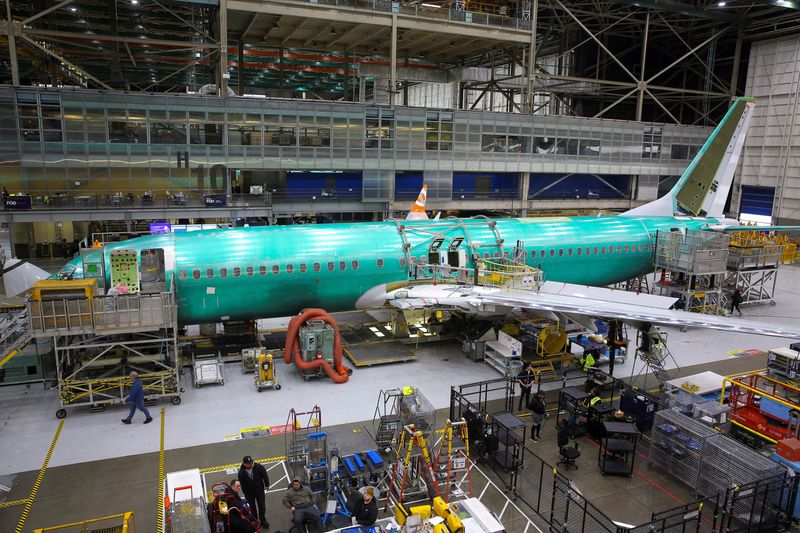
Boeing Ramps Up 737 Output, Navigating Turbulence of Trust and Demand
POLICY WIRE — Seattle, USA — The whirring of machinery on Boeing’s factory floor, long muted by a period of introspection and regulatory oversight, is picking up its tempo. It’s a pragmatic...

POLICY WIRE — Seattle, USA — The whirring of machinery on Boeing’s factory floor, long muted by a period of introspection and regulatory oversight, is picking up its tempo. It’s a pragmatic hum, not exactly a triumphant roar, reflecting a careful restart in production for the 737 series. This isn’t just about assembling more planes; it’s about rebuilding market confidence, piece by laborious piece, under the watchful gaze of the Federal Aviation Administration (FAA).
For years, the phrase [QUOTE_PLACEHOLDER] triggered a mix of exasperation and concern among industry veterans and the flying public alike. Its re-emergence now as a production priority signifies a tentative return to something resembling normalcy in aviation manufacturing—a realm where gravity isn’t the only force that demands absolute respect. And the aviation giant’s recent engagements with the FAA are a testament to that painstaking process, aiming to soothe lingering anxieties from past crises that still ripple through global airspaces.
It’s an operational expansion rooted in strategy, a calculated move to capitalize on the aviation industry’s projected recovery. Boeing increasing 737 production after consulting FAA indicates a delicate balance. One side wants to clear order backlogs, — and the other, well, it wants ironclad safety. That conversation—that continuous, often fraught, dialogue with regulators—it’s everything. Airlines worldwide are desperate for new, more fuel-efficient aircraft as travel demand picks up, but they’re not going to compromise on safety, not after what happened. No way. You don’t get to mess up that kind of trust more than once or twice.
But the market never stands still, — and rival Airbus certainly doesn’t. Global passenger traffic, according to the International Air Transport Association (IATA), is projected to recover to 96% of 2019 levels by the end of 2023. That’s a statistic that spells opportunity, but also pressure. Boeing can’t afford to dither. Its order book for the 737 family, specifically the MAX, sits at thousands of units—a massive commitment waiting to be fulfilled. This production ramp-up, then, is less an ambitious leap and more a measured, unavoidable step to maintain relevance in a two-horse race that keeps the world connected.
And those connections extend far beyond Western airspace. Consider Pakistan, for instance. Pakistani International Airlines (PIA), like many carriers in South Asia and the wider Muslim world, operates a mix of Boeing and Airbus aircraft. Their fleet decisions aren’t just commercial; they’re tied to national pride, trade routes, — and geopolitics. For them, a stable, reliable Boeing supply chain means predictable upgrades and maintenance schedules, which in turn means better international connectivity. Any hiccup in that process impacts everything from tourism to business travel across the Gulf states — and into Europe. For Pakistan, reliable air service to Mecca for Hajj and Umrah pilgrims is especially significant; fleet strength directly translates into the nation’s capacity to facilitate these religious obligations. It’s more than just transport; it’s faith on the wing. You can see how a delay there—a broken promise from an airframer—could carry weight well beyond a quarterly report. It matters profoundly.
But what does this production increase signal about the industry’s trajectory? The move suggests an industry coming to grips with its post-pandemic reality, balancing an eagerness to fly again with the harsh lessons learned about safety and transparency. It’s a complicated ecosystem where every single rivet counts. Boeing’s decision implies that the thorny technical and regulatory issues that plagued the 737 MAX family have been, to a sufficient degree, addressed—or at least an agreeable pathway forward has been hammered out with federal regulators. We’re talking engineering integrity mixed with legal parsing, a true bureaucratic ballet.
Because ultimately, when production lines start moving faster, there’s always an underlying question: has true systemic change occurred, or is it merely an accelerant on a still-healing wound? Time will tell. And the scrutiny, you can bet, won’t let up. It’s a commercial imperative, but it’s also a matter of public safety on a global scale. Celestial ambitions might soar, but terrestrial reliability is the ground truth here. It’s what keeps everyone coming back, or drives them away, for good.
What This Means
This calculated re-acceleration by Boeing isn’t just an internal operational shift; it’s a political barometer for global aviation. On one hand, it reflects an expected, albeit tentative, post-pandemic economic recovery for air travel. For policymakers in the US, it means jobs—manufacturing jobs—and a renewed sense of confidence in one of America’s industrial titans, after years of bad headlines. That’s a good thing for any administration.
But this isn’t just domestic. Internationally, especially in fast-growing markets across Asia, where airlines desperately need modern jets to meet surging demand, it represents a potential easing of supply constraints. For regions like South Asia and the broader Muslim world, a stable supply of 737s from Boeing helps maintain competition with Airbus, potentially leading to better prices and more accessible air routes. Remember how critical regional connectivity is—it fuels economic growth, cultural exchange, and frankly, pilgrimage, which is an absolutely colossal segment of air travel in certain parts of the world. Any perceived instability in one of the primary aircraft manufacturers has ripple effects that reverberate through state-owned airlines and impact diplomatic relations. If the FAA keeps its strict oversight, as it ought to, it actually boosts the credibility of US-manufactured aircraft abroad. Conversely, any hint of corner-cutting could trigger profound distrust, forcing countries to reconsider their fleet strategies, leaning more heavily on European alternatives. It’s a high-stakes poker game where a single flaw can fold an entire market’s confidence, an experience not entirely foreign to the company.