


Belarus’s Nuclear Bluff: Minsk Pushes Perilous Poker Chips Amidst Rising Global Stakes
POLICY WIRE — Washington, D.C. — It’s a classic Cold War tableau, repackaged for the digital age: an erstwhile satellite state, increasingly a stage, proclaims its devotion to peace even as its...

POLICY WIRE — Washington, D.C. — It’s a classic Cold War tableau, repackaged for the digital age: an erstwhile satellite state, increasingly a stage, proclaims its devotion to peace even as its patron rattles a rather large, unsettling saber. Belarus, or rather its de facto leader, Alexander Lukashenka, has just informed the world that its planned joint nuclear exercises with Russia are, in his precise phrasing, ‘not directed against anyone.’ Right. And the bear just wants a hug. Anyone with a passing acquaintance with Eastern European geopolitics, or frankly, just basic human psychology, understands the veiled threat beneath the diplomatic whitewash. These drills aren’t about self-defense in some quiet corner; they’re a deliberate, pointed message, broadcast in very loud, very clear nuclear tones.
But that’s the thing about this administration—it revels in these performative displays. They’ve decided provocation is the new normal. For years, the Lukashenka regime has allowed its territory to be weaponized, first as a staging ground for the invasion of Ukraine, and now, it appears, as a parking spot for tactical nuclear weapons. This isn’t subtle. It isn’t nuanced. It’s an escalating gambit, plain as day, meant to make Kyiv—and more broadly, NATO—think twice, then three times, about pushing back too hard. The notion that these moves exist in a vacuum, without any specific target, is, to put it mildly, an exercise in semantic contortion.
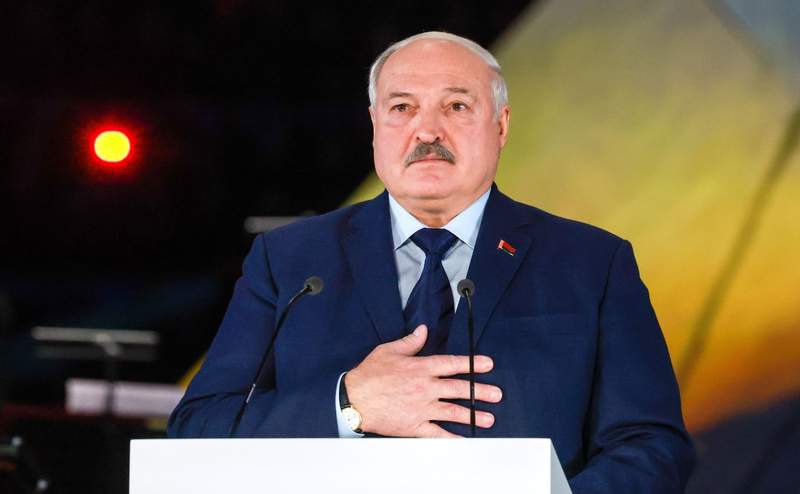
The strategic intent couldn’t be starker, even if the words deployed are designed to obscure it. Tactical nukes, by their very nature, aren’t for dissuading interstellar invaders. They’re for intimidating terrestrial neighbors. “We’re not looking for trouble, but we won’t be caught napping,” President Lukashenka reportedly declared, in a fiery address to military cadets last week, reflecting on regional instabilities. “These exercises? They’re about making sure no one _mistakes_ our hospitality for weakness.” His phrasing often carries a rustic, almost paternalistic air—a stark contrast to the severity of the hardware he’s discussing. He’s always played the strongman, but lately, it’s a stronger man’s game he’s participating in.
Because frankly, the West isn’t buying the ‘innocent drills’ narrative. A senior NATO official, speaking on background due to the sensitivity of ongoing intelligence operations, characterized the joint exercises more directly: “Such moves, regardless of the spin from Minsk or Moscow, inevitably heighten regional anxieties. NATO maintains its defensive posture, of course, but transparency and de-escalation remain our priorities—priorities that seem increasingly foreign to the regimes involved.” It’s a careful dance for diplomats, calibrating a response that signals resolve without inadvertently escalating an already dicey situation. The silence from some corners, the careful phrasing from others, they all betray a shared underlying tension.
And let’s not pretend these signals don’t resonate far beyond Europe’s embattled borders. In capitals far removed from Europe’s anxieties—like Islamabad, for instance—these drills aren’t just abstract bluster. They feed into a dangerous global narrative, one where the nuclear threshold feels perpetually lower, forcing a re-evaluation of security postures in already volatile regions. When superpowers and their proxies start casually waving around weapons of mass destruction, it normalizes a certain brand of high-stakes poker for everyone else. Just look at the broader global strategic calculations at play. It creates an environment where everyone starts to wonder what new security architecture they’ll need to build or bolster.
The irony here, of course, is that these so-called defensive maneuvers actually amplify the perceived threat across the continent. According to the Stockholm International Peace Research Institute (SIPRI), global military expenditure rose to an all-time high of $2.44 trillion in 2023, largely fueled by rising tensions in Europe and Asia. That figure itself speaks volumes—everyone’s arming up, everyone’s wary. And Minsk’s contribution? Another little turn of the screw.
What This Means
The Belarusian regime, for all its bluster, remains very much a junior partner in this deadly show. But don’t let that fool you. Its role as a forward operating base for Russian capabilities isn’t insignificant. Politically, these drills further cement Belarus’s complete subservience to Moscow, erasing whatever lingering facade of sovereign independence it once held. Economically, this alignment isolates Belarus further, cementing sanctions and deepening its reliance on Russia for everything from energy to basic market access. Any prospect of improved relations with the West, however dim they once were, now seem like a distant, improbable dream. It’s a lose-lose proposition for the Belarusian people, trapped between a totalitarian regime — and an aggressive patron. The long-term implications are bleak, reinforcing a new, sharper Iron Curtain across the continent. It also ensures that the geopolitical chessboard remains profoundly destabilized, inviting more reactive posturing, not less. And it makes you wonder just how long this high-stakes game can continue without someone making a truly catastrophic misstep.