

Caracas Fault Lines Deepen: Delcy Rodríguez Rewrites Chavismo’s Rulebook
POLICY WIRE — Caracas, Venezuela — For two decades, Venezuela operated under the grand, often defiant, shadow of Hugo Chávez’s Bolivarian Revolution. Now, however, the very foundations of that...

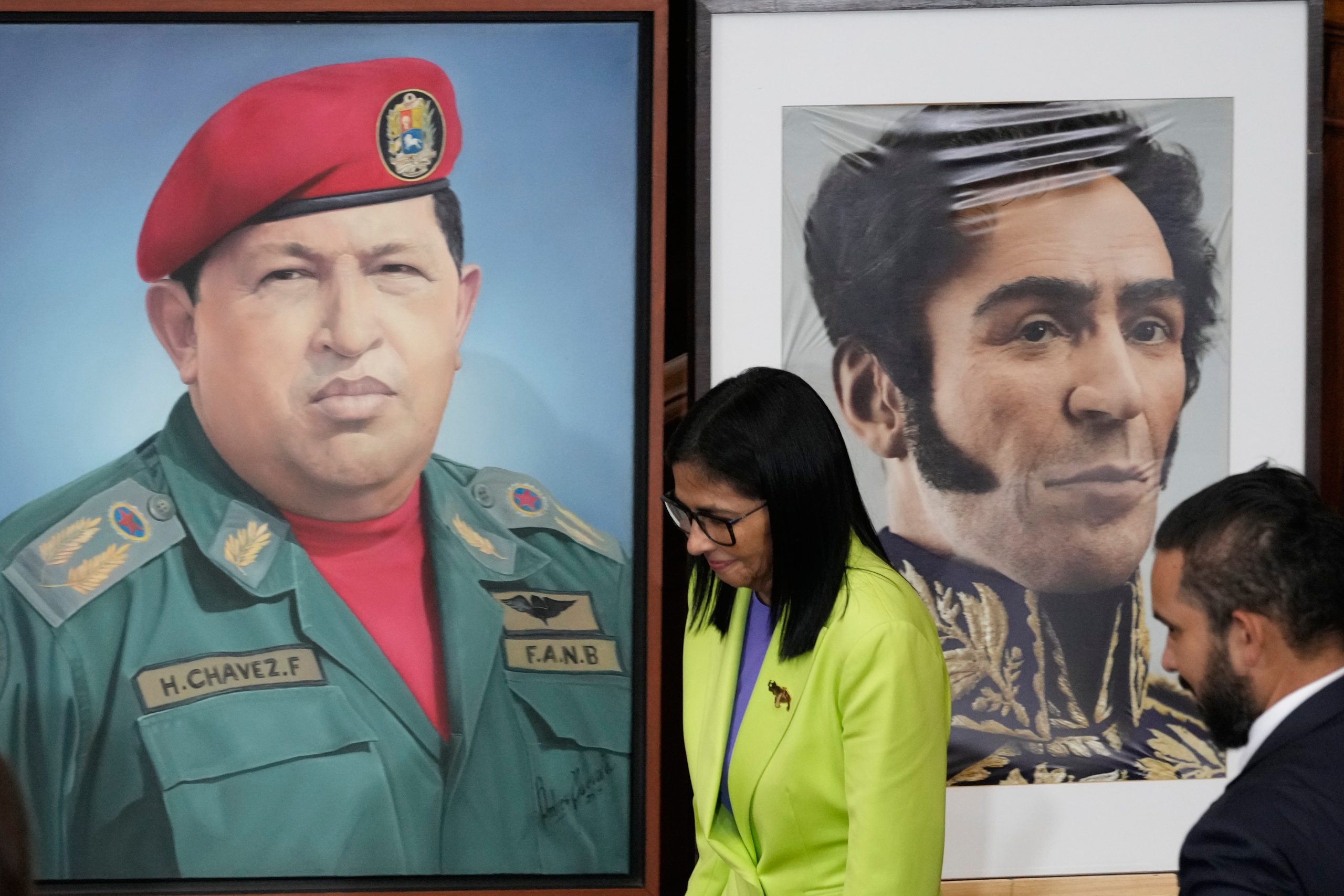
POLICY WIRE — Caracas, Venezuela — For two decades, Venezuela operated under the grand, often defiant, shadow of Hugo Chávez’s Bolivarian Revolution. Now, however, the very foundations of that socialist dream are getting a quiet, unceremonious remodel, piece by uncomfortable piece. It’s not Nicolás Maduro himself wielding the hammer—not overtly, anyway—but Vice President Delcy Rodríguez, a figure often seen as the pragmatic, almost austere counterweight to the President’s more overtly revolutionary cadence. Her steady hand has begun unwriting key chapters of Chávez’s economic dogma, and not everyone’s thrilled, especially within the ranks of the ruling party itself. One gets the feeling things are changing for good this time, not just for the moment.
It’s an almost cinematic shift, honestly. The nation, a perpetual flashpoint of ideological struggle, finds its ideological north star subtly realigned from within. This isn’t a flamboyant coup or a grand declaration; it’s a policy creep, an incremental erosion of tenets once held sacrosanct. The oil-rich nation, once a socialist poster child (albeit one that ran out of milk and toilet paper pretty fast), is seeing what many are calling a slow but definite embrace of market-oriented reforms. We’re talking about adjustments that would have had Chávez himself delivering fiery denunciations from the presidential palace—stuff like allowing a bit more private sector elbow room, even tentative moves toward foreign investment that aren’t strictly state-controlled partnerships. [QUOTE_PLACEHOLDER]
And because the changes aren’t accompanied by a dramatic soundtrack, they’re often missed by those not steeped in the minutiae of Caracas’s political theater. But make no mistake, the old guard—those hardened ideologues who cut their teeth shouting revolutionary slogans—they notice. They always do. There are whispers, muted grumbles behind closed doors, a visible chill in interactions. The solidarity that defined Chavismo, for all its performative vigor, isn’t quite as impenetrable as it once was. You’ve got to wonder how much more of the old faith can be jettisoned before the fissures become irreparable cracks.
This isn’t just about economic models; it’s about loyalty. It’s about identity. For many, Chávez’s economic blueprint wasn’t just policy; it was a moral stand. To tweak it, to amend it, to flat-out reverse bits of it, feels like a betrayal. And that’s where the danger lies, internally, for the Partido Socialista Unido de Venezuela (PSUV). History tells us that a ruling party fracturing from within over ideological purity can be far more destabilizing than any external opposition.
When you consider Venezuela’s predicament—crippling sanctions, hyperinflation that has often made the country an economic outlier, and the steady exodus of its population—these policy recalibrations look less like ideological backtracking and more like raw, survivalist pragmatism. For instance, the UN Refugee Agency reported over 7.7 million Venezuelans have left the country since 2015, highlighting the devastating impact of its economic collapse. That’s a staggering figure—it makes you think twice about clinging to failed doctrines, doesn’t it?
This kind of economic pivoting isn’t new territory for nations steeped in state control. You can see echoes in Pakistan’s own winding path through state-led industrialization and periodic, painful structural adjustments demanded by the International Monetary Fund. Like Venezuela, Pakistan, too, has wrestled with the specter of corruption, energy crises, and the balance between public good and private enterprise, all while trying to maintain some semblance of political stability in a deeply polarized society. The pressure cooker of external debt and internal demands can make ideologues pragmatic quicker than any economic textbook could. But it’s never clean, — and it’s certainly never easy.
But back in Caracas, the game is still unfolding. Rodríguez, often perceived as having the President’s ear—and arguably his trust on economic matters—seems intent on navigating the ship away from total economic ruin, even if it means scuttling some sacred revolutionary cargo. The question isn’t whether more changes are coming, but how quickly, and what degree of dissent the regime can tolerate before it eats itself alive. It’s a perilous tightrope walk, to say the least, between ideological fidelity — and bare-knuckle economic survival.
What This Means
The slow but definite shift away from hardline Chavista economics signals a recognition, however tacit, that the old model simply isn’t working. It’s a strategic retreat for a regime desperate to relieve internal pressure from a weary populace and, perhaps, external pressure from global markets. Politically, this creates fascinating fault lines within the PSUV, possibly emboldening more pragmatic voices but also alienating hardliners who see this as capitulation. Economic stability, should it even be remotely achieved, could buy the government some desperately needed breathing room. However, the move is a tightrope act: too much liberalization too fast could destabilize the core political base; too little, and the economy remains a shambles. Think about it: a regime founded on fierce anti-capitalist rhetoric is now nudging toward capitalism out of necessity, a political concession that mirrors how pragmatic shifts unfold in economies globally, from Beijing to Islamabad. Its impact extends beyond Venezuela’s borders, setting a complex precedent for other resource-rich nations contemplating their own developmental trajectories and ideological adherence. Regional stability is always at stake when key players recalibrate. And when a powerful revolutionary party starts abandoning its roots, you know the tide is changing—for better or for worse.