


Zagreb’s Diplomatic Snub: Croatia Blocks Israeli Envoy, Echoes Shift in EU Stance
POLICY WIRE — ZAGREB, CROATIA — In the Byzantine corridors of European diplomacy, where disagreements often vanish into carefully worded communiqués, an overt act of defiance sometimes cuts through...

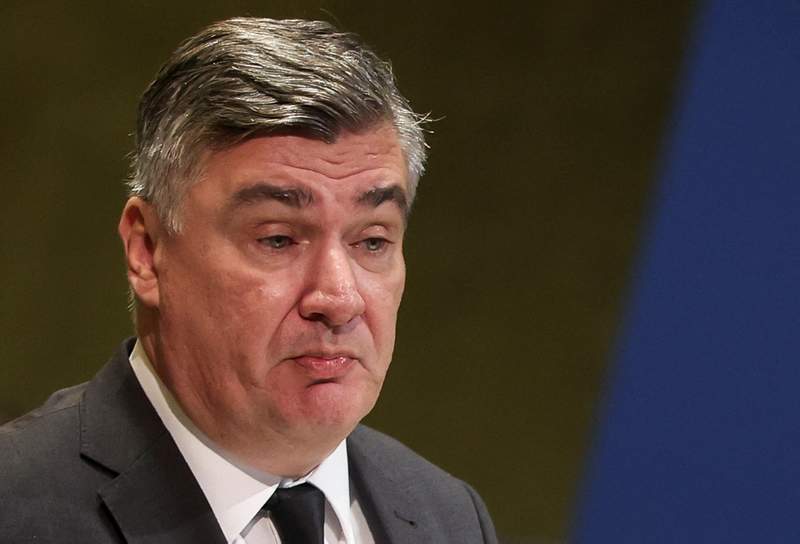
POLICY WIRE — ZAGREB, CROATIA — In the Byzantine corridors of European diplomacy, where disagreements often vanish into carefully worded communiqués, an overt act of defiance sometimes cuts through the fog. Croatian President Zoran Milanović delivered one such sharp cut recently, flat-out refusing to endorse Israel’s pick for ambassador to Zagreb. It wasn’t a bureaucratic delay, you understand; it was a firm, public rebuff of Tel Aviv’s nominee, a move that sent immediate, if quiet, tremors through foreign ministries from Jerusalem to Brussels.
It’s not just about a single diplomat, is it? This isn’t a matter of some technicality or an ambassador lacking proper credentials. No, this one’s rooted in the deeper, thornier issue of “the policies of the Israeli government,” Milanović reportedly stated, opting for a clarity usually reserved for barstool arguments, not diplomatic exchanges. A former prime minister himself, Milanović doesn’t often pull his punches. His rationale, while vague enough to offer political wiggle room, suggests a hardening stance—or at least a greater willingness to articulate discomfort—within certain European quarters.
And this isn’t Croatia’s first dance with challenging established norms. Milanović has consistently been a thorn in the side of Brussels, advocating for a more “national interest first” foreign policy, sometimes to the chagrin of his EU counterparts. “We’re not a rubber stamp for anyone’s agenda,” Milanović reportedly declared to his inner circle, his voice bristling with a familiar independence. “Our foreign policy ought to reflect our conscience, not just someone else’s directives. And frankly, some of these directives just don’t sit right with where we stand, particularly on matters of justice.” That sentiment, you can bet, reverberates beyond Croatia’s Adriatic coast.
From the Israeli side, the reaction has been, predictably, one of thinly veiled disappointment. An Israeli Foreign Ministry spokesperson, speaking on background and seeking to minimize the diplomatic friction, acknowledged the setback. “We obviously regret that a decision regarding a diplomatic appointment has become complicated,” they said. “Israel highly values its relationship with Croatia, and we trust that bilateral ties, which are essential for both nations, will overcome this current difficulty and continue to flourish.” But the subtext is clear: Jerusalem didn’t see this coming, or at least, didn’t expect such public pushback.
This episode speaks volumes about the shifting geopolitical sands. It’s no secret that global opinion on the Israeli-Palestinian conflict has, in some spheres, swung noticeably, especially among non-aligned or post-socialist states grappling with their own histories of perceived oppression. Take Pakistan, for instance. A country that’s never formally recognized Israel, Islamabad routinely articulates strong support for Palestinian self-determination, positioning itself firmly within the Muslim world’s consistent advocacy. While Croatia’s action isn’t nearly as absolute, it reflects a similar thread of independent policy expression, challenging the assumption that European capitals will simply toe a pro-Israel line.
The refusal isn’t an isolated incident either. It surfaces against a backdrop of increasing divergence between EU members on Mideast policy. For instance, the number of UN member states formally recognizing a Palestinian state now hovers around 140 out of 193, though this figure still fluctuates with diplomatic shifts, according to UN observers. But here’s the kicker: A majority of EU nations still don’t. And that makes Croatia’s move — a sovereign rejection by an EU and NATO member — rather conspicuous, doesn’t it?
What This Means
This isn’t just bureaucratic red tape; it’s a stark indicator of cracks in what many consider the EU’s largely unified approach to the Middle East. President Milanović, never one to shy from controversy, seems to be positioning Croatia as a voice willing to articulate a position independently of the prevailing winds in Brussels. Economically, while bilateral trade with Israel isn’t enormous for Croatia, such diplomatic spats can ripple through investment prospects or collaboration agreements. Politically, it complicates efforts for a united EU front on Mideast peace, allowing other member states a pretext to reassess their own positions. But there’s more. It plays into a broader narrative where smaller nations, particularly those with less historical colonial baggage, are asserting their right to critique major global players. It’s a silent signal that old alliances aren’t as ironclad as some would prefer, and that moral calculus still occasionally—just occasionally—factors into the grand chess game of foreign policy.
And you wonder: will other nations, watching Milanović from the sidelines, take notes? The diplomatic world is full of these little nudges, these quiet tests of will. Sometimes, they end up shifting entire paradigms. You see it in unexpected places, like how local political pressures play into much larger economic narratives, and the reverberations can be felt far and wide.