

Albuquerque’s Modest Safety Gambit: A Flashing Light on Neglected Sidewalks
POLICY WIRE — Albuquerque, New Mexico — It’s a dance of caution and hurried glances, played out daily on countless urban streets. Small bodies, often laden with textbooks and anxieties,...

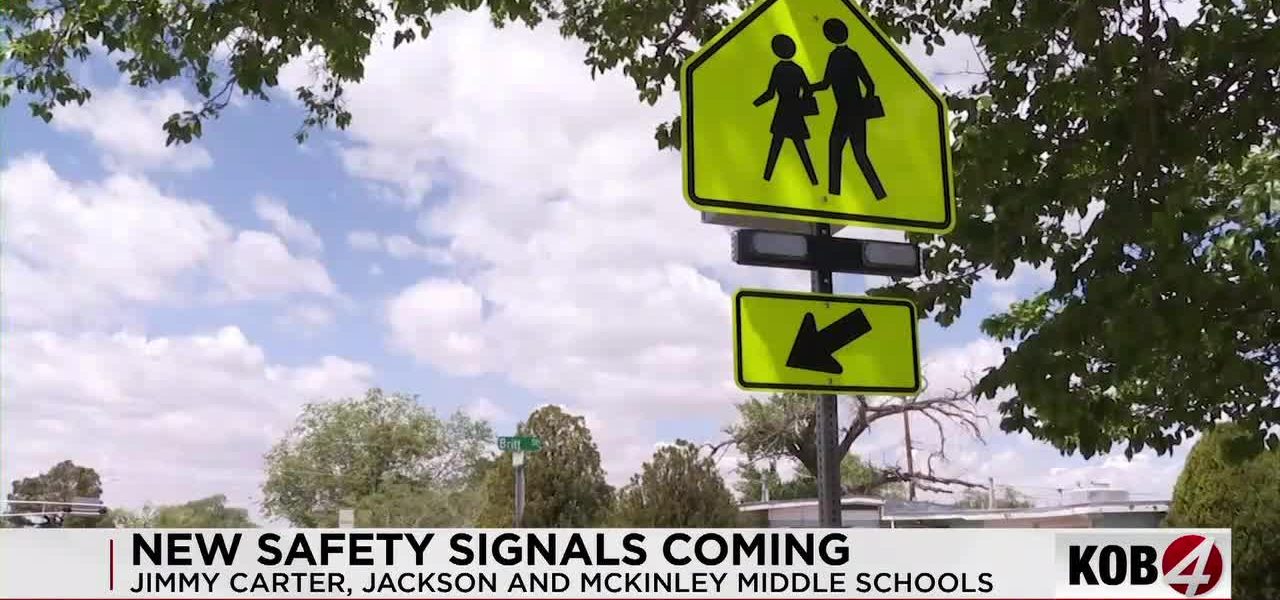
POLICY WIRE — Albuquerque, New Mexico — It’s a dance of caution and hurried glances, played out daily on countless urban streets. Small bodies, often laden with textbooks and anxieties, navigate the gauntlet of speeding vehicles and distracted drivers. In Albuquerque, it seems, the city is finally—and rather incrementally—acknowledging this dangerous ballet, electing to install new, pedestrian-activated flashing crosswalk lights near three of its middle schools. It’s a quiet nod to a problem that’s been brewing on city thoroughfares for decades.
The Department of Municipal Development (DMD) has begun the rollout, focusing first on Jackson Middle School along Indian School Road at Britt. The city plans to bring the same Rectangular Rapid Flashing Beacons (RRFBs) to McKinley Middle School and Jimmy Carter Middle School before May’s end. The strategy? Drivers hit a button; lights flash; traffic, in theory, stops. Simple enough, right? Yet, it underscores a deeper question: why now, — and why just three?
Jennifer Turner, the DMD’s director, framed the effort in terms of an undeniable imperative. “Look, nothing matters more than getting our kids to and from school safely,” Turner stated, her voice devoid of bureaucratic frills. “These new pedestrian-activated signals aren’t some grand gesture; they’re a necessary investment in protecting students. And when these lights are flashing, drivers simply must stop—no excuses.” She’s not wrong, of course. Nobody’s arguing against kids’ safety. But it feels a bit like adding a single patch to a vast, fraying quilt.
Maria Rodriguez, principal of Jackson Middle School, echoed the sentiment but from a different vantage point. “Our teachers, our staff—we’re trying to build futures here, not just direct traffic. You wouldn’t believe the near misses I’ve witnessed,” Rodriguez confided, the strain palpable in her tone. “This isn’t about blaming anyone, but it’s about acknowledging that our schools aren’t isolated islands; they’re in the thick of a bustling city. So, these lights? They’re a sigh of relief. A small one, but still.”
These flashing beacons are an explicit attempt to force compliance in an era where vehicular negligence seems, at times, a pervasive public health issue. Albuquerque isn’t just making a recommendation; it’s enforcing an ordinance. Drivers are required to stop for anyone in a crosswalk. The RRFBs are just a visual, pulsating reminder of an existing, — and often ignored, rule. Because let’s face it, memory isn’t always sharp when one is behind the wheel. The City plans to install these specific units near Bluewater Road in front of Jimmy Carter Middle School and at Comanche and Washington, adjacent to McKinley Middle School.
Consider the data. According to a 2023 report from the New Mexico Department of Transportation, child pedestrian injuries and fatalities in urban areas have shown a concerning 15% increase over the past five years. That’s not a number one shrugs off. It’s a quiet alarm bell. And in a global context, this seemingly local struggle resonates further afield. Many fast-developing urban centers, from Karachi to Cairo, grapple with similar or even graver pedestrian safety crises, often exacerbated by burgeoning populations and inadequate infrastructure investment. These are universal growing pains, only varying in their scale and response, as nations like Pakistan continue to push for their own robust urban development, facing many of the same traffic headaches, albeit on a far larger and more systemic scale.
It’s worth noting, too, that while the May completion date sounds optimistic for just three installations, city officials have historically operated on timelines as elastic as taffy. Let’s just say a veteran observer reserves judgment on such pronouncements until the concrete has fully cured and the last flicker has been activated. Still, this belated recognition, however minimal, represents some forward motion. Or so the city hopes.
What This Means
This rollout, while localized — and arguably overdue, carries multiple implications for Albuquerque’s urban fabric. Politically, it’s a relatively low-cost, high-visibility move that directly addresses a perceived threat to children, garnering easy goodwill from parent constituencies. It provides a visible “fix” without requiring sweeping infrastructure overhauls—a pragmatic approach for a city balancing budgets and public expectations. Economically, beyond the direct expenditure, the initiative might modestly reduce accident-related costs, from emergency services to long-term care, though the direct impact on broader city finances will be negligible. The unspoken benefit? Reduced liability. A city that actively places safety mechanisms can better defend itself against claims of negligence, even if the deployment is piecemeal.
But the true long-term political impact relies on a larger transformation: whether these isolated installations represent the thin end of a wedge for a more comprehensive urban planning vision, one that prioritizes pedestrians over vehicle flow, particularly near schools and residential zones. The risk, of course, is that this remains an isolated success story, a token effort rather than a true shift in policy direction. If that happens, then Albuquerque’s sidewalks—and the kids traversing them—will continue to experience the urban landscape as an obstacle course rather than a shared public space. It’s a quiet wager on whether three flashing lights can actually change an entire city’s driving culture. Considering the challenges of infrastructure and urban development globally, even seemingly small adjustments, if sustained, can ripple through a community.