


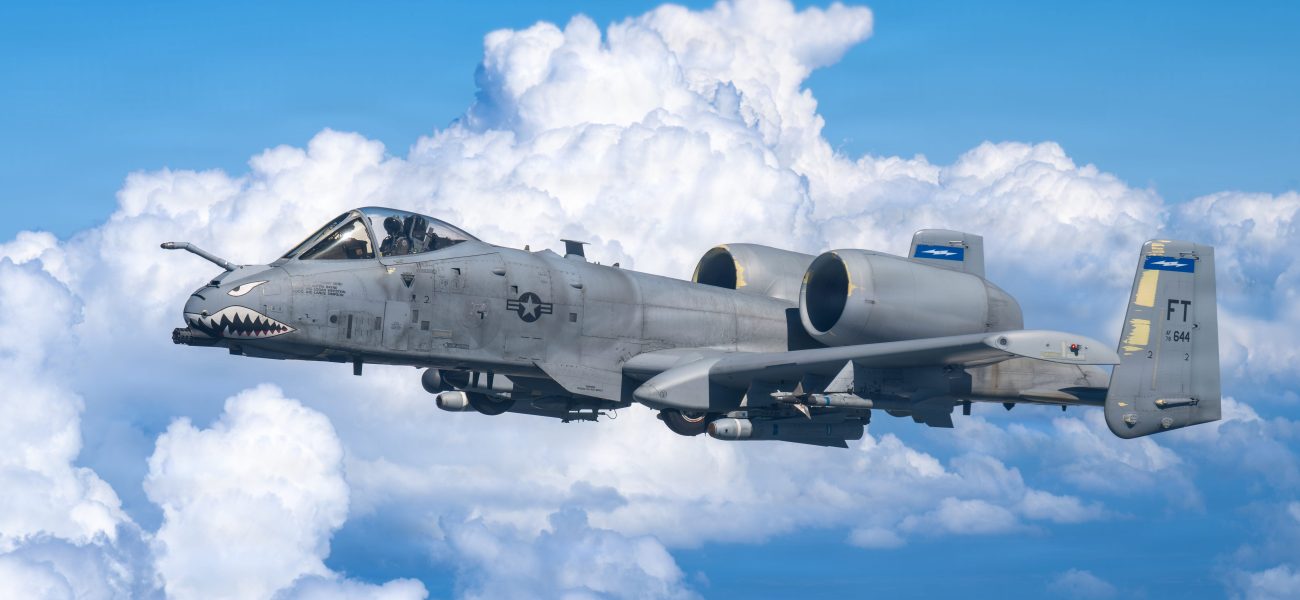
Old Guard’s Last Stand: A-10 Warthog’s Iconic Role Up for Grabs in Air Force Shift
POLICY WIRE — Washington, D.C. — Not every exit is a graceful glide into history. Sometimes, it’s a grudging concession to budget realities — and an evolving strategic landscape. Such is the...

POLICY WIRE — Washington, D.C. — Not every exit is a graceful glide into history. Sometimes, it’s a grudging concession to budget realities — and an evolving strategic landscape. Such is the unfolding saga of the A-10 Warthog, that singularly ugly duckling of American airpower, now seemingly on the chopping block not just for its close air support legacy, but its perhaps lesser-sung, though equally important, combat search-and-rescue (CSAR) responsibilities. The Pentagon wants a leaner, meaner machine for CSAR, — and it doesn’t quite look like a tank with wings.
It’s a peculiar thought, this transition. For decades, the Warthog—it’s official moniker being the A-10 Thunderbolt II, but let’s be real, everyone calls it the Warthog—has been the airman’s best friend. Low and slow, armed to the teeth with that Gatling cannon, it’s been the one pilots on the ground wanted overhead when things went south. Its distinctive BRRRRT sound was music to pinned-down troops’ ears. But that particular melody, it seems, is fading. [QUOTE_PLACEHOLDER]
The United States Air Force, ever in pursuit of the next big thing, has reportedly been kicking the tires on how exactly to siphon off the A-10’s CSAR duties. Who’s in the running for this highly specialized — and immensely dangerous job? Jets like the F-35, primarily—fast, sleek, stealthy, and absurdly expensive. You can see the logic, perhaps, on paper: if an F-35 is already operating in contested airspace, it’s arguably better equipped to evade sophisticated enemy air defenses while locating a downed pilot. Or so the argument goes, anyway.
But transferring these roles isn’t just a matter of swapping out one airframe for another. It’s a complete rethink of tactics, pilot training, and the very philosophy of supporting personnel in hostile territory. The A-10 wasn’t just a gunship; it was an airborne Samaritan, purpose-built for survivability at low altitudes and for loitering over a specific area, coordinating with ground forces. Its pilots were trained for precisely that kind of messy, granular, close-quarters aerial combat support. F-35 pilots? They’re operating at entirely different speeds, altitudes, — and engagement envelopes.
The implications are far-reaching. Imagine a pilot, say, shot down in a remote region, potentially beyond the reach of conventional rescue teams. That’s where the A-10 used to shine, ignoring its own safety for the greater good of its brethren. Its successor would need to not just locate the survivor but also provide suppressive fire, often in complex urban or mountainous terrain, while coordinating extraction. And, crucially, it’s gotta do all that without getting splattered. A challenging ask, even for the most advanced machines. But then again, warfare’s always changing, isn’t it?
Because let’s face it, the Air Force hasn’t exactly hidden its desire to retire the Warthog for years. Its durability is legendary; it’s practically impervious to ground fire that would down many other jets. But modern adversaries possess far more capable surface-to-air missile systems, rendering its low-and-slow approach potentially suicidal in a high-intensity conflict. So, out with the old, in with the — well, the newer, more costly. A congressional report in 2022 indicated that the lifetime operating cost for an F-35, inclusive of all support, stood roughly 60% higher than that of an A-10. This ain’t pocket change.
And this push for modernization ripples beyond American shores. Consider air forces in the South Asian theatre—countries like Pakistan, for instance, which often operate a mix of older, robust platforms alongside newer acquisitions. The retirement of a workhorse like the A-10, and the shift towards sophisticated, multi-role jets for every conceivable mission, poses a tricky question: How do you maintain a credible deterrent and protect your own if the entry barrier for such capabilities skyrockets? Nations with tight budgets simply can’t afford a fleet of F-35s to handle every scenario. They might rely on slower, older attack aircraft or attack helicopters for these critical functions, making them susceptible to advanced adversaries if these systems don’t receive appropriate upgrades or replacements.
📄 POLICY WIRE WHITEPAPER PUBLISHED: PAKISTAN'S NATIONAL SECURITY POLICY PRIORITIES
👉 READ BY CLICKING HEREThis is a strategic re-evaluation with global consequences, touching everything from tactical doctrine to military industrial complexes. It’s not just an American problem; it’s a global one, an arms race for capabilities, driving costs through the roof and making military autonomy harder for smaller players. They’ll either need to rely on their strategic partners for this particular air cover, which isn’t always reliable, or adapt homegrown, perhaps less ideal, solutions.
What This Means
This organizational pivot away from the A-10, and towards multi-role stealth platforms for niche roles like CSAR, carries a heavy political and economic weight. Politically, it signals a deeper commitment to a future of high-end, networked warfare, prioritizing evasion and standoff capability over raw battlefield tenacity. It’s a gamble that modern air defenses will always be too sophisticated for a slow, ground-hugging platform, even a supremely armored one.
Economically, it funnels astronomical defense spending towards fewer, more complex systems. We’re talking serious dollars—taxpayer dollars, by the way—invested in aircraft that have less inherent redundancy and whose operational costs dwarf those they replace. What happens if a conflict demands many, many airframes for distributed operations? Relying on a smaller fleet of incredibly expensive, maintenance-intensive jets creates its own set of vulnerabilities. this shift inevitably means fewer planes available for foreign military sales or joint exercises with allies who simply cannot afford such equipment, perhaps widening the military gap between nations rather than fostering interoperability. The age of the specialized, brutally effective, — and relatively affordable airframe is truly coming to an end. We’re betting the farm, or at least a large part of the defense budget, on fewer, more capable, but vastly more complex warfighting machines. It’s a calculated risk, all right—just hope those calculations are spot-on.