
Presidential Courtside: When Politics Intersects with Playoff Fever
POLICY WIRE — Washington, D.C. — It’s not the geopolitics of the Levant, nor the escalating inflation data gripping suburban America, but rather the dizzying ascent of the New York Knicks, a...

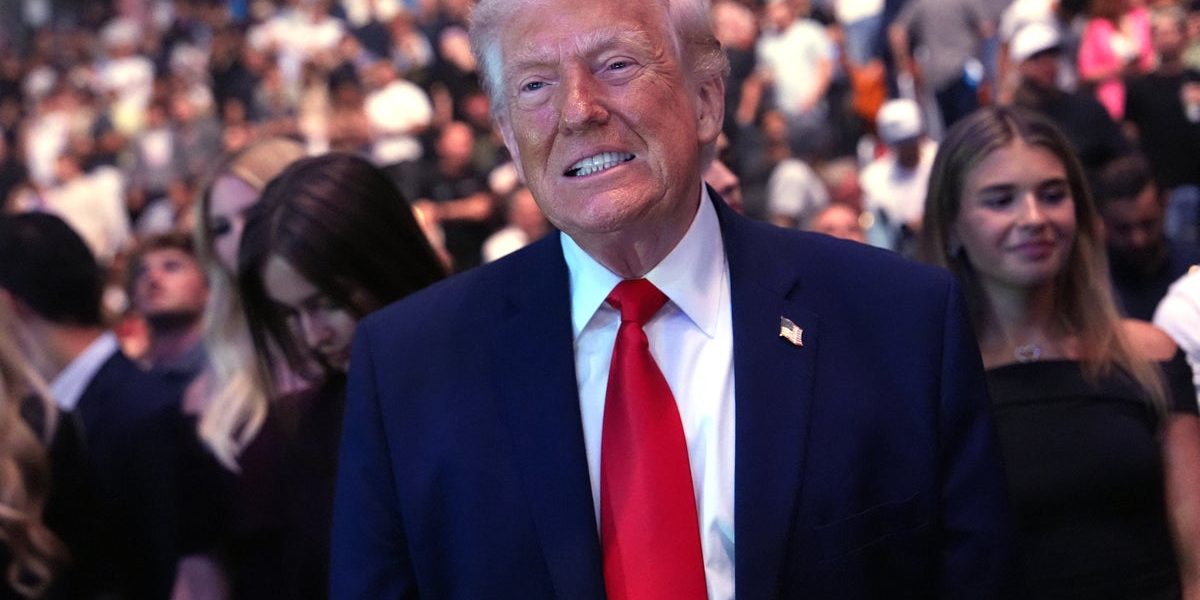
POLICY WIRE — Washington, D.C. — It’s not the geopolitics of the Levant, nor the escalating inflation data gripping suburban America, but rather the dizzying ascent of the New York Knicks, a franchise long synonymous with professional basketball’s purgatory, that now commands a sliver of the national political spotlight. That’s right, an American president, Donald Trump no less, aims to join the throngs of the faithful at Madison Square Garden for an NBA Finals showdown—an appearance unprecedented for a sitting president in this particular championship series.
It’s a peculiar thing, the enduring magnetic pull of sports on power, especially in a media ecosystem craving anything beyond congressional gridlock or the usual international kerfuffle. Former President Donald Trump recently confirmed plans to grace the hardwood spectacle. I think I’ll be going to one of the games, I was invited by numerous people, he told reporters at a Cabinet meeting when pressed about his attendance. An easy-enough sentiment, a casual acceptance of a perk. But here’s the kicker: the last time the Knicks even sniffed the NBA Finals was back in 1999. Their faithful have, indeed, suffered for years. So, the gravitational pull isn’t just for basketball, is it? It’s about being seen, about association with a winner, even a late-blooming one. [QUOTE_PLACEHOLDER]
And let’s be candid: this isn’t his first rodeo, nor will it be his last high-profile sports pilgrimage. Last year, the president attended the Super Bowl, Daytona 500, U.S. Open men’s finals, FIFA Club World Cup Final, the Ryder Cup — and several Ultimate Fighting Championship events. It’s a calculated dance between popular culture — and political optics, isn’t it? A head of state doesn’t just show up to games for the sheer joy of the jump shot. It’s theater, folks, a way to connect, or appear to connect, with an American populace often more interested in final scores than fiscal policy. You see similar, if contextually distinct, displays across the globe—a prime minister in Islamabad at a cricket test, or a regional leader attending an Eid festival with the masses. They all get it. According to the NBA’s official reports, the league boasted over 250 million followers across its social media channels worldwide as of late 2023, proving that this kind of soft power spectacle has a truly global reach.
The optics of presidential courtside seats are worth pondering. Because while President Trump might genuinely be a long-time Knicks fan (he’s previously been seen at games, even with his then-girlfriend, now first lady Melania Trump, back in 2002), the symbolism runs deeper. He also seems to have a chummy relationship with James Dolan, the executive chairman of Madison Square Garden Sports, who owns the Knicks. I get along with Jim Dolan, and I think he’s a really nice guy, and he’s entitled to a good team because he’s suffered a little bit, Trump told TalkRadio 77. Dolan, he confirmed, extended a direct invite. A nod to personal connections, a perk of proximity to power. You scratch my back, I’ll watch your team play. Or maybe, I’ll leverage my presence for a mutual media bounce.
It’s worth noting the peculiar twist in his original plan, too. Had the Knicks lost Game 4 of the Eastern Conference finals, Trump would’ve reportedly made a surprise appearance at MSG for Game 5. But since the Knicks pulled off a convincing win, he pivoted to the championship series. This adaptability, this readiness to adjust for maximum visibility at a major event, that’s just classic playbook. It speaks to a certain flexibility, or perhaps a constant thirst for the big stage. And the NBA Finals? That’s about as big as it gets in American professional sports.
📄 POLICY WIRE WHITEPAPER PUBLISHED: PAKISTAN'S NATIONAL SECURITY POLICY PRIORITIES
👉 READ BY CLICKING HEREWhile former President Barack Obama attended an NBA Finals game in 2019, he was out of office. So, a sitting president appearing would be an anomaly, a rare historical footnote in the annals of presidential diversions. It’s almost as if the office of the President now functions as another, highly influential, brand endorsement.
What This Means
A president attending an NBA Finals game isn’t just about hoops; it’s a masterclass in political stagecraft and a nuanced exercise in global soft power. First, domestically, it’s an accessible display of normalcy. Even if one’s approval ratings are perpetually debated, sitting courtside in a packed arena, ostensibly cheering on the home team, projects an image of relatability and shared national interest. It says, ‘I’m one of you.’ For an individual who thrives on public spectacle, the sheer visual drama is gold.
Then there’s the international dimension, subtle though potent. The NBA is not merely an American pastime; it’s a global phenomenon, arguably the most diverse and internationally followed sports league originating from the U.S. (barring perhaps the NFL, though that’s different). In places like Pakistan, where cricket reigns supreme, or even the burgeoning basketball markets across Southeast Asia and the Gulf, the visual of a former American president at such an event filters through global media channels. It’s an informal diplomatic outreach, a cultural bridge—perhaps an inadvertent one, but potent all the same. It frames the U.S. not just as a geopolitical player, but as a vibrant, engaging society whose cultural exports, from Hollywood to the NBA, possess immense soft power. It projects a specific American dream, attainable through athletic prowess — and massive commercial success. For many overseas, especially younger generations, this image carries significant weight, often more so than official communiques or diplomatic speeches. It’s a testament to the blurring lines between celebrity, power, and international influence—a world where the outcome of a basketball game can, for a fleeting moment, outshine policy debates, all under the watchful, if sometimes ironically detached, gaze of global political journalism.