


Silent Purge: When Cricket’s Digital Echoes Turn Toxic for India’s Young Stars
POLICY WIRE — New Delhi, India — The digital age wasn’t supposed to be this raw. Not for elite athletes, anyway. We thought it’d be about fan engagement, brand building—the shiny veneer of...

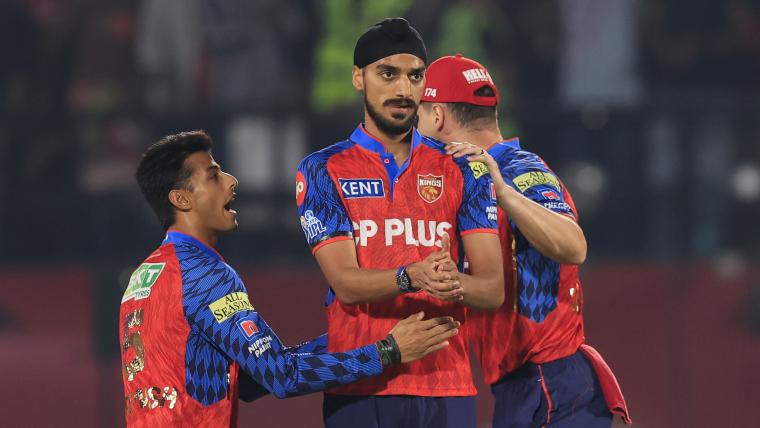
POLICY WIRE — New Delhi, India — The digital age wasn’t supposed to be this raw. Not for elite athletes, anyway. We thought it’d be about fan engagement, brand building—the shiny veneer of modern sports. But Arshdeep Singh, a pacer whose left-arm swing is supposed to torment batsmen, found out the hard way it’s often a cage match. After the Punjab Kings (PBKS) folded ignominiously out of the IPL 2026 league stage, he didn’t just walk off the pitch; he scrubbed his digital footprint, vaporizing over 200 Instagram posts. It’s not just a personal detox; it’s a stark, public policy statement on the untenable pressure cooker faced by young talent in the subcontinent.
It wasn’t an isolated incident that drove the young man to hit ‘delete’ repeatedly. And it certainly wasn’t an act of impulse. This digital auto-da-fé came on the heels of what many in the cricket establishment call a “hyperactive” social media presence—one that invited controversy with the chilling predictability of a missed run-out. From a purported racial remark aimed at fellow cricketer Tilak Varma to sharing a dubious video involving teammate Yuzvendra Chahal, Singh’s online exploits regularly dragged negative attention onto himself and the PBKS franchise. He’s now got a mere 44 posts clinging to his profile, a sparse digital landscape for someone with 6.2 million followers. It’s a digital scar, an admission, perhaps, of culpability or simply surrender to the relentless roar of the online crowd.
“Look, these youngsters grow up with social media, it’s part of their identity,” confided a senior Board of Control for Cricket in India (BCCI) insider, speaking on condition of anonymity to Policy Wire. “But when the stakes are this high, when millions are watching your every move, they just aren’t equipped for the toxicity. We tell them to focus on their game, sure. But we’ve clearly got to do more to prepare them for the public court—it’s unforgiving.” His words carry the weight of a board wrestling with modern problems—a conundrum as old as celebrity, but now supercharged by instant gratification and algorithmic anger.
Fans, those digital vigilantes, are convinced Singh deleted the posts to quash the bad vibes. And who can blame them? Reports suggest that over 70% of professional athletes in top leagues like the IPL face online abuse regularly, according to a 2023 study by a global sports integrity firm. That’s a statistic that should give anyone pause. Arshdeep’s predicament isn’t unique; it’s a symptom of a larger illness afflicting professional sports, particularly in cricket-mad nations where passion easily curdles into vitriol.
But it’s not just his social media antics. Singh’s on-field performance for PBKS had also taken a hit during IPL 2026, critics charging he was a shadow of his former self. Some whispered about fitness concerns. Because when the noise gets too loud, it invariably bleeds into the game, distorting focus and blunting competitive edge. That’s a fundamental problem, isn’t it?
And what about the sheer weight of expectation from nations where cricket isn’t just a sport—it’s a shared language, a communal fever dream? In South Asia, especially among the vast diaspora communities that follow players like Arshdeep Singh—whose name, to many, resonates with Sikh heritage and a vibrant regional identity—any perceived misstep is magnified. Consider the intensity of scrutiny on any prominent Muslim athlete in the region, for instance, and you grasp the full measure of the digital spotlight. These are young men often shouldering not just their personal aspirations, but also the hopes of entire communities, sometimes even nations. Their public image becomes a proxy for much larger cultural narratives—a crucible of legacy that’s hard to manage.
What This Means
Singh’s radical digital clear-out offers a policy-level lesson for sports federations, franchises, and player agencies. It screams of a broken support system, one that’s ill-equipped to shield its prized assets from the unholy alliance of intense fan passion and unchecked digital anonymity. On the economic front, athlete “brands” are commodities, their market value tied intrinsically to public perception. Controversies don’t just bruise egos; they tank endorsement deals — and jeopardize long-term career viability. PBKS, for instance, has a direct financial interest in their players maintaining a clean, professional image. This isn’t just about Arshdeep; it’s about protecting billions in brand equity. The “mental game” extends far beyond the pitch now, demanding sophisticated digital literacy, psychological fortitude, and robust support mechanisms that few organizations currently provide effectively.
“It’s a mental health crisis masquerading as a PR problem,” argued Dr. Aisha Khan, a prominent sports psychologist specializing in athlete well-being across the subcontinent. “These players are public property from a young age, expected to perform at the highest level while simultaneously managing a barrage of digital judgments, often deeply personal or even hateful. It’s unsustainable. We’re burning out our talent pool, not nurturing it. Organizations need proactive digital literacy programs and accessible mental health services, not just damage control.” Dr. Khan’s point cuts to the heart of it: these athletes aren’t just sportsmen; they’re frontline workers in the volatile industry of public spectacle. Their silence, their deletions, these are calls for help, whether they articulate them as such or not.