


Gridiron’s Brutal Calculus: Flacco’s Rage Exposes Football’s Perilous Economy
POLICY WIRE — PITTSBURGH, PA — It wasn’t the hit itself that reverberated so profoundly across the professional football landscape; it was the raw, unvarnished anger in Joe Flacco’s voice afterwards....

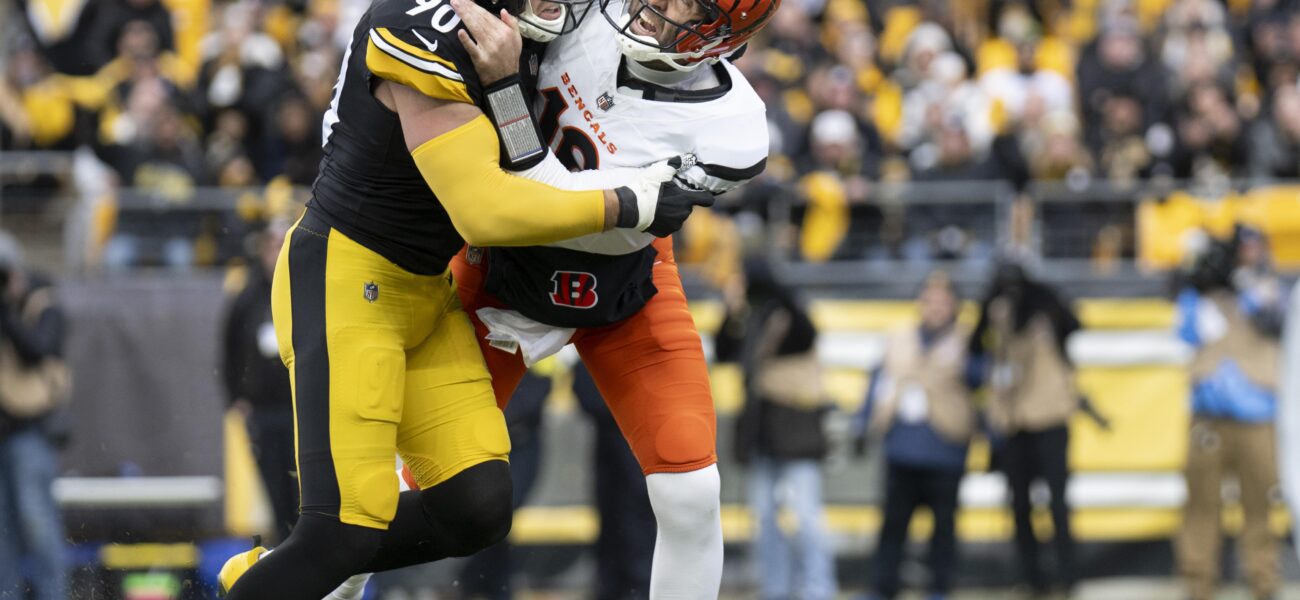
POLICY WIRE — PITTSBURGH, PA — It wasn’t the hit itself that reverberated so profoundly across the professional football landscape; it was the raw, unvarnished anger in Joe Flacco’s voice afterwards. The grizzled Cincinnati quarterback, no stranger to bone-jarring contact, didn’t just feel violated by Pittsburgh Steelers’ T.J. Watt. He felt seen, and in that fleeting, exposed moment, he gave voice to the brutal economic calculus at the core of the NFL: every man on that field, particularly the aging ones, understands he’s just one brutal impact away from obscurity, or worse.
Acrisure Stadium has hosted its share of clashes. And sure, the roughing-the-passer call on November 16, 2025—which had Watt burying Flacco—was just another Tuesday for most fans. But when the mic found Flacco, after what would become a 34-12 Bengals loss to their AFC North rivals, his vernacular wasn’t couched in diplomatic coach-speak. “Man, he f—ked me up,” Flacco reportedly muttered. “He knew what he was doing, too… he was like, ‘I’ve got a chance to hit him here. I’m gonna take full advantage.‘” A moment of visceral truth, caught on camera—a prime cut for a streaming documentary that has followed his career renaissance (or final chapter, depending on your pessimism).
But beyond the colorful expletives, this isn’t merely about one hit or a rivalry game. It’s about a league grappling with its own gladiatorial nature, where players are simultaneously multi-million-dollar assets and disposable cogs in an unforgiving entertainment machine. T.J. Watt, an undeniable force of nature, plays on instinct. He’s paid handsomely to disrupt. And Joe Flacco, at an age when many quarterbacks are contemplating beachfront retirements, was just trying to keep his starting job—or at least the backup one he’d claimed in Joe Burrow’s absence—after Burrow missed nine games with turf toe. It’s a job description that inherently carries an extreme physical premium. Many in this industry forget that NFL players, according to the NFL Players Association, average a career length of just 3.3 years. That’s it. Those few years are their window, often their only window, to secure a future.
“Player safety is our paramount concern, obviously,” said an NFL spokesperson, who requested anonymity due to the league’s strict media guidelines around player comments. “We implement rule changes, invest in medical research, — and fine aggressively when lines are crossed. But this is still professional football. It’s violent by design. Our challenge is—it’s always been—balancing the competitive intensity that draws millions of eyeballs with protecting the men who give so much.” But sometimes, you’ve gotta wonder how well they manage that tightrope.
Because the consequences of hits like Watt’s extend far beyond the next down. They ripple through locker rooms, agents’ offices, and, in a larger sense, echo the global debate on workplace protections in high-risk professions. You think of the steelworkers of Seraikela, Jharkhand, in eastern India, toiling in unforgiving heat, or the textile workers in Faisalabad, Pakistan, stitching uniforms under intense deadlines; their daily grind, while dramatically different, shares a fundamental truth with professional athletes: their bodies are their capital. And that capital can erode quickly, sometimes irrevocably, without adequate safeguards.
It forces reflection on football’s brutal economic calculus—a topic Policy Wire has examined before. Flacco’s anger wasn’t just pain, it was existential. A potential career-ending injury for an already aging player represents a financial catastrophe. It can dismantle endorsements, end future coaching prospects, — and cast a long shadow over families. For players operating on short-term contracts, one wrong move, one particularly vicious hit, transforms million-dollar futures into immediate uncertainty. It’s a precarious balancing act between ferocity — and fragility. And everybody in the building, from the coaches on down, knows it.
📄 POLICY WIRE WHITEPAPER PUBLISHED: PAKISTAN'S NATIONAL SECURITY POLICY PRIORITIES
👉 READ BY CLICKING HEREWhat This Means
This incident, seemingly a routine spat between combatants, illuminates several underlying policy debates within the sport and, frankly, broader society. Firstly, it reignites the perennial discussion around player safety, particularly for quarterbacks who, despite protection rules, remain the most vulnerable high-value targets. The league faces an ongoing PR battle against perceptions that it prioritizes spectacle over well-being, especially as new studies on long-term cognitive impairment surface.
Economically, Flacco’s outburst underscores the precarious financial lives of even highly paid athletes. Contract structures in the NFL are rarely fully guaranteed, making sustained performance—and sustained health—the ultimate measure of success and security. An aging veteran like Flacco, after his run with Netflix’s ‘Quarterback’ special, might be hoping for one last significant pay-day. A bad injury threatens not only that, but potentially any post-playing career as well. This creates a psychological pressure cooker, making every hit, every ache, every strained ligament a potential crisis.
Finally, there’s the broader ethical question for all professional sports leagues: How much physicality is too much? The appeal of American football often rests on its intensity, its inherent violence. But where is the moral line when that violence consistently risks the long-term health and financial stability of its labor force? This isn’t just about fouls; it’s about the social contract between employer and employee in one of the world’s most physically demanding and highest-stakes industries. And judging by Flacco’s barely contained fury, that contract feels broken for a lot of guys on that field.