


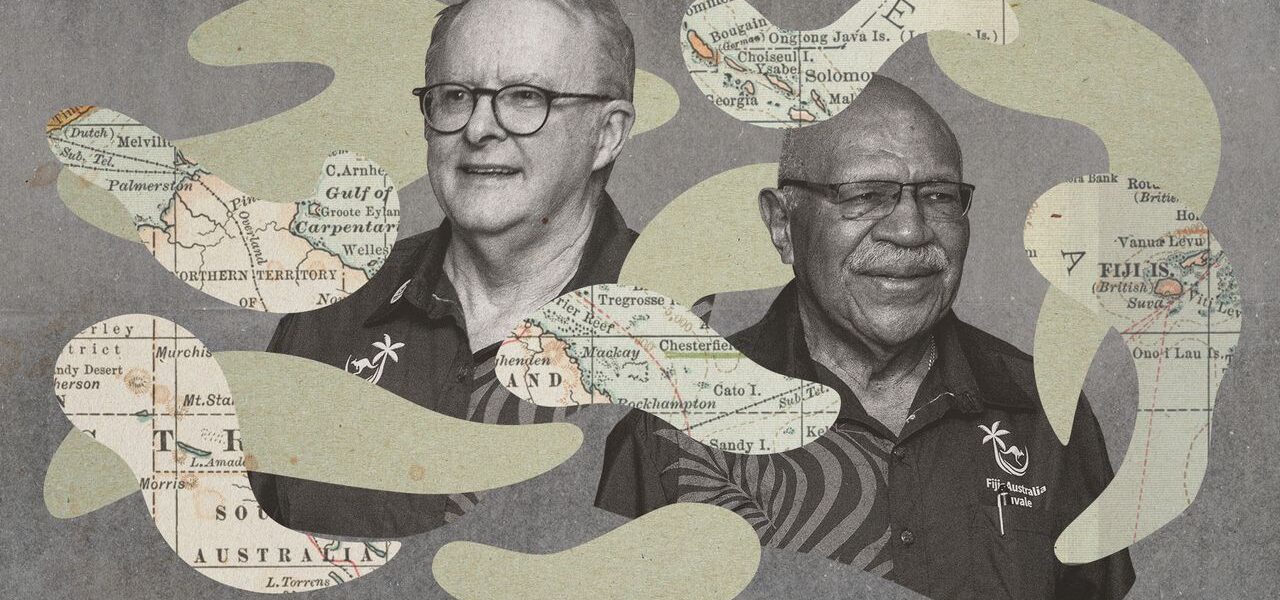
Coral Chessboard: Why Canberra’s Pacific Push Extends Beyond White Sand Beaches
POLICY WIRE — Canberra, Australia — You don’t often find global security architecture being debated over a kava bowl, but that’s exactly the undertone shimmering beneath the recent...

POLICY WIRE — Canberra, Australia — You don’t often find global security architecture being debated over a kava bowl, but that’s exactly the undertone shimmering beneath the recent defense agreement between Australia and Fiji. It wasn’t the kind of earth-shattering pronouncement that grabs CNN’s front page, was it? More like a quiet tightening of a knot already half-tied, a strategic nod in a region increasingly viewed as a geopolitical chessboard, where the pieces are sovereign nations, and the stakes couldn’t be higher. We’re talking realpolitik played out across shimmering turquoise waters — and volcanic islands. And it’s messy, like all the best political plays are.
It’s easy to dismiss these bilateral handshake deals as boilerplate, just another round of diplomatic niceties. But if you’re paying attention—and we’re, trust us—you’d notice this isn’t just about shared values or historic friendships anymore. This particular pact, quietly firmed up after months of murmurs and a few too many cups of instant coffee between delegations, represents something much bigger. It’s Canberra’s renewed assertion, a subtle flex, in its own backyard, after years of perceived drift. It’s about securing an arc of influence, a buffer, whatever you want to call it, against burgeoning external interests that make traditional allies quite jumpy. They’ve got their eye on the game, make no mistake.
Because frankly, the Pacific has become too interesting for global powers to ignore. From rare earth minerals to strategic shipping lanes, everybody wants a piece, or at least a presence. Australia’s Prime Minister, Anthony Albanese, didn’t mince words, though he softened the edges with familiar regional kinship. “Canberra’s commitment isn’t just about defence; it’s about solidifying the very architecture of a free, open, and resilient Pacific,” Albanese said during a press conference in Sydney, probably nursing a strong flat white. “We’re family here, — and families look out for each other, no matter the tides.” It sounds nice, doesn’t it? But you hear the steel beneath the sentiment.
But Fiji isn’t some passive participant waiting to be led. It’s a regional player, acutely aware of its own sovereignty — and agency. Sitiveni Rabuka, Fiji’s Prime Minister, who’s been around the block a few times himself, understands the dynamics. “Our sovereignty, it’s not for sale, nor is our leadership role within Melanesia,” Rabuka countered, ensuring his nation’s position was heard loud and clear through diplomatic channels. “This isn’t just Australia calling the shots. It’s a two-way street, a testament to shared values — and mutual respect. Fiji dictates its future, but we’ll always embrace true partners.” His government knows how to play the field; they’re not new to the complexities of balancing relationships with larger powers. This isn’t a blind allegiance. It’s a considered engagement. But then, it’s always about choices, isn’t it?
The deal itself focuses on increased military training, interoperability, maritime security, and — crucially — disaster relief operations. Because that’s the humanitarian veneer draped over what’s, at its core, a strategic power play. Climate change, cyclones, rising sea levels — these aren’t abstract concepts in the Pacific; they’re daily realities. And for many smaller nations, access to Australian defense assets for disaster response is a truly tangible benefit. It buys goodwill. It buys access. It’s smart, actually.
📄 POLICY WIRE WHITEPAPER PUBLISHED: PAKISTAN'S NATIONAL SECURITY POLICY PRIORITIES
👉 READ BY CLICKING HEREAnd where does Pakistan or the broader Muslim world fit into this particular maritime jigsaw? Well, think of it as a localized manifestation of a global pattern. The scramble for influence, the formation of security blocs, the delicate dance of smaller nations trying to secure their interests without provoking bigger elephants in the room — it’s happening everywhere. From the Arabian Sea to the South China Sea, powers are lining up, forging alliances, securing strategic points. Australia, in this instance, is shoring up its southern flank in much the same way that nations in South Asia constantly re-evaluate their positions relative to, say, China’s Belt and Road Initiative, or the shifting security dynamics between Iran and its Gulf neighbours. The stakes might be geographically distant, but the geopolitical rhythm feels strikingly familiar. Australia’s push here echoes Canberra’s broader ‘Pacific Pivot’ strategy, which isn’t just about countering one specific power but about cementing a reliable sphere of influence.
The statistics don’t lie about Australia’s regional commitment, either. For the 2022-23 financial year, Australia allocated an estimated A$1.9 billion as Official Development Assistance (ODA) to the Pacific region, making it the largest donor. (Source: Australian Department of Foreign Affairs — and Trade (DFAT)). That’s a significant investment, money on the table, reflecting long-term engagement that goes beyond just military hardware. It’s about hearts and minds, building infrastructure, shoring up economies — all the soft power plays that grease the wheels for harder agreements like defence pacts.
What This Means
This pact isn’t a silver bullet. No single agreement ever is. But it solidifies an essential alignment for both Australia — and Fiji. Politically, it signals Canberra’s quiet reassertion of traditional relationships, aiming to restore a degree of predictability to a region that has become anything but predictable. It’s an implicit pushback against any perception that smaller Pacific Island nations are up for grabs by distant powers offering quick fixes. Economically, closer military ties can lead to increased infrastructure development—ports, communication systems—that often serve dual military-civilian purposes, indirectly benefiting local economies. For Fiji, it means enhanced military capabilities, greater regional standing, and a stronger bargaining chip on the world stage, enabling them to balance their foreign policy interests more effectively. But they’re also walking a tightrope. It’s about leverage, sure, but also about knowing who’s pulling the strings, and ensuring those strings aren’t tied too tight to anyone else’s agenda. Australia wants security, Fiji wants sovereignty. And right now, their interests—at least publicly—align. But don’t ever mistake alignment for outright subordination. These nations have long memories, — and they’re fiercely proud of their independence. It’s a delicate dance, always.