

The Silent Surveillance Saving Suppers: Your Shopping Data’s Unintended Public Health Role
POLICY WIRE — Washington D.C. — A quiet revolution is underway in how we track—or fail to track—what lands on our dinner plates. It’s not about bespoke government programs or advanced...

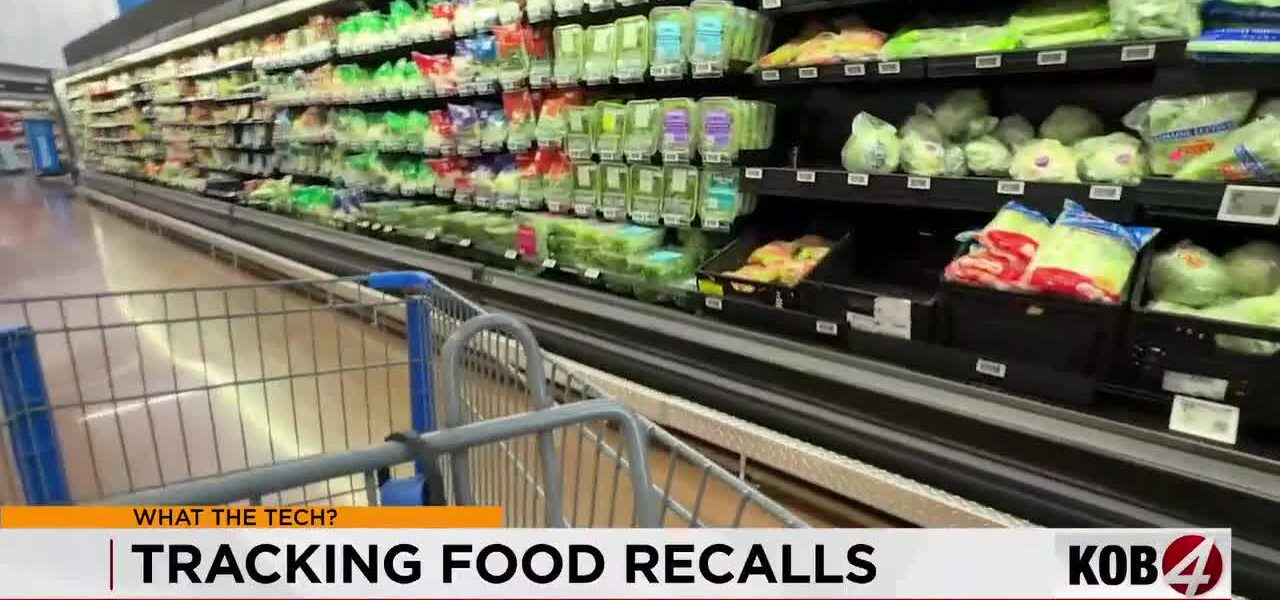
POLICY WIRE — Washington D.C. — A quiet revolution is underway in how we track—or fail to track—what lands on our dinner plates. It’s not about bespoke government programs or advanced biological sensors. Rather, it hinges on a much more prosaic, yet profoundly effective, technology: your grocery store loyalty program. Think about that for a second. The very digital footprints you leave for coupons and personalized ads are now, almost inadvertently, forming a critical, if ethically hazy, frontline in public health. This shift arrives just as a new wave of stomach bugs, like the one recently sending shivers through communities, throws the weaknesses of our traditional food recall mechanisms into sharp relief.
It’s easy to forget what you tossed into the cart two days ago, let alone two weeks. Most of us, honestly, don’t keep physical receipts. But the massive retail giants? Oh, they don’t forget. Not for a minute. Every romaine lettuce, every carton of berries, every pre-cut salad mix—if you’ve tapped your loyalty card or mumbled your phone number at checkout—it’s likely sitting on a server somewhere, a digital breadcrumb trail connecting you directly to potential contagion. The Centers for Disease Control and Prevention (CDC) finds itself in a perpetual game of catch-up, wrestling with outbreaks where symptoms often manifest a full week after exposure. By then, memories have faded, evidence consumed. The technology—these ubiquitous store apps and purchase histories—short-circuits that problem.
And it’s a hell of a problem. Annually, roughly 48 million Americans get sick from foodborne illnesses, leading to 128,000 hospitalizations and 3,000 deaths, according to the CDC. The human toll is steep, the economic burden immense. So, this rather unglamorous solution, this digital ledger held by multinational corporations, offers a glimpse into how existing commercial surveillance infrastructure can pivot to serve a collective good.
“We’re not exactly thrilled that private corporations hold such granular data on every citizen’s shopping habits, but when a multi-state E. coli outbreak threatens hundreds, you don’t look a gift horse in the mouth, do you?” mused Dr. Lena Hanssen, a senior epidemiologist with the CDC, in a candid off-record chat. “It’s about containing sickness fast, — and right now, this ‘big data’ approach is proving indispensable. We’ve even seen how quickly targeted alerts through these apps can prevent further consumption of compromised products, a process that used to take days of public service announcements and hope.”
But there’s a flip side, a nagging unease about where our convenience ends — and corporate oversight begins. “For years, we’ve warned about the creep of commercial surveillance, the creation of digital profiles for marketing purposes that become incredibly difficult to erase,” argued Amir Javed, Director of Digital Liberties at the fictitious Coalition for Internet Privacy. “Now we’re seeing these same systems lauded as public health saviors. It’s a thorny ethical bind, isn’t it? Our privacy sacrificed, or at least heavily compromised, in exchange for an expedited recall notice.” His point? We’ve traded anonymous cash for tracked digital payments, and the price of that seemingly innocuous exchange now has ramifications we’re just beginning to understand. It isn’t just about what you bought last week; it’s about who knows what you bought, — and why. Because once that data is out there, it’s never really just for one purpose.
📄 POLICY WIRE WHITEPAPER PUBLISHED: PAKISTAN'S NATIONAL SECURITY POLICY PRIORITIES
👉 READ BY CLICKING HEREConsider the stark contrast with countries like Pakistan, for instance, or many parts of the wider South Asian and Muslim world. Where digital payment infrastructure is less pervasive, where mom-and-pop shops often operate solely on cash transactions, and where large supermarket chains with integrated loyalty programs are rarer outside major urban centers, such tech-enabled food safety nets simply don’t exist. Their food recall systems rely almost entirely on traditional public health communication, often slower, less targeted, and far more prone to failure in vast, diverse populations. The digital divide isn’t just about internet access; it’s about disparities in data-driven governance and public safety.
It’s an open secret in industry circles: the same tech that predicts your next craving—or figures out you’re pregnant before your family does—is also becoming the unexpected custodian of our collective guts. The data, the purchases, the anonymized profiles. They’re all part of a quiet, unseen engine that’s reshaping how societies respond to invisible threats. It might be less glamorous than chasing down a runaway truck full of contaminated produce, but it’s becoming shockingly effective. And that, in an age where information is currency, isn’t just interesting; it’s consequential.
What This Means
The burgeoning role of commercial data in public health signals a significant, if often unexamined, shift in societal risk management. Politically, this presents a tricky tightrope walk for regulators. How do governments compel, or incentivize, private entities to share purchase data for public good without setting precedents for wider surveillance? The tension between individual privacy—a cornerstone of liberal democracies—and collective safety is laid bare. We’re already seeing the beginnings of these debates in the aftermath of COVID-19 and its various contact tracing apps; food safety offers another, less dramatic but more persistent, battleground. Economically, this integration reinforces the power of large retailers. They’re not just selling groceries; they’re becoming de facto public health partners, consolidating influence over supply chains and consumer information. This could raise barriers to entry for smaller businesses unable to invest in similar data infrastructure, potentially accelerating market concentration. it might pressure producers and suppliers to enhance their own traceability systems to integrate seamlessly with retailer platforms, affecting everything from farming practices to logistics. Ultimately, it’s not just about protecting people from bad food. It’s about how much of ourselves we hand over—piece by digital piece—in the name of security and convenience.