

The Silent Toll: When America’s Unseen Vulnerabilities Find Refuge in a Kennel
POLICY WIRE — Albuquerque, N.M. — It wasn’t the rattling diner windows, nor the dust devils that perpetually swirl across the high desert, but the hushed, almost imperceptible sigh emanating...

POLICY WIRE — Albuquerque, N.M. — It wasn’t the rattling diner windows, nor the dust devils that perpetually swirl across the high desert, but the hushed, almost imperceptible sigh emanating from countless kennel cages that told a more telling tale of contemporary America. A story not of economic boom or bust in the abstract, but of its tangible, four-legged consequences. Far from the political grandstanding in Washington, here in New Mexico’s sprawling expanse, the struggles of its residents often find their unstated resolution in a shelter pen—a place where a “Miracle” isn’t a hope, but a name, and a dog named K-Bob is a metaphor for a sputtering social compact.
Because, really, what’s a nation without compassion for its most vulnerable? And for a certain segment of the population—those on the economic razor’s edge, those caught between the soaring cost of living and stagnant wages—a pet, once a comfort, can swiftly become an unbearable expense, a choice between kibble and basic human necessities. You see it play out every day. The local animal shelters, often underfunded — and over capacity, bear the brunt of these quiet catastrophes. It’s not always neglect, don’t get me wrong; sometimes it’s simply a profound inability to keep promises made to creatures who offer nothing but unwavering loyalty.
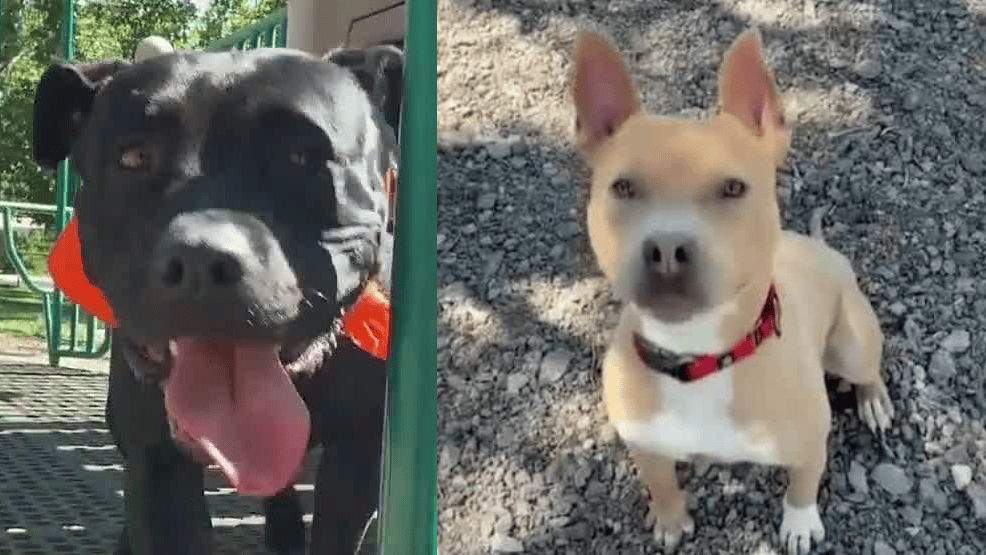
Consider Miracle. A three-year-old Pitbull mix. She’s called the Bernalillo County shelter home for far too long, the ‘longest-term resident,’ they say. A statistic cloaked in a tail wag — and a perpetually hopeful smile. But don’t mistake that cheer for indifference. She’s been passed over, week after week, month after month. Her existence there isn’t just about an empty couch somewhere; it’s an economic marker. It says something about a community where housing is tough, pet deposits are prohibitive, and discretionary income is a distant dream for too many.
Then there’s K-Bob, a mere ten-month-old, thirty-five-pound ball of potential found wandering in a parking lot down in Lincoln County, presumably looking for a seat at someone’s metaphorical table. Cute? Absolutely. A future therapy dog, perhaps. But his journey from a diner parking lot to a crowded shelter reflects an even younger failure—a snapshot of impulsivity, unpreparedness, or perhaps, the quick decay of a temporary arrangement. These aren’t isolated incidents, mind you; they’re symptoms. According to the ASPCA, approximately 6.3 million companion animals enter U.S. animal shelters nationwide each year, with 3.1 million of those being dogs.
But how do we, as a society, deal with this? “We’re seeing an unprecedented number of owner surrenders,” offered Commissioner Elena Vasquez of Bernalillo County, her voice laced with an exhaustion only bureaucrats in underfunded departments truly understand. “It’s not just the sheer volume, it’s the heartbreaking stories that come with each one. People are choosing between feeding their kids — and feeding their dog. And we’re just not equipped to handle the scale of it all.” Her words—they didn’t need to be spoken loudly to carry weight.
It’s a predicament with echoes far beyond America’s borders, of course. Think of Pakistan, where street dogs and cats are a far more pervasive urban challenge, handled largely through different cultural norms and, frankly, far fewer formalized welfare systems, often with less societal infrastructure to manage animal populations at all. It’s a spectrum, this global issue of creature care, with different societies applying their distinct socioeconomic lenses to the same basic problem of coexistence. But here, with our professed prosperity, the sheer numbers entering shelters feel like a judgment, an indictment.
📄 POLICY WIRE WHITEPAPER PUBLISHED: PAKISTAN'S NATIONAL SECURITY POLICY PRIORITIES
👉 READ BY CLICKING HEREAnd Ms. Anya Sharma, Executive Director for the New Mexico Animal Advocates, put it bluntly: “We treat animal welfare as an afterthought, not an indicator of societal health. We funnel money into everything else, but ignore the early warning signs of stress that show up at the shelter gates.” She then spoke about the policy vacuum, the piecemeal local ordinances. “Until we see pet ownership, and by extension, animal rescue, as a public health issue, an economic indicator, frankly—not just some fluffy endeavor—these kennels will keep overflowing.” You could almost hear the data mirage of inadequate metrics stretching into the distance. She’s not wrong, you know.
What This Means
This isn’t merely about two cute animals needing a home; it’s about the erosion of the safety nets—both human and animal—in plain sight. The continued high intake and low adoption rates at shelters across New Mexico, exemplified by cases like Miracle and K-Bob, reveal cracks in a system ill-prepared for mounting economic pressures. Politically, it signals a failure of local governments to adequately resource these often-overlooked agencies, an area typically delegated to a patchwork of underfunded non-profits. The economic implications are also straightforward: each abandoned animal represents a cost—to the shelter, to the taxpayers (when public facilities are involved), and a hidden burden on the broader social fabric. Neglecting animal welfare is never isolated; it often correlates with other indicators of community stress and neglect, hinting at larger social problems that governments prefer not to address. If a community can’t manage its pets, one has to wonder what else it’s struggling to manage—especially when comparing the sheer resource disparity of such issues, say, in America versus countries like Pakistan.
Ultimately, these tales from the kennel are an inconvenient barometer, one we rarely check. They offer a granular view of policy consequences playing out on a domestic scale—a quiet testament to human struggles manifest through the lives of our domesticated companions. And their fates? They reflect our own societal priorities, or lack thereof.