


Fleeting Reprieve: New Mexico’s Brief Truce with Rain Hints at Deeper Climate Volatility
POLICY WIRE — Albuquerque, N.M. — Another Wednesday in the Southwest just wrapped, — and it wasn’t exactly a quiet affair. After a good, old-fashioned drubbing of a rain day...

POLICY WIRE — Albuquerque, N.M. — Another Wednesday in the Southwest just wrapped, — and it wasn’t exactly a quiet affair. After a good, old-fashioned drubbing of a rain day — one that apparently delivered the “wild ride” meteorologists love to report — New Mexico was set to enjoy a bit of a pause. A brief, welcome intermission, if you will, before the next act of the state’s perpetually unpredictable climate drama. You can almost hear the collective sigh of relief, can’t you? Because sometimes, even a low-drama forecast feels like a victory in this era of meteorological whiplash.
It wasn’t a promise of clear skies — and sunshine, mind you. More like a temporary truce. Drier air, bless its heart, was expected to edge into the Albuquerque metro area, bringing the chance of rain down to a mere 20% for Thursday. That’s practically a sunny day for those of us who’ve been watching the skies with a mix of dread and resignation lately. Cooler temperatures too, they said. But don’t get it twisted; this wasn’t a return to normal. Normal’s been on vacation for a while now.
No, the state’s higher terrain wasn’t getting off that easy. Storms were slated to “fire off” — that’s the technical term, folks — late morning into early afternoon in the usual suspect areas: northern and western New Mexico, particularly near the Sacramento Mountains’ western slopes. And you know what that means. Localized, fast, and angry rainfall. It’s the kind of weather event that makes you wonder if our infrastructure, built for yesterday’s climate, can keep pace with today’s temperamental skies. These aren’t your grandpa’s gentle drizzles.
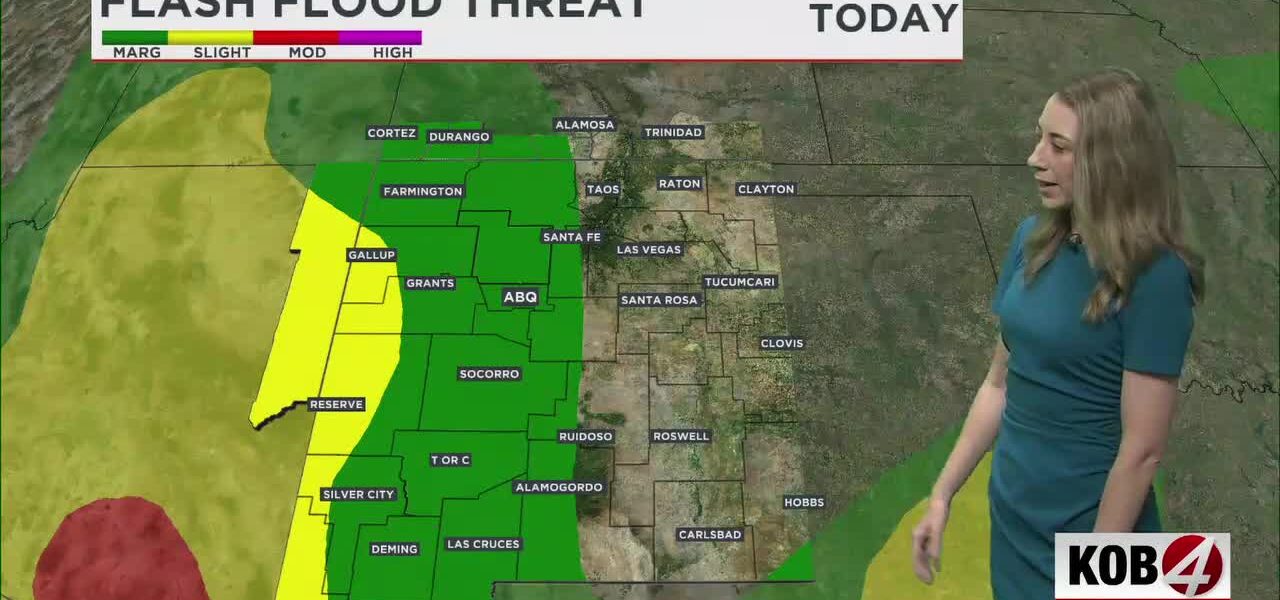
The U.S. National Oceanic and Atmospheric Administration (NOAA) certainly provides the grim numbers; their data suggests a nearly 30% increase in the frequency of intense rainfall events across the American Southwest over the last two decades alone. That’s not just a statistic, it’s a siren call, especially when these quick-hitting downpours lead straight to a flash flood risk. Which, for parts of New Mexico — including a “marginal risk” stretching from the Central Mountain Chain westward into counties like McKinley and Hidalgo, encompassing Gallup, Zuni, and Lordsburg — was very much on the menu. A 1 out of 4 risk rating. Small potatoes to some, maybe. But to those living downstream, it’s a very big potato indeed.
“We’re in a perpetual state of readiness,” noted Miguel Chavez, director of the New Mexico Office of Emergency Management, during a recent local broadcast (probably from a dry, windowless room, I’m guessing). “It isn’t about whether the rain comes, it’s how much, how fast, — and if the ground can take it. Our focus remains on community preparedness, ensuring folks understand the real-time dangers of flash floods, which can turn a dry arroyo into a raging river in minutes.” He’s not wrong. It’s a frantic scramble every time the sky opens up, — and local resources are always stretched thin.
📄 POLICY WIRE WHITEPAPER PUBLISHED: PAKISTAN'S NATIONAL SECURITY POLICY PRIORITIES
👉 READ BY CLICKING HEREAnd that cycle? It’s not going anywhere. The rain chances get better, so they say, as we roll into the weekend. So much for that brief calm. It’s a pattern familiar to vulnerable regions worldwide. While New Mexico grapples with its micro-climates and localized deluges, you can see similar — though exponentially more devastating — scenarios playing out in places like Pakistan. Monsoon seasons there now frequently bring unprecedented, brutal flooding, destroying crops and displacing millions across the Indus River basin. The sheer scale is different, sure, but the underlying narrative of erratic, intense precipitation and overwhelmed infrastructure? That rings a bell, doesn’t it?
It’s a stark reminder that what seems like just another weather report from the American Southwest is really a dispatch from the front lines of a global climate shift. “These weather patterns, they don’t respect borders,” remarked Dr. Aisha Khan, an environmental policy expert with the Institute of Regional Studies in Islamabad, speaking recently about the growing unpredictability of South Asia’s monsoon cycle. “Whether it’s flash floods in New Mexico or catastrophic deluges in Punjab, the challenge for governance is the same: how do you plan, how do you protect, when the very patterns you used to predict are unraveling?” Her words hit hard because they encapsulate the growing unease wherever you are on the map.
What This Means
This fleeting pause in New Mexico’s erratic rain cycle isn’t just about a cooler Thursday; it’s a microcosm of the larger, unsettling dance between policy and planet. Economically, this kind of unpredictability strains local budgets — not just for immediate emergency response but for long-term infrastructure upgrades. You can only patch up so many roads before you need a complete overhaul. And those overhauls? They’re expensive. Politically, it presents a Genoa’s Judgment Day-style dilemma: invest heavily now in resilient infrastructure, or pay the steeper price later in damage, displacement, and economic disruption. It’s about managing expectations against a backdrop of increasing uncertainty, and quite frankly, our old metrics just aren’t cutting it anymore. The challenge isn’t just surviving the next storm; it’s redesigning our entire interaction with an environment that no longer plays by the old rules. And for a region already grappling with severe drought conditions, getting too much water all at once, in all the wrong ways, just adds another layer of grim irony to the whole situation. It’s a dangerous game of meteorological roulette, — and everyone’s holding their breath for the next spin.