


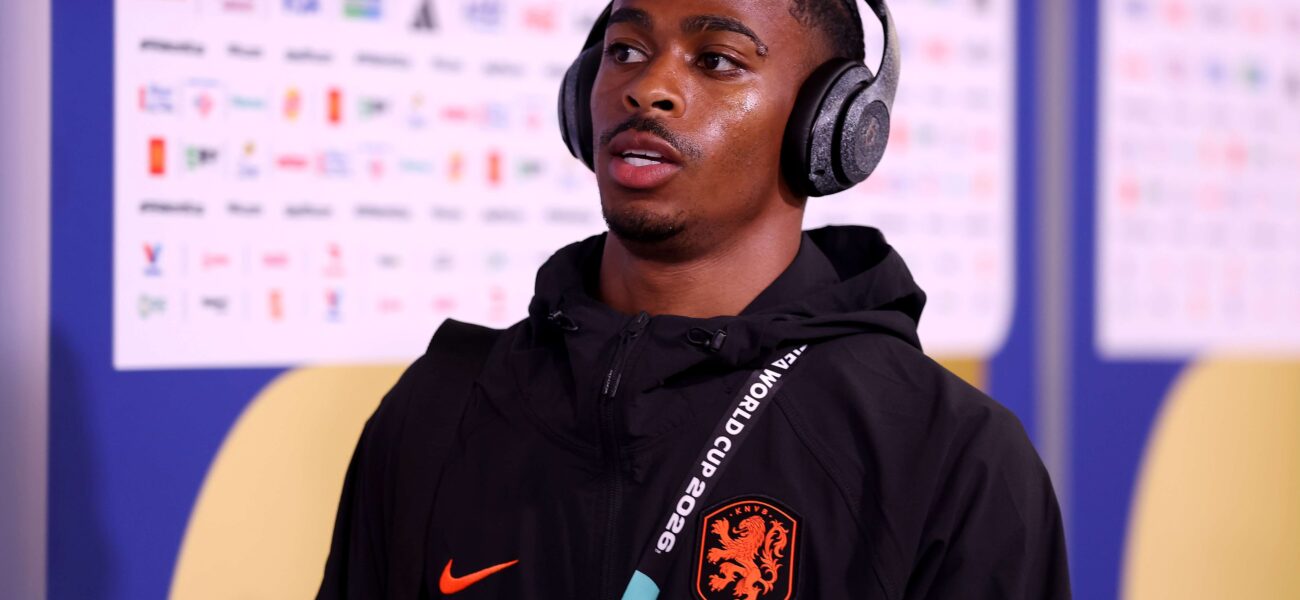
Europe’s Football Bourse: Summerville, Shillings, and the Subtle Dance of Capital
POLICY WIRE — London, UK — In the high-stakes theater of European football, where talent functions less as a player and more as a tradable commodity, the murmurs around Crysencio...

POLICY WIRE — London, UK — In the high-stakes theater of European football, where talent functions less as a player and more as a tradable commodity, the murmurs around Crysencio Summerville aren’t just about goal tallies. They’re about money. Big money, — and the quiet desperation of clubs navigating an increasingly unforgiving market. This isn’t merely a transfer saga; it’s a telling parable of financial restraint meeting soaring ambition, played out on the global stage.
It’s West Ham, recently relegated and smarting from their demotion, who finds themselves in a rather unenviable position. They hold the rights to Summerville, a winger whose flashes of brilliance, particularly his recent World Cup outings for the Netherlands, have set off alarms—and, crucially, opportunities—across the continent. But here’s the rub: relegation slashed their negotiating power. They’re not exactly in the driver’s seat, are they? It’s more like they’re hoping for a bidding frenzy to bail them out, to justify the €29.3 million they reportedly splashed on him two summers ago, a figure market analysts initially flagged as a hefty gamble. They’ve got a product; they just don’t quite own the sales narrative.
Enter the titans. Roma wants him, sure. The Giallorossi aren’t shy about their interest, as Alfredo Pedullà’s reports continue to affirm. But they’re not irrational, not completely. Their fiscal prudence seems almost antiquated in this era of bottomless petrodollars — and speculative equity funds. They’ve drawn a line in the sand, quite publicly: €40 million for West Ham, and a manageable €4-4.5 million annually for the player’s wages. It’s an opening gambit, perhaps, but also a statement of their perceived market ceiling for an asset they clearly value.
Manchester United, for their part, floats in the periphery like a predatory whale, observing. They’ve got their own internal balancing act. Because they won’t move. Not unless Marcus Rashford, fresh off a spell at Barcelona (one that certainly added a gloss to his CV, if not a guaranteed spot at Old Trafford), decides his future lies elsewhere. It’s a game of musical chairs, really, — and Summerville’s seat only becomes available if someone else stands up. They’re a club perpetually looking for the ‘next big thing’ but often tripping over the current ‘big salary.’
But the intricate web extends beyond these European giants. Summerville’s agency, THE·TEAM, also manages Donyell Malen—a known quantity in the Italian capital—and they’ve tried to push another talent, Club Brugge’s Christos Tzolis, into Roma’s field of vision. Little interest, though. It’s Summerville or bust for the moment, a clear signal of market preference, and the sheer concentrated power agents wield in directing capital flows. They’re not just selling players; they’re brokering the fate of multi-million-euro enterprises, managing expectations, and perhaps, occasionally, bending market will.
📄 POLICY WIRE WHITEPAPER PUBLISHED: PAKISTAN'S NATIONAL SECURITY POLICY PRIORITIES
👉 READ BY CLICKING HEREAnd this entire global carousel, the push and pull of millions across continents for the feet of a few gifted individuals, isn’t lost on the wider world. Fans in Lahore, glued to their screens, are as invested in these transfers as those in Leicester. Because it’s a global show. We’re talking about an ecosystem, folks, that’s not just sustained by season ticket holders in Europe, but by sponsorships and viewership spanning regions, from North Africa to Southeast Asia, areas whose vast, untapped economic potential increasingly defines the sport’s commercial future. Just look at the burgeoning digital ad markets in these regions—they’re gold mines waiting to be properly tapped. Digital footprints, after all, leave economic trails.
“We operate under strict financial guidelines, both internally and dictated by league governance,” stated Giovanni Rossi, AS Roma’s Sporting Director, in a recent, somewhat exasperated press conference. “Talent isn’t limitless, but neither are our coffers. It’s about strategic acquisition, not impulsive spending.” Sir Alistair Finch, a senior financial analyst known for advising several Premier League entities, put it more bluntly: “In this market, liquidity is king. West Ham needs cash; Roma seeks value. United waits for an arbitrage opportunity. It’s less about passion, more about predatory economics.”
What This Means
This tangled dance isn’t just about who signs whom; it offers a piercing insight into the contemporary global sports economy. It highlights the stratification of wealth and influence: relegated clubs like West Ham, for all their past Premier League glories, are forced to liquidate assets to stabilize finances, much like smaller nation-states shedding national assets during economic downturns. Roma’s stance, meanwhile, reflects a conscious decision to temper ambition with fiscal responsibility—a rarity, some might say, in an industry awash with leveraged buyouts and state-sponsored infusions. Manchester United’s reticence, dictated by the hefty contract of a star striker, illustrates the immense structural rigidities inherent in big-club finance. They’re trapped, often, by their own success. the role of super-agencies like THE·TEAM in directing talent and effectively shaping market values mirrors the consolidated power seen in other global industries, where a few gatekeepers dictate the flow of high-value resources. This isn’t just football; it’s a microcosm of international capital markets, player salaries functioning as bespoke futures contracts, their valuations subject to rumor, performance, and the sheer audacity of those who manage the trade. It’s messy, often ruthless, — and always, always about the money.