


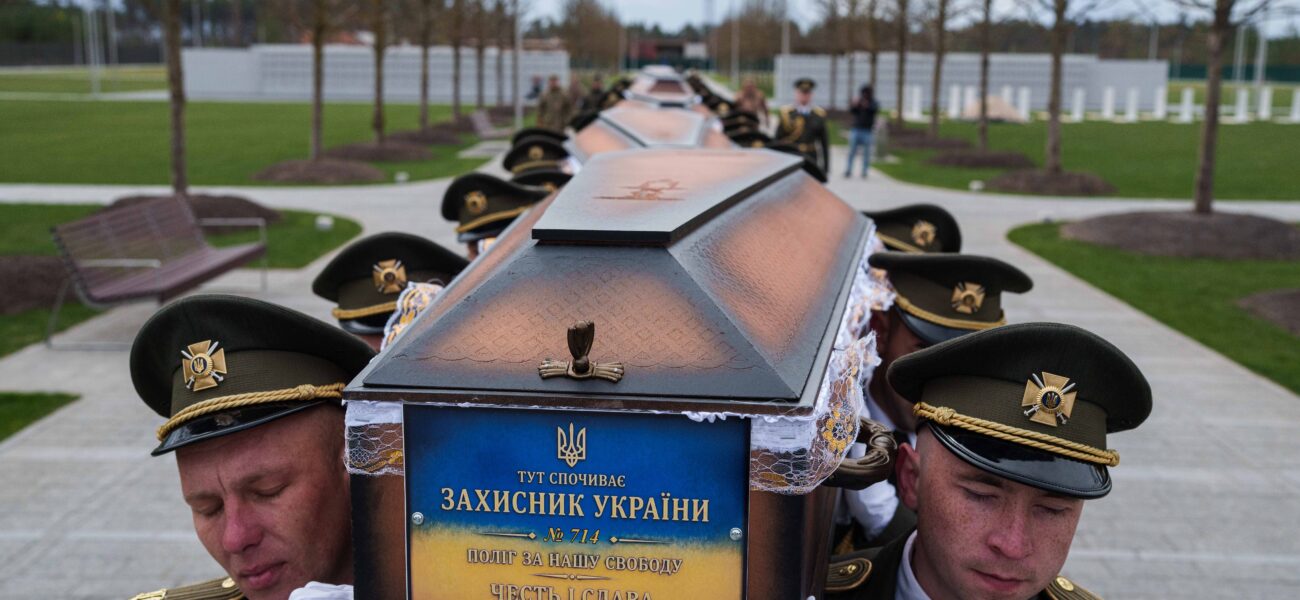
The War’s Silent Harvest: Ukraine’s Unclaimed Dead and the Bureaucracy of Endless Grief
POLICY WIRE — Kyiv, Ukraine — It isn’t the boom of artillery or the whir of drones that defines Ukraine’s long, grim slog anymore; it’s the aching silence in countless homes,...

POLICY WIRE — Kyiv, Ukraine — It isn’t the boom of artillery or the whir of drones that defines Ukraine’s long, grim slog anymore; it’s the aching silence in countless homes, punctuated only by the dread of a knock that never quite delivers closure. Here, amid the shattered landscapes and the grinding daily reports of advances and retreats, another, more profound battle is waged. It’s fought not with tanks or missiles, but with DNA samples, cold storage units, and the agonizing, interminable wait for a name. A recognition. A final farewell.
For every soldier lauded, for every hero publicly mourned, there are others. Thousands, in fact, whose stories remain truncated, their identities consumed by the raw savagery of modern warfare. They’re the known unknowns, the nameless figures interred in increasingly numerous designated plots across the nation. Families, however, aren’t waiting for a plot number. They’re just waiting.
Because war doesn’t just create casualties; it manufactures a chilling administrative void. Body after body, retrieved from bombed-out buildings, trenches, or freshly churned earth, often bears no discernible mark of its former life. Some are just fragments. The process of piecing together these human puzzles — matching genetic markers with blood relatives who’ve dutifully provided their own samples — it’s a marathon. And it feels like one run through thick, bureaucratic mud.
“Every fallen soldier, whether identified or not, represents an irreparable loss to our nation. But we owe it to them, and to their loved ones, to restore their names,” stated Major General Oleksandr Syrenko, Ukraine’s Deputy Minister of Defense, speaking recently in a measured tone that couldn’t quite mask the weariness in his eyes. He wasn’t wrong. They owe them. But the reality is stark: as of late 2023, Ukrainian authorities confirmed well over 2,000 unidentified bodies in their care, with thousands of DNA samples from hopeful families waiting in forensic labs, according to reports from state forensics bureaus.
This silent tally—this inventory of the uncounted—is more than a macabre statistic; it’s a national trauma unfolding in slow motion. Imagine the anguish: seeing a vague image, perhaps on a government portal, wondering if those tattered fatigues, that indistinct face, might be your son, your husband, your brother. It’s a cruelty that lingers long after the bullets stop flying.
And it’s a stark reminder that war’s invisible scars run deep, resonating far beyond the immediate conflict zones. Nations like Pakistan, no stranger to internal strife and geopolitical quagmires, understand this particular kind of agony. Whether it’s the lingering mystery of missing persons from Balochistan, the anonymous dead from extremist attacks, or those whose lives were claimed during counter-insurgency operations in former tribal regions, the thirst for identification and dignified closure echoes universally. The human cost, ultimately, transcends borders — and battlefields.
📄 POLICY WIRE WHITEPAPER PUBLISHED: PAKISTAN'S NATIONAL SECURITY POLICY PRIORITIES
👉 READ BY CLICKING HERE“We’ve established robust forensic protocols, trained hundreds, built out new labs,” explained Dr. Mariya Koval, director of Ukraine’s Central Forensic Identification Bureau. “Our team works around the clock. But the scale… it’s simply immense. And each number represents a son, a father, a daughter. We don’t forget that.” You don’t need a high-tech lab to feel the weight of her words, do you?
But beyond the immediate emotional devastation, this grim arithmetic feeds a pervasive unease. Unidentified dead means unresolved pensions, tangled inheritances, properties left in limbo. It’s an economic drag, yes, but mostly, it’s a tearing of the societal fabric, piece by agonizing piece. For a nation fighting for its very existence, grappling with a past still bleeding, a clean ledger — even one marked by overwhelming loss — is a distant dream.
What This Means
The persistent challenge of identifying fallen soldiers isn’t just a humanitarian issue; it’s a profound strategic one. Politically, the backlog of unidentified remains creates a fertile ground for dissent — and distrust. Families, already enduring unimaginable grief, can become alienated from a state that appears unable to provide finality. This disillusionment, though quiet, gnaws at the foundational legitimacy of governance during wartime, chipping away at public morale and faith in institutions. For Kyiv, it’s an unspoken pressure point, especially as external support from partners like Washington or Berlin might seem more focused on materiel than mortality, as Policy Wire has previously covered regarding international shifts elsewhere in global public opinion. Economically, the indeterminate status of these individuals — neither definitively alive nor formally deceased — generates complex legal and administrative quandaries regarding everything from military benefits to inheritance, creating a cascading set of bureaucratic obstacles that weigh heavily on both the families and the state budget. Resolving these cases demands significant investment in forensic infrastructure and psychological support, a strain on resources already stretched thin by ongoing hostilities. But more subtly, the inability to bury one’s own, even one’s unknown dead, carries a heavy social cost, impacting the national psyche and the collective ability to move forward once the guns fall silent. Just as nations like Pakistan face the protracted social fallout of past conflicts on familial ties and community trust—often exacerbated by opaque information from authorities, as explored in discussions around Pakistan’s digital media landscape—Ukraine too is finding that the fog of war extends long past the front lines, into the very heart of its citizenry.