

Orange Haze Chokes Twin Tiers, Echoing a Global Climate Reckoning
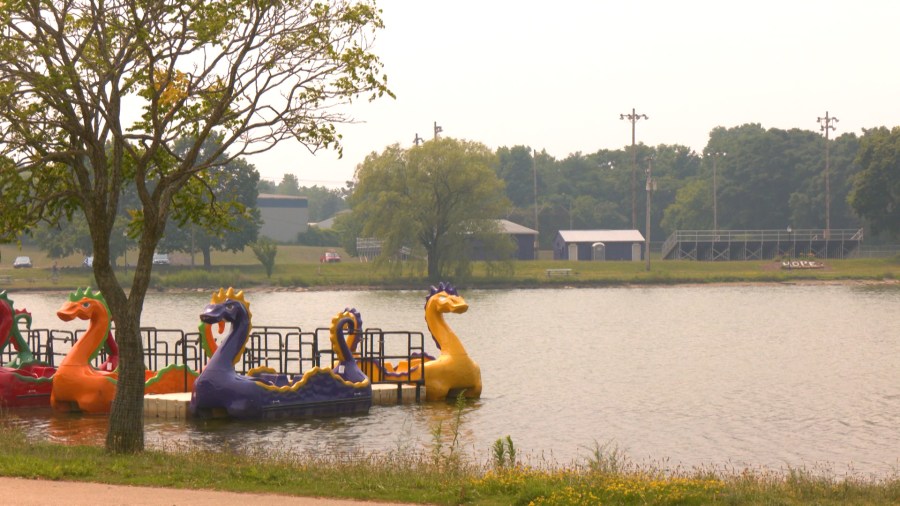
POLICY WIRE — Elmira, NY — The midday sun, a blood orange smudge through a haze thick enough to chew on, offered an unsettling kind of light yesterday over the Twin Tiers. Forget the idyllic autumnal...

POLICY WIRE — Elmira, NY — The midday sun, a blood orange smudge through a haze thick enough to chew on, offered an unsettling kind of light yesterday over the Twin Tiers. Forget the idyllic autumnal postcards, folks. What settled instead was a suffocating reminder that distant problems don’t stay distant forever. This ain’t just about smoky skies; it’s about compromised lungs, lost productivity, and the kind of creeping unease that clings to your clothes long after you’ve finally managed to breathe somewhat freely again.
Nobody much thought about far-flung Canadian wildfires as they sipped their morning coffee a week back. But then the wind shifted, and now—poof—the air quality indexes in places like Chemung County and Bradford County soared into the unhealthy category. And you feel it, don’t you? That rasp in your throat, the faint burn in your eyes. This isn’t a theoretical climate crisis, not when the air you gotta suck down is visibly foul. It’s right here, now. We’re experiencing the tail-end consequences of environmental neglect and the raw power of nature—or perhaps, nature reacting to us.
Local authorities, bless their bureaucratic hearts, issued the usual litany of advisories. [QUOTE_PLACEHOLDER], they said, recommending everyone stay indoors, especially the vulnerable. But what if you work outside? What if your job doesn’t allow for a quick retreat to an air-filtered cocoon? What if, heaven forbid, you’re one of the half-million asthma sufferers in New York State alone, a statistic according to the New York State Department of Health? For them, this isn’t just an inconvenience; it’s a threat, a real and present danger to their immediate health and well-being. And you just know doctors’ offices are seeing a bump in visits.
The whole region—this often-overlooked patch straddling state lines—found itself bathed in that eerie, Martian glow. School athletic events got scrubbed. Construction crews had to rethink outdoor work schedules. It wasn’t the kind of headline that grabs national attention (we’re talking Twin Tiers here, not Manhattan), but the everyday cost quickly starts piling up. Economically, even short bursts of poor air quality ripple out. Productivity dips when folks aren’t feeling 100 percent or are outright missing work because of symptoms. Then there’s the tourism hit, however minor it might be in autumn. No one plans a scenic getaway to a perpetual fog machine.
But this isn’t an isolated incident, not by a long shot. Think about it: similar, often far more dire, atmospheric events are old news in other corners of the planet. Just ask someone living in Lahore or Karachi, Pakistan, where air pollution routinely hits world-leading toxic levels. They’ve been contending with the kind of noxious air that the Twin Tiers is only just getting a sniff of, for years on end. Sometimes, it’s industrial emissions. Sometimes, it’s crop burning. But the human toll, the sheer grim burden on public health systems and the daily grind of survival, carries a similar stench. Their battles with airborne contaminants often pass unseen by the Western press, mere silent flights across international policy radars.
And so, while Twin Tiers residents peered out through smoky windows, a fraction of the world’s population has developed a certain grim expertise in dealing with prolonged, hazardous air quality. But they aren’t afforded the luxury of a ‘shelter in place’ advisory with air conditioning — and purifiers. Many toil outdoors. Many breathe it in, day in, day out, with little recourse. It’s a bitter truth, isn’t it?
Back home, local politicians, always keen for a soundbite, issued boilerplate calls for calm — and cooperation. [QUOTE_PLACEHOLDER], they invariably suggested, pointing to state — and federal agencies. But this is the sort of creeping environmental disaster that state lines don’t respect, much less provincial differences. This isn’t just a local issue, a brief blip on the weather radar. It’s a fragment of a larger, global narrative, touching down right here, right now, in upstate New York and northern Pennsylvania.
It’s hard to make wildfire smoke exciting. It’s not a dramatic financial scandal or a sports hero’s fall from grace. It’s quieter, more insidious. But it matters. It’s a collective cough in the throat of progress.
What This Means
This episode of widespread wildfire smoke across the Twin Tiers isn’t just an isolated weather phenomenon; it’s a harsh economic lesson and a policy preview. First, the immediate economic cost to local economies is subtly profound. Small businesses reliant on foot traffic or outdoor services suffer. Healthcare systems will likely see an uptick in respiratory-related admissions and outpatient visits—costs often absorbed locally and silently. This isn’t just about lost revenue for a weekend; it’s about strains on existing infrastructure — and personnel. And this particular impact isn’t just hypothetical; studies from California wildfires consistently show spikes in medical expenses during and after severe smoke events, creating a burden that wasn’t budgeted for. agricultural output can take a hit, even if slight, affecting regional supply chains.
Second, and perhaps more significantly, it underscores the interconnectedness of climate-induced crises globally, whether it’s a distant wildfire or atmospheric changes impacting Pakistan. We’ve seen in South Asia how prolonged air pollution devastates public health and contributes to political unrest by exacerbating inequality. The relatively short-lived event in the Twin Tiers should serve as a stark reminder that such atmospheric disturbances are becoming a new norm, forcing local governments to rapidly adapt policies for public health and economic protection. It prompts questions: are our regional emergency response plans equipped for prolonged air quality emergencies? Do we have the public health resources to handle mass respiratory distress? And are our politicians willing to address the transnational implications of climate change when its effects are quite literally landing on our doorsteps? Because right now, the policy infrastructure just isn’t quite built for these sorts of airborne intrusions.
This isn’t going away. It’s just going to get worse. And unless we start thinking bigger than state lines—start connecting the dots between distant blazes and our own backyard—we’re going to keep getting choked by the future. Simple as that.