

Digital Smoke & Mirrors: Pakistan’s Jailed Politician, Social Media, and the Truth in Shards
POLICY WIRE — Islamabad, Pakistan — In the chaotic echo chambers of social media, facts often perform a disappearing act, especially when a nation’s political future hangs in the balance. It’s...

POLICY WIRE — Islamabad, Pakistan — In the chaotic echo chambers of social media, facts often perform a disappearing act, especially when a nation’s political future hangs in the balance. It’s an old trick, really, fabricating an outrage to stir the pot, but modern tools make it so much… faster. And uglier, frankly. For a country perpetually teetering on the edge of its next political upheaval, this isn’t just noise; it’s a deliberate, digital weapon.
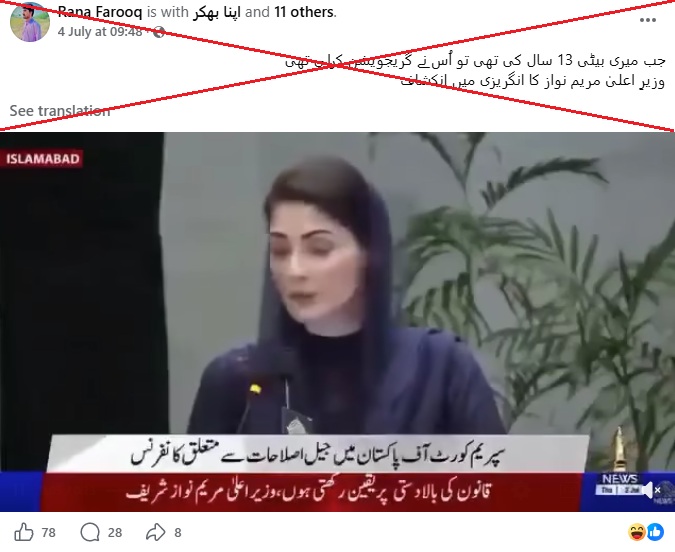
Case in point: recent viral posts concerning a prominent Pakistani politician, currently residing in the less-than-luxurious confines of a state prison. Narratives swirling across WhatsApp and X (formerly Twitter) insisted the incarcerated figure—a man whose charisma once seemed boundless but whose political fortunes have drastically soured—had been denied essential family visits, held in virtualcommunicado. It’s a tear-jerker, isn’t it? The lonely leader, cut off from his kin. Trouble is, those specific, widely shared claims? They weren’t entirely accurate. Not even close, as it turns out. But the digital damage? Oh, that’s done.
Because the real story, pieced together from less sensational sources, indicates that family visitation rights, while subject to stringent protocols given the politician’s high-profile status and security concerns, were never fully rescinded in the manner peddled online. The fuss stemmed from an alleged comment, heavily distorted and taken out of context, hinting at frustrations over visit frequency, not outright denial. A nuance, you see, easily obliterated by a punchy, rage-bait headline. And then, off it goes, across the digital ether, sparking outrage amongst legions of devoted followers and fueling the endless cycle of accusation and counter-accusation.
“This is nothing more than calculated melodrama,” sneered Fawad Hassan, a spokesperson for the Interior Ministry, when pressed by Policy Wire about the incident. “They’ll grasp at any straw, twist any statement, if it buys them sympathy. It’s tiring, isn’t it? The justice system runs its course, no matter how many digital tears they try to wring out.” His tone was clipped, dismissive—the kind you get when you’ve heard the same old song too many times.
But opposition voices, naturally, weren’t buying that. “They cage political opponents, they silence dissent, and then they expect us to believe every pronouncement from official channels is gospel truth?” countered Senator Anwaar Khan, a staunch critic of the current administration. “No. They play dirty, they always have. We’re witnessing a systemic attempt to dehumanize — and isolate a popular leader. If the government had nothing to hide, wouldn’t transparency be their priority?” It’s a valid question, even if it cuts both ways.
📄 POLICY WIRE WHITEPAPER PUBLISHED: PAKISTAN'S NATIONAL SECURITY POLICY PRIORITIES
👉 READ BY CLICKING HEREThis entire spectacle unfolds against a backdrop of deep political mistrust in Pakistan, where the line between legitimate protest and sedition can feel arbitrarily redrawn depending on who’s in power. Misinformation, especially politically charged misinformation, isn’t just annoying; it’s corrosive. A 2023 report by the Pakistan Telecommunication Authority indicated that social media usage soared by nearly 20% in the last two years, creating fertile ground for both legitimate discourse and the rapid spread of falsehoods that can destabilize public order.
Pakistan, much like other nations across the Muslim world and South Asia, navigates a complex information landscape. Old traditions meet new technologies, often clashing in ways that make discerning truth incredibly hard. It’s a land where personal loyalties run deep, and narrative trumps data for many—a vulnerability easily exploited by those looking to control public opinion. This particular storm, therefore, isn’t just about a politician in jail; it’s about the weaponization of emotional narratives in an increasingly digital, hyper-connected world.
What This Means
The incident surrounding the jailed politician’s visitation rights, while seemingly a minor kerfuffle, carries significant weight. Politically, it deepens the existing chasms within Pakistan’s volatile landscape. The rapid spread of misleading information erodes public trust not only in state institutions but also in the media itself, making it harder to find common ground. For political parties, it encourages a reliance on aggressive online campaigns, prioritizing emotional appeal over factual debate. Economically, such instability discourages foreign investment and diverts governmental focus from pressing issues like inflation or development. it speaks to a broader, worrying trend visible from China’s rigid online controls to America’s polarized media: information isn’t just consumed; it’s manufactured and deployed. When the distinction between a policy debate — and a psychological operation blurs, society pays the price.