

Modi’s Australian Overture: Land Acknowledgement or Geopolitical Gambit?
POLICY WIRE — Sydney, Australia — The optics game in modern diplomacy has never been more sophisticated, or, frankly, more fraught. Where once heads of state exchanged stiff pleasantries and signed...

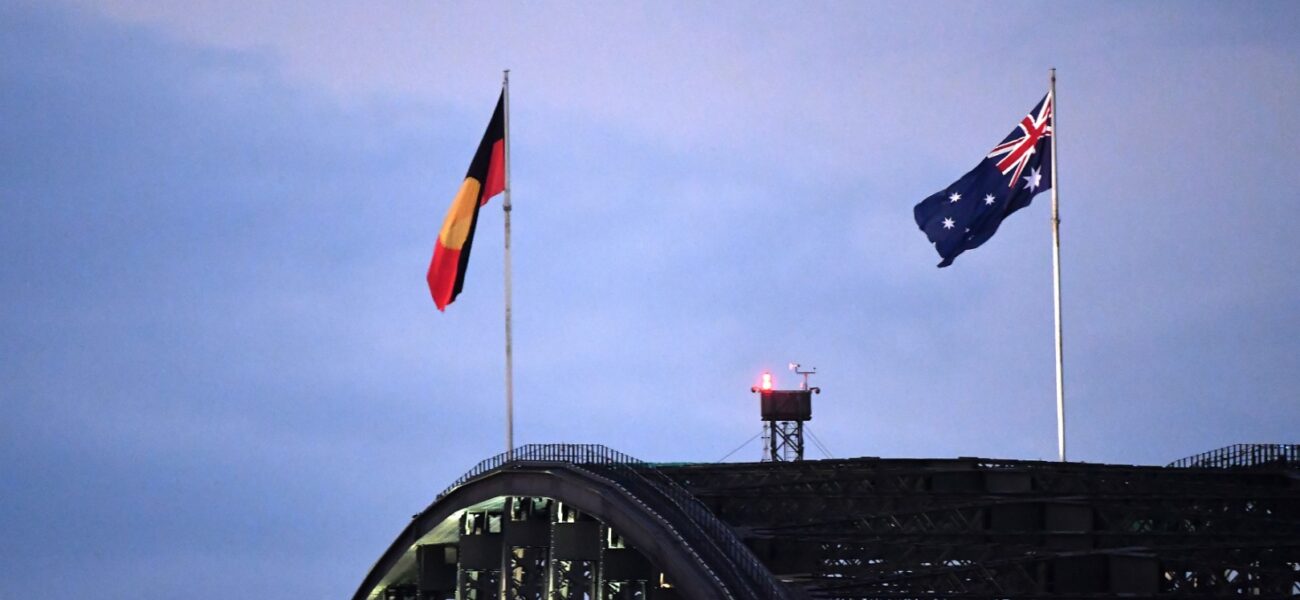
POLICY WIRE — Sydney, Australia — The optics game in modern diplomacy has never been more sophisticated, or, frankly, more fraught. Where once heads of state exchanged stiff pleasantries and signed hefty accords, today’s leaders often kick things off with a land acknowledgement. It’s a gesture, an increasingly common bow to Indigenous heritage that’s supposed to signal respect, understanding—a forward step. And when India’s Prime Minister Narendra Modi stood on Australian soil, offering such an acknowledgement, it wasn’t just a nod to ancient custodianship; it was a carefully calibrated maneuver, brimming with more implications than a Sunday morning crossword puzzle.
No, he wasn’t the first, nor will he be the last, to preface a diplomatic appearance with this contemporary ritual. But his particular iteration of this symbolic performance—given the thorny thicket of his domestic policies and the rather blunt instrument with which some ethnic and religious sensitivities are often handled back home—has drawn a quiet hum of observation from the astute. For an international audience, it presented a veneer of inclusivity. For a domestic one, well, who’s watching the distant diplomacy anyway when there’s an election to win?
Modi’s recent swing through Australia wasn’t just about boosting trade or consolidating the Quad alliance. It was a charm offensive, plain — and simple. His address in Sydney, before a crowd estimated at over 20,000, saw him invoke the traditional owners of the land, the Aboriginal peoples. It felt… smooth. Too smooth, perhaps, for those who regularly critique the Indian government’s approach to its own minority populations or the unresolved conflicts over territory and autonomy within its borders, particularly in Kashmir. Because you don’t always get what you’re selling abroad squared up with what you’re doing at home. That’s just politics, isn’t it?
“Prime Minister Modi’s respect for our First Nations peoples was genuinely appreciated by the Australian government and public,” stated Australian Foreign Minister Penny Wong, a shrewd operator herself. “It’s reflective of the deep respect our nations are building, not just on strategic issues, but on shared human values.” She’s playing the good host, framing it as part of an expanding, culturally sensitive alliance. But even that statement holds a certain unspoken expectation. What are these ‘shared human values,’ precisely? We don’t really know, do we? And do they apply everywhere, always?
The performative aspects of these high-level interactions cannot be overstated. A leader acknowledges Indigenous peoples in a foreign land. Great. Yet, the question of similar historical and territorial claims—especially those concerning religious or ethnic minorities, say, in parts of Pakistan, or the ongoing struggle for self-determination in disputed regions like Balochistan or the broader dynamics of the Muslim world’s post-colonial identities—rarely gets the same polished diplomatic courtesy on home soil. That’s a different kettle of fish entirely, one marinated in much longer, more bitter histories.
The statistical backdrop to such gestures isn’t always cheerful. In Australia, for instance, Indigenous Australians constitute approximately 3.8% of the population but face significant disparities, including an incarceration rate 16 times higher than non-Indigenous adults, according to the Australian Bureau of Statistics’ 2023 figures. This grim reality remains, despite increasing official acknowledgements. So, is a symbolic nod enough? Rarely. These issues are systemic, woven into the very fabric of nationhood, globally. And one has to wonder about the leaders doing the acknowledging—how much introspection does such an act truly provoke about their own historical baggage?
For India, an emerging global power and an active participant in frameworks like the Quad (which Australia also belongs to), such a gesture isn’t just politeness. It’s statecraft. It burnishes its credentials as a responsible, enlightened actor on the world stage, especially as it navigates complex relationships and seeks to project its soft power against rivals like China. Beijing, for its part, takes a rather different approach to historical claims, to say the least.
📄 POLICY WIRE WHITEPAPER PUBLISHED: PAKISTAN'S NATIONAL SECURITY POLICY PRIORITIES
👉 READ BY CLICKING HERE“India has always respected the diversity of traditions and the sacred bond between people and their land,” an anonymous official from the Prime Minister’s Office in Delhi confided, speaking on background. “Our commitment to global brotherhood means we engage with the unique heritage of every nation, reinforcing mutual respect as the bedrock of our foreign policy.” It’s a sentiment designed for consumption, for projection. A bit flowery, perhaps, but effective.
What This Means
This evolving diplomatic dance of land acknowledgements signals a more nuanced, if at times opportunistic, approach to international relations. Politically, for leaders like Modi, it’s about multilateral brand building. It positions India not merely as a geopolitical chess piece, but as a culturally aware partner—a subtle counter-narrative to criticisms that often label the current government as narrowly nationalist. Economically, strong cultural ties, even symbolic ones, ease the path for deeper trade agreements and investment flows, particularly as both nations seek to de-risk supply chains and bolster economic resilience in the Indo-Pacific. It’s part of a broader strategy, a humanizing touch in an otherwise transactional world. But the actual human impact? That remains a matter for deeper policy, — and often, much longer timelines, to resolve. Just because it sounds good, doesn’t always make it feel good to those on the receiving end of history.
And because these gestures are becoming de rigueur, they sometimes lose their punch. But they don’t lose their utility for leaders looking to score easy diplomatic points. The world’s watching, you know. But is it watching closely enough, — and what exactly does it see, through the fog of performance? Perhaps the truth lies somewhere between the official statement and the quiet observations of those who feel overlooked.