


When a World Cup Dreamer Falls: Gaza’s Bitter Price of Fleeting Joy
POLICY WIRE — Gaza Strip — Here’s something nobody talks about enough: how hope, even manufactured, fragile hope, tends to wither in the arid soil of protracted conflict. Not with a bang, often, but...

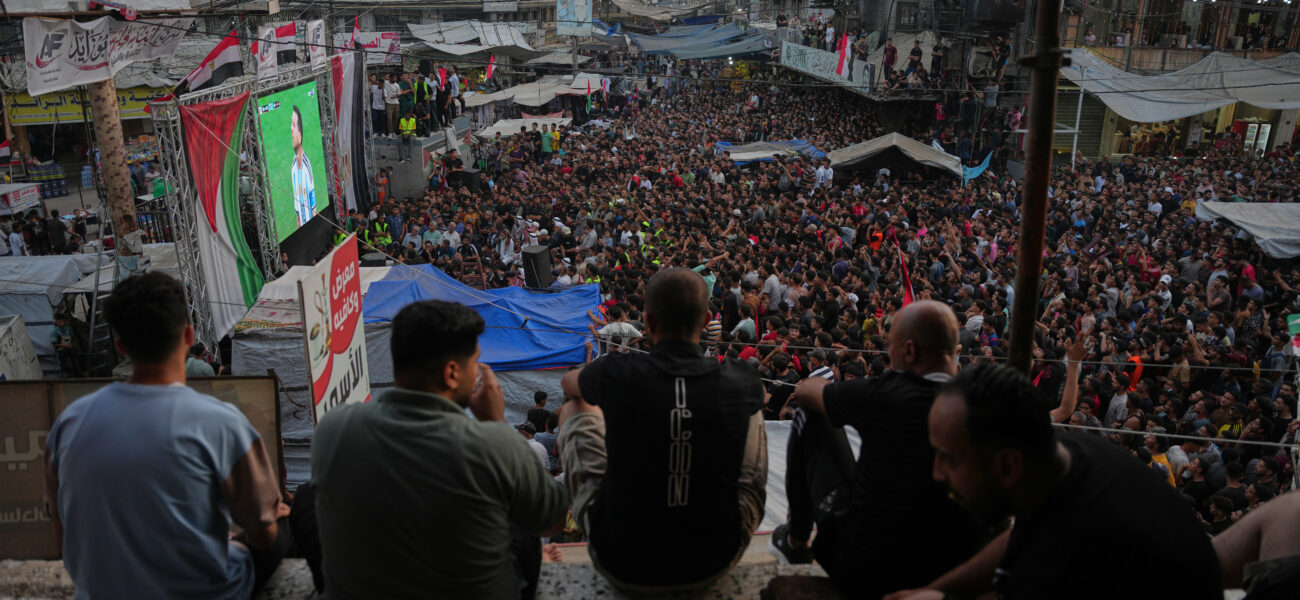
POLICY WIRE — Gaza Strip — Here’s something nobody talks about enough: how hope, even manufactured, fragile hope, tends to wither in the arid soil of protracted conflict. Not with a bang, often, but with the chilling whimper of a single life extinguished, one that once, against all sensible odds, dared to ignite moments of collective cheer. That’s the quiet, yet devastating, epitaph for the aid worker who recently perished here, a man remembered not for political speeches or tactical maneuvers, but for making it possible for besieged Gazans to forget, if only for a few weeks, their perpetual hardship by watching the World Cup.
It sounds almost absurd, doesn’t it? That in a place so regularly gripped by the horrors of war, someone would dedicate themselves to—of all things—showing football matches. But this wasn’t just football; it was an escape, a brief, technicolor illusion of normalcy in a reality defined by scarcity and violence. And now, the architect of that brief, collective reverie is gone. Struck down in an incident the Israeli military described as an unintended consequence of operations, it ripped away not just a person, but another sliver of what little spirit remains. The circumstances are contested, as they always are here. Locals insist the targeting was precise. But it’s done.
His story echoes across the broader Muslim world, a region acutely sensitive to the plight of Gaza. From Jakarta to Lahore, communities often see their own frustrations mirrored in the Strip’s perpetual cycles of devastation. Pakistan, for instance, a nation grappling with its own internal strife and humanitarian needs, watches Gaza’s anguish unfold with a mixture of empathy and profound anger. It’s not just a Palestinian issue for them; it’s a shared injury, a consistent, deeply felt affront.
“We try to delineate combatants from civilians,” Brigadier General Daniel Hagari, an Israeli military spokesperson, told Policy Wire, offering a terse statement typical of Jerusalem’s official posture. “Our forces operate against Hamas’s terrorist infrastructure, which, tragically, routinely embeds itself within civilian areas. Every loss of innocent life is regrettable, but the responsibility rests squarely with those who initiate and sustain this conflict from within population centers.” It’s a standard refrain, familiar, almost recited. But for those on the ground, the impact hits harder than any official apology could mend.
But the numbers speak a different language. Data from the Aid Worker Security Report indicates that aid workers faced an 8% increase in major attacks globally in 2023, with the most severe violence concentrated in conflict zones like Gaza. For many, that just translates to another name on a tragically long list.
Martin Griffiths, the UN Humanitarian Coordinator, his voice usually measured, expressed a thinly veiled weariness. “Our humanitarian colleagues are out there, not with guns, but with food, with medicine, sometimes with nothing more than a projector and a screen trying to patch up a world torn apart. When they become collateral, whether by design or catastrophic error, it’s a chilling blow to the fundamental premise of aid itself. It simply shouldn’t happen—ever.” His words, heavy with the weight of constant loss, highlight the ever-narrowing space for principled action. And in Gaza, that space has shrunk to almost nothing.
📄 POLICY WIRE WHITEPAPER PUBLISHED: PAKISTAN'S NATIONAL SECURITY POLICY PRIORITIES
👉 READ BY CLICKING HEREThis incident isn’t an isolated aberration; it’s a symptom of a larger, systemic breakdown. For aid organizations, it means re-evaluating risk, tightening security, often slowing or stopping essential services altogether. For civilians, it means another erosion of trust, another person lost who might have made their lives incrementally better, or just bearable. Because when the person bringing you a few hours of soccer relief is killed, who’s left to offer anything at all?
What This Means
This tragedy ripples out far beyond the immediate grief. Politically, it complicates an already intractable humanitarian crisis, further isolating Israel on the international stage and intensifying calls for accountability. Every aid worker casualty reinforces the perception among global publics, particularly in the Middle East and South Asia, that international laws of war are either selectively applied or utterly disregarded. Economically, the blow is dual-edged. A reduction in humanitarian operations means deeper destitution for Gazans, strangling what’s left of local enterprise and fostering an even greater dependence on external assistance – an assistance that itself is now jeopardized. And you’ve got to understand, this kind of death creates a chilling effect; it makes recruitment harder, retention tougher. It doesn’t just mean fewer aid workers; it means less innovative, less dedicated work. From a diplomatic perspective, this further complicates efforts toward de-escalation, making any form of future reconciliation or even dialogue seem like an ever more remote fantasy.
The incident also underscores the broader regional instability, acting as another raw nerve in a volatile landscape. For nations like Pakistan, long vocal critics of perceived injustices against Palestinians, incidents like this feed into narratives of ongoing occupation and state violence. This can fuel public discontent — and exert pressure on their own governments to take harder diplomatic lines. It’s a continuous feedback loop: an event in Gaza resonates, creating political headaches hundreds, even thousands, of miles away. It forces questions about the integrity of international peacekeeping, of aid charters, of fundamental human decency—questions that remain disturbingly unanswered in a conflict where the lines blur and hope gets routinely buried under the rubble, much like the promise of that distant World Cup, now just a ghost of World Cups past, or the ever present Middle East’s brewing storm that threatens to consume everything.